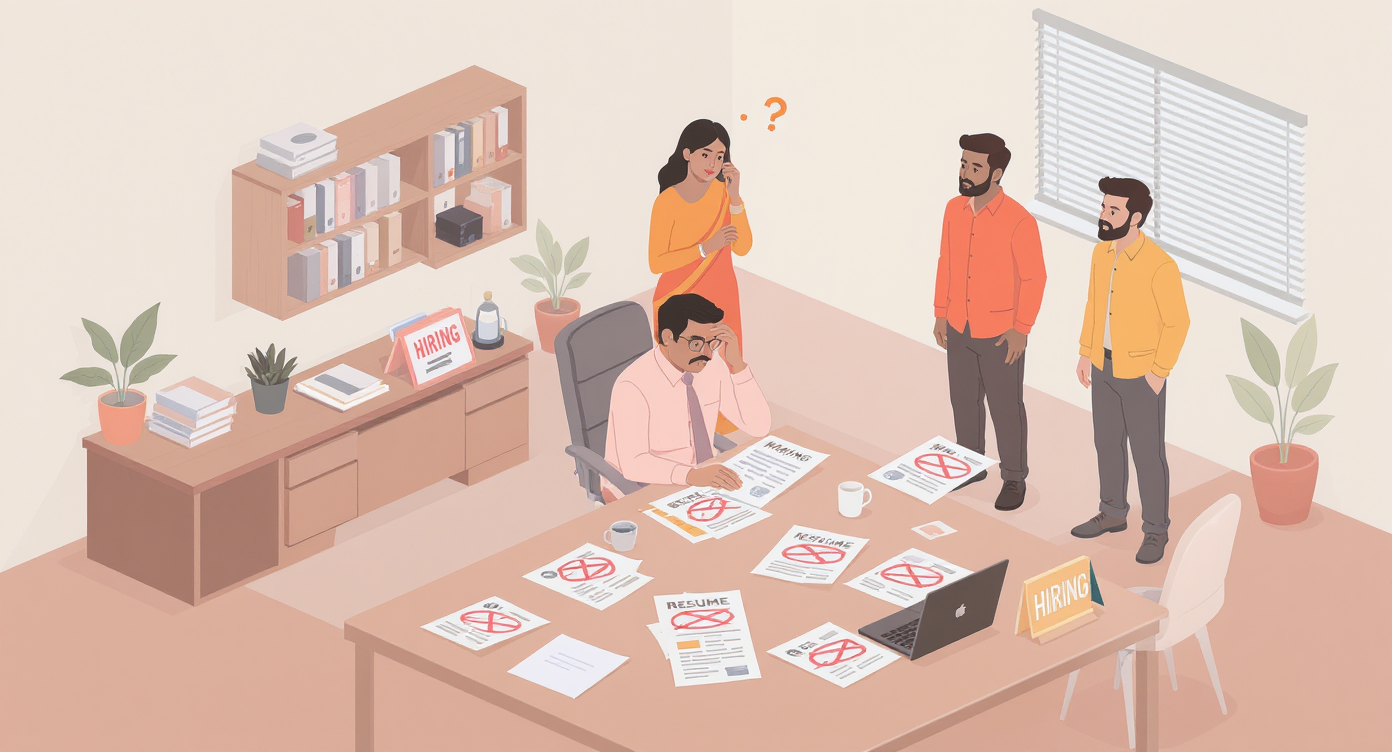
Why 80% of Hiring Fails in Indian MSMEs and How to Avoid It
Introduction
If you ask any Indian entrepreneur what their biggest headache is, chances are they’ll say “employees.” Whether it’s hiring the right person, retaining them, or getting consistent performance, most business owners face the same struggle. In fact, studies show that nearly 80% of hiring decisions in Indian MSMEs end up as failures. This means that four out of five times, the person hired either quits early, underperforms, or simply doesn’t fit into the role.
Stop for a second and think it through. Every wrong hire not only costs money but also time, energy, and missed opportunities. Yet most small and medium business owners keep repeating the same mistakes because they don’t understand why these failures happen in the first place. The truth is, hiring in India’s MSME sector is not just about filling a vacancy. It’s about building the very foundation on which your business will grow. And when this foundation is weak, the whole structure shakes.
So, why do most Indian MSMEs struggle with hiring? And more importantly, how can you, as a business owner, avoid becoming part of this 80% failure statistic? Let’s dive deep.
The Harsh Reality of Hiring in Indian MSMEs
Most Indian MSMEs operate in a high-pressure, low-resource environment. Unlike large corporations with HR teams and recruitment budgets, small businesses often depend on word of mouth, local networks, or quick fixes to hire employees. On the surface, this might save money, but in reality, it sets the stage for long-term damage.
Take the example of textile units in Surat. Many owners hire workers through labor contractors, hoping to cut costs and speed up the process. But within months, the majority of these workers either leave for slightly higher pay elsewhere or fail to deliver the expected productivity. The result? The business owner goes back to square one, frustrated and burnt out.
According to a 2023 report by the Confederation of Indian Industry (CII), employee turnover rates in Indian MSMEs are as high as 45% annually, far above the global average. Imagine spending months training someone only to see them leave just when they start adding value. It’s like filling a leaking bucket; no matter how much you pour in, it never stays full.
Why Hiring Goes Wrong So Often
If we dig deeper, the problem isn’t just about finding people. The real issue lies in how most MSME owners approach hiring. Many rely on gut feeling instead of structured processes. They pick someone because “he seemed confident” or “she was referred by a friend.” But running a business isn’t about guesswork.
Another reason is the obsession with cost-cutting. A lot of entrepreneurs think hiring someone at a lower salary means saving money. But a wrong hire at a low cost is still more expensive than a right hire at a slightly higher cost. For instance, a small electronics business in Delhi once hired a sales executive at ₹12,000 a month, thinking it was a bargain. Within six months, the owner realized that the executive had not only failed to generate sales but also damaged customer relationships due to a lack of communication skills. That one wrong hire cost the business lakhs in lost revenue.
There’s also the lack of clarity in job roles. In many MSMEs, the job description is simply, “handle everything.” A person hired for accounting is also expected to handle sales calls, logistics, and sometimes even errands. This confusion leads to frustration, underperformance, and eventual attrition.
The Emotional Cost of Wrong Hiring
Numbers show the financial side of wrong hiring, but the emotional cost is often even higher. Every entrepreneur knows the frustration of spending hours training a new recruit, only to see them leave in a few months. It’s not just about the money; it’s about trust being broken again and again.
One small business owner from Jaipur once shared that after his marketing executive quit suddenly, he had to step in himself, spending late nights preparing campaigns and meeting clients. “It felt like I was back to being a one-man army,” he said. The constant pull back into daily firefighting drains energy and holds back growth.
Why This Matters More in India’s MSME Sector
India has over 63 million MSMEs, employing nearly 120 million people. This sector contributes around 30% to India’s GDP and 45% to its exports. Yet, despite being such a powerful backbone of the economy, most MSMEs lack structured HR practices.
Large corporations can absorb a few hiring failures without much impact. But for MSMEs, every single employee matters. If a company with just 10 people loses one, that’s 10% of its workforce gone. Imagine if that one person were handling sales or key client relationships, the entire business could come under stress.
This is why hiring failures hurt MSMEs much more than big companies. A single wrong decision can set growth back by months, sometimes even years.
Breaking the Cycle of Hiring Mistakes
The best part is, hiring doesn’t need to feel like a gamble. But it requires a shift in mindset. Instead of thinking of hiring as a quick fix, MSME owners need to see it as a long-term investment.
The first step is clarity. Before hiring, ask yourself: What exactly do I expect this person to do? What skills are absolutely necessary? What kind of attitude will fit into my company’s culture? When you’re clear, you automatically filter out the wrong candidates.
The second step is the process. Even if you don’t have a full-fledged HR department, you can create a simple but effective hiring system. For example, instead of relying on a single interview, include a small practical test. As part of the recruitment process, have the candidate try selling your product to you. If you’re hiring an accountant, give them a sample balance sheet to review.
The third step is training and retention. Many MSMEs assume that once someone is hired, their job is done. But the reality is, employees need continuous guidance and growth opportunities. According to a LinkedIn survey, 94% of employees are more likely to stay longer with companies that invest in their learning and development. This is where most MSMEs miss out. They spend money on machines, offices, and marketing, but hesitate to invest in people.
Learning From Real Success Stories
There are inspiring examples of MSMEs that cracked the hiring code. A small manufacturing unit in Pune, struggling with 60% attrition, decided to completely revamp its hiring and onboarding process. Instead of rushing to fill vacancies, the owner spent time defining roles clearly, introduced a referral system where current employees could recommend candidates, and started giving structured training sessions. Within a year, attrition dropped to 15%, and productivity rose significantly.
Similarly, a bakery business in Ahmedabad found that most new hires left within six months. After analyzing the problem, the owner realized that employees didn’t see growth opportunities. So, he introduced a simple career path: helpers could move up to bakers, bakers to supervisors, and supervisors to managers. This small change gave employees a reason to stay, and within two years, the business expanded from one outlet to four.
The Hidden Power of Culture in Hiring
One often overlooked reason for hiring failures is company culture. Many business owners assume that culture only matters in large companies like Infosys or Tata. But culture matters even more in small businesses. If your workplace is filled with stress, blame games, and lack of respect, no employee will stay for long, no matter how high the salary.
Consider the case of a small IT company in Bangalore, where the owner was frustrated as developers kept quitting within three to four months. Upon reflection, he realized the office environment was too rigid. Employees were excluded from decisions, denied flexibility, and received little recognition for their efforts. Once he started giving regular feedback, celebrating small wins, and allowing flexible work hours, retention improved dramatically.
The Cost of Inaction
Some business owners keep delaying this issue, thinking, “I’ll fix hiring later, let’s just focus on sales now.” But ignoring hiring problems is like ignoring a crack in your house foundation. The longer you wait, the deeper the damage.
Research from SHRM suggests that hiring the wrong person may set a company back by 30% of the employee’s first-year pay. In MSMEs, this percentage is even higher because resources are limited. Add to this the cost of delays, missed opportunities, and stress, and you’ll realize that not fixing hiring mistakes is one of the costliest errors an entrepreneur can make.
Conclusion: Building a Strong Workforce is the Real Growth Hack
If there’s one truth every Indian MSME owner must accept, it’s this: your business is only as strong as your people. Machines, technology, marketing, and money are important, but without the right team, none of these can deliver sustainable results.
The reason 80% of hiring fails in Indian MSMEs is not because talent is missing, but because the approach to hiring is broken. By shifting from quick-fix recruitment to thoughtful, structured hiring, by valuing people as investments rather than costs, and by building a culture where employees feel respected and valued, MSMEs can turn hiring from a pain point into their biggest strength.
Think about it. The next time you’re about to hire someone, ask yourself: Am I solving today’s problem, or am I building tomorrow’s business? Your answer will determine if you remain among the 80% who fail or step into the 20% who create teams that scale businesses beyond imagination.
Frequently Asked Questions (FAQs)
Q1. Why do 80% of hiring decisions fail in Indian MSMEs?
Most hiring fails because MSME owners rely on gut feeling, word-of-mouth referrals, or cost-cutting instead of structured hiring processes. Lack of clarity in job roles, poor training, and weak company culture also lead to high attrition and underperformance.
Q2. What are the hidden costs of a wrong hire for small businesses?
A wrong hire doesn’t just mean wasted salary. It drains time, lowers productivity, damages client relationships, and forces the business owner back into daily firefighting. Studies suggest wrong hiring can cost 30% or more of the employee’s annual salary.
Q3. How can MSMEs reduce employee turnover?
Turnover drops when employees feel valued and see growth opportunities. Clear role definitions, proper onboarding, structured training, recognition, and creating a positive culture can significantly improve retention.
Q4. Is hiring at a lower salary always a bad idea?
Not necessarily, but choosing candidates only because they cost less often backfires. A competent hire at a slightly higher salary usually adds far more value and stability than a cheaper but unfit candidate.
Q5. What simple hiring practices can small businesses adopt without an HR team?
MSMEs can:
- Define clear job roles.
- Use practical tests during interviews.
- Ask existing employees for referrals.
- Focus on attitude and cultural fit, not just skills.
- Provide basic training and growth paths.
- Hiring



Rahul Malodia is a leading business coach in India, a Chartered Accountant, and the creator of the transformational Vyapari to CEO (V2C) program. With a mission to empower MSMEs, he has trained over entrepreneurs to systemize operations, manage working capital, and scale their businesses profitably.
Known for transforming traditional business owners into confident CEOs, Rahul delivers India’s top business coaching programs through bootcamps, workshops, and online courses. His practical strategies and deep industry insights have made him a trusted name among entrepreneurs seeking sustainable and scalable growth.
