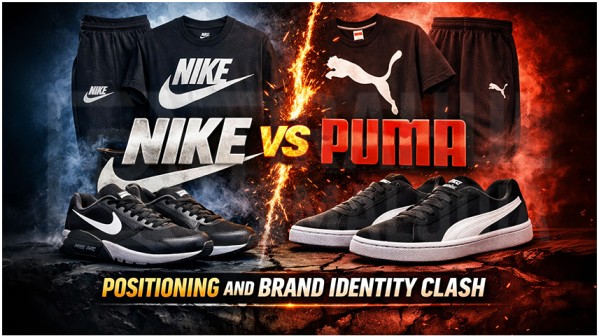
Nike vs Puma: Positioning and Brand Identity Clash
You have probably walked through a crowded mall in Jaipur or Mumbai and noticed it without even trying. One teenager grabs a pair of sleek black sneakers with the leaping cat logo. Another picks up the ones with the swoosh, checking the price twice. It is not just about shoes.
It is a quiet battle of brand identities playing out in every Indian city, from tier-1 showrooms to small-town online carts.
For entrepreneurs like you who are building businesses in a market of 1.4 billion people obsessed with both status and value, this Nike vs Puma clash offers a masterclass in how positioning wins customers and builds lasting loyalty.
The Surprising Roots of a Legendary Rivalry
The story starts not in boardrooms but in a small German town in the 1940s. Two brothers who once worked together split over a disagreement and created two giants. One became Nike, the other Puma.
What began as a family feud turned into one of the longest-running positioning wars in business history. Today, that tension still drives every decision these brands make. Nike built an empire around pushing human limits.
Puma chose to celebrate life beyond the scoreboard. Understanding this origin helps explain why their identities feel so different even now, decades later.
Nike's Winning Formula: Aspiration Meets Innovation
Nike has always positioned itself as the ultimate performance partner. The “Just Do It” slogan is not just a tagline. It is a promise that wearing Nike makes you part of something bigger, something unstoppable.
The brand pours billions into research, creating technologies like Air Zoom and React foam that athletes swear by. For Indian consumers chasing fitness goals or simply wanting to look serious about their hustle, Nike feels like the premium choice that signals ambition.
Its global revenue hit $46.3 billion in fiscal 2025, showing how this aspiration-led identity translates into massive scale.
Puma's Smart Rebellion: Fashion, Fun, and Agility
Puma took a different road. Instead of chasing pure performance, it positioned itself as the fun, fashion-forward challenger. Its 2025 “Go Wild” campaign spoke directly to Gen Z, blending street style with speed.
Puma does not preach “win at all costs.” It invites you to enjoy the journey. This lighter, more lifestyle-focused identity helped Puma stay relevant when consumers started wearing sportswear to offices and cafes.
In India, this approach feels refreshing because it matches our love for affordable style that still performs.
How Positioning Shapes Every Customer Choice
Positioning is not marketing jargon. It is the reason one brand feels right, and the other does not. Nike owns the narrative of elite achievement. Puma owns the narrative of joyful self-expression.
When an Indian startup founder buys team T-shirts, Nike says, “We are serious and growing fast.” Puma says, “We are creative and approachable.”
These identities are not accidental. They are built through years of consistent storytelling, product design, and pricing that Indian buyers instantly feel in their gut.
Breaking Into India: Premium Dreams vs. Ground-Level Reality
India rewards brands that understand its layered reality. Nike entered with a premium playbook, focusing on metros and high price tags above ₹5,000. It built aspirational flagships but stayed selective.
Puma did the opposite. It listened to tier-2 and tier-3 towns, opened over 577 stores nationwide, sourced locally, and priced smartly. The result? Puma has outsold Nike in India for years.
This contrast shows why positioning must bend to local context. What works in New York may not land the same in Lucknow.
The Marketing Showdown That Captivates Indian Consumers
Marketing here is personal. Cricket stars, Bollywood influencers, and social media reels decide who wins hearts. Nike partners with global icons and big-ticket events, reinforcing its premium aura.
Puma bets on local relevance and bold, shareable campaigns. Its focus on Gen Z through “Go Wild” is already shifting conversations in Indian colleges and offices.
Both brands spend heavily, but Puma’s agility lets it pivot faster to trends like athleisure, which now drives much of India’s sports apparel growth.
Revenue Realities: What the Numbers Reveal in 2025
Numbers cut through the noise. Globally, Nike remains the undisputed leader. Puma, while smaller, is executing a strategic reset to chase top-three status. Here is a clear side-by-side look at their 2025 scale.
| Brand | Global Revenue (2025) | Key Focus Area |
| Nike | $46.3 billion | Performance innovation |
| Puma | €7.3 billion (approx. $7.9B) | Lifestyle agility |
In India the picture flips. Puma’s deeper penetration shows how smart positioning beats sheer size.
| Brand | India Revenue (FY24, latest available) | Store Network Strength |
| Puma | ₹3,274 crore | 577+ stores, tier 2/3 focus |
| Nike | ₹1,200 crore | Metro-first approach |
These figures are not random. They prove that when positioning matches Indian realities, even the smaller global player can dominate locally.
Consumer Loyalty in the Age of Athleisure
Indian buyers today want more than logos. They want brands that understand their daily life. The sports apparel market in India is worth around $900 million in 2025 and growing fast at double-digit rates.
Athleisure is everywhere, from morning yoga in parks to evening client meetings. Nike wins the performance crowd. Puma wins the lifestyle crowd.
A simple line graph of India sales trends over the past five years would show Puma’s curve climbing steadily while Nike holds strong in premium pockets. The message is clear: loyalty follows identity that feels personal.
Brand Identity Lessons Every Indian Startup Can Steal
You do not need Nike’s budget to win. Study how Puma turned its underdog status into an advantage by going local and staying agile. Or how Nike never compromises on innovation even when sales dip.
Indian entrepreneurs scaling D2C brands or MSMEs can apply the same principles. Define your identity early. Price it right for your customer. Tell stories that resonate with Indian aspirations.
The brands that win tomorrow will be the ones that position themselves as part of the customer’s journey, not just another product on the shelf.
The Future Clash: What It Means for Your Business Growth
As India’s fitness wave and young population push the sportswear market toward $16 billion by 2034, this clash will only intensify. Nike will keep raising the bar on premium performance. Puma will keep pushing bold, accessible lifestyle appeal.
For you as an entrepreneur, the takeaway is simple. Positioning is not a one-time decision. It is the daily choice that decides whether your brand becomes the next story Indians tell each other.
Watch Nike and Puma closely. Then build your own identity that no one else can copy. The market is wide open for those who understand the game.
- Small Business
- Market Analysis



Rahul Malodia is a leading business coach in India, a Chartered Accountant, and the creator of the transformational Vyapari to CEO (V2C) program. With a mission to empower MSMEs, he has trained over 4,00,000 entrepreneurs to systemize operations, manage working capital, and scale their businesses profitably.
Known for transforming traditional business owners into confident CEOs, Rahul delivers India’s top business coaching programs through bootcamps, workshops, and online courses. His practical strategies and deep industry insights have made him a trusted name among entrepreneurs seeking sustainable and scalable growth.
