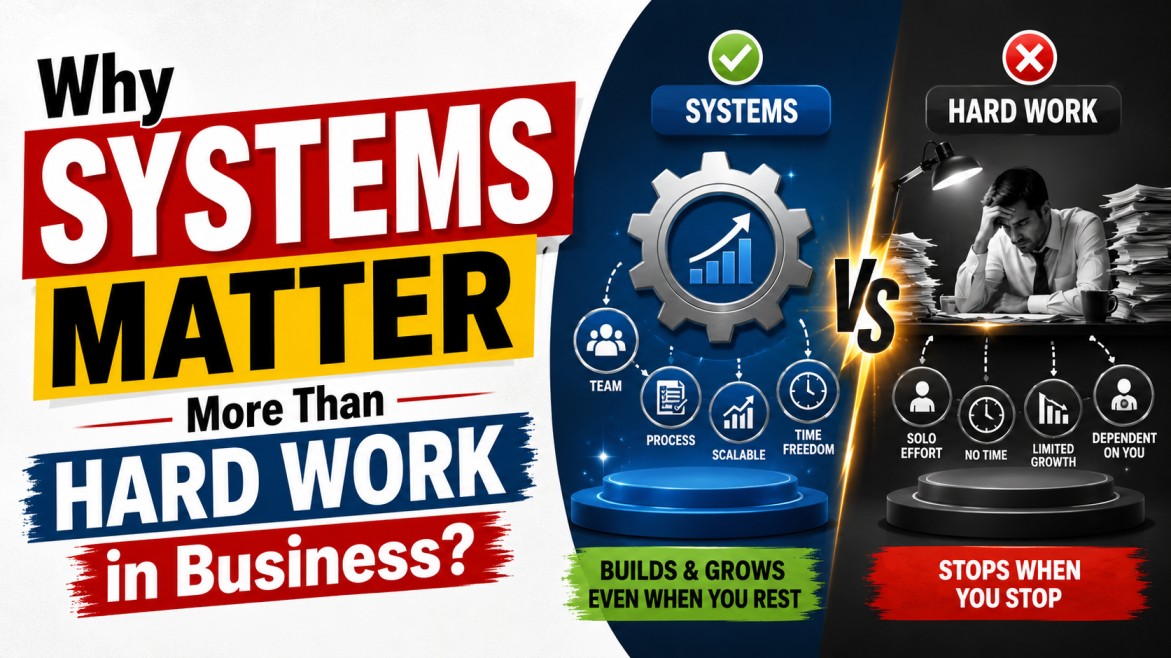
Why Systems Matter More Than Hard Work in Business?
You’ve poured your heart, late nights, and every rupee into your business. Sales are coming in, but growth feels stuck. The team depends on you for everything. One delay and operations freeze. This story echoes across countless Indian MSMEs and startups. Hard work alone isn’t enough anymore. What separates thriving businesses from those burning out is something quieter but far more powerful: systems.
In India’s competitive landscape, where MSMEs number over 8 crore and contribute nearly 30-31% to GDP while employing tens of crores, the ones that scale build repeatable processes. Those relying purely on hustle often stall or fail.
The Hidden Cost of Pure Hustle
Picture a typical day for many Indian entrepreneurs: handling client calls, chasing suppliers, fixing accounts, and managing deliveries all at once. It feels productive, but it caps growth. You become the bottleneck. When you step away, things slow down or collapse.
This “technician trap” keeps most small businesses small. Hard work delivers short-term wins, but without systems, it leads to exhaustion and inconsistency. In India’s fast-moving markets, customers expect reliability, not heroic efforts.
What Business Systems Actually Mean in Practice
Systems are the documented ways your business runs day-to-day, from lead handling and order fulfilment to invoicing and team handovers. They turn chaos into predictable results.
Think of it as building the operating manual for your company. A good system lets a new team member deliver the same quality as you on day one. It frees your time for strategy while ensuring nothing falls through the cracks. In India’s diverse supply chains and regulatory environment, this structure becomes your biggest advantage.
Why Hard Work Alone Fails Most Indian Businesses
Startup failure rates in India hover around 90% within the first five years. Many collapse not from lack of effort but from missing processes for cash flow, customer retention, or scaling operations.
Hard work creates initial traction. But without systems, problems compound: delayed payments, inconsistent quality, and team burnout. MSMEs often stay in the “missing middle”, unable to grow from small to medium because operations remain personality-driven rather than process-driven.
The Real Difference: Systems vs. Hustle in Action
Consider two businesses in the same city. One founder works 16-hour days, personally overseeing everything. Revenue plateaus. The other invests time upfront documenting processes, training staff, and automating routine tasks. Growth compounds.
Indian giants like Reliance and Tata didn’t scale on individual effort alone. They built robust operational frameworks, supply chains, and execution systems that run reliably across regions. Flipkart transformed e-commerce by systematising logistics and customer experience, not just aggressive selling.
Hustle-Driven vs. Systems-Driven Business Outcomes (Typical Indian MSME Context)
| Aspect | Hustle-Driven | Systems-Driven |
| Growth Potential | Plateaus quickly | Scales predictably |
| Owner Time | Trapped in daily operations | Focused on strategy & expansion |
| Team Dependency | High on founder | Distributed & empowered |
| Consistency | Varies daily | Reliable every time |
| Risk on Expansion | High failure on scaling | Lower, more controlled |
This contrast explains why many family-run businesses struggle to professionalize while systematised ones attract better talent and funding.
Building Your First Simple Systems That Work
Start small. Document your core processes: how you onboard a new customer, handle complaints, or manage inventory. Use free or low-cost tools common in India like Google Workspace, WhatsApp Business, or basic ERP apps.
Test, refine, and train your team. The goal isn’t perfection on day one. It’s creating something repeatable that improves over time. Many successful Indian founders began this way, turning garage operations into national players through disciplined execution.
Real Indian Stories Where Systems Created Freedom
PhysicsWallah scaled education massively by systematizing content delivery and student support rather than relying on one teacher’s charisma. Zoho built a global software empire on efficient, self-sustaining internal processes and product systems, staying profitable without heavy external funding.
These examples show systems don’t kill creativity. They multiply impact, allowing founders to focus on innovation while operations run smoothly.
Described Graph: Revenue Growth Trends
Imagine a simple line graph comparing two paths over 5 years. The “Hustle Only” line rises sharply then flattens or dips due to burnout and bottlenecks. The “Systems-Built” line shows steadier, steeper compounding growth after initial setup, reflecting real MSME data where process adopters achieve higher productivity and scale.
Common Pitfalls When Implementing Systems in India
Many hesitate, fearing rigidity or high costs. But ignoring systems leads to bigger problems amid GST compliance, supply disruptions, and talent shortages. Start with high-pain areas like finance or customer service. Avoid overcomplicating; simple checklists and SOPs deliver quick wins.
Policy support like Udyam registration and digital initiatives make system-building easier today than ever.
Signs Your Business Needs Systems Now
| Sign | What It Means | Quick Action |
| You handle all key decisions | Owner bottleneck | Document decision frameworks |
| Frequent errors/rework | Inconsistent processes | Create checklists |
| Team waits for your approval | Low empowerment | Delegate with clear guidelines |
| Cash flow surprises | Poor tracking | Implement simple dashboards |
How Systems Unlock Scalability and Peace of Mind
With systems, expansion becomes less risky. You can open new branches, hire confidently, or enter new markets knowing core operations won’t break. This is crucial for Indian businesses eyeing growth beyond metros or exports.
Productivity gaps between MSMEs and larger firms remain significant, but closing them through better processes can unlock massive value, equivalent to substantial GDP contributions in emerging economies.
Measuring What Matters Beyond Effort
Track metrics like repeat business rate, process completion time, and employee independence rather than just hours worked. Tools for automation and data tracking are more accessible now, helping even small teams compete.
Businesses embracing systems report better resilience, especially post-pandemic and with AI tools emerging in 2026.
The Quiet Power That Builds Lasting Businesses
Shifting from hustle to systems doesn’t mean working less hard initially. It means working smarter for sustainable results. Your business gains the ability to run without you constantly present, giving you time for family, new ideas, or rest.
In India’s entrepreneurial journey, those who build strong foundations don’t just survive competition. They lead it. The systems you create today determine the legacy you leave tomorrow. Start documenting one process this week. The compound effect will surprise you.
Click here and head to our blog page for more practical insights on business growth, leadership, and building a business that actually works for you.
- Market Analysis
- Business Ideas


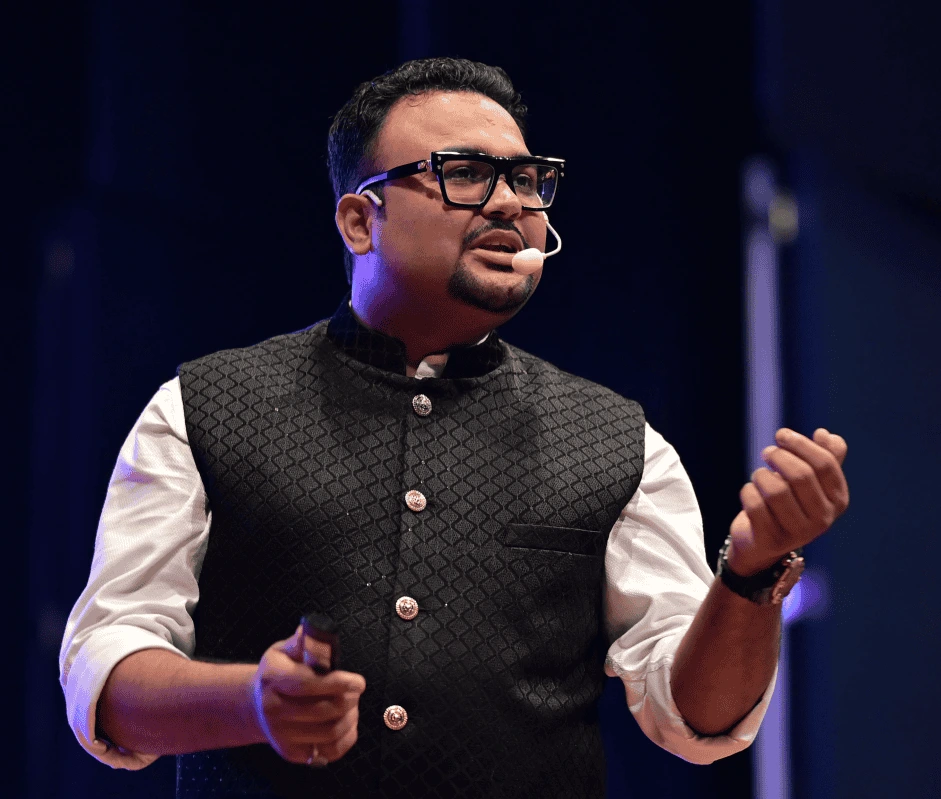
Rahul Malodia is a leading business coach in India, a Chartered Accountant, and the creator of the transformational Vyapari to CEO (V2C) program. With a mission to empower MSMEs, he has trained over entrepreneurs to systemize operations, manage working capital, and scale their businesses profitably.
Known for transforming traditional business owners into confident CEOs, Rahul delivers India’s top business coaching programs through bootcamps, workshops, and online courses. His practical strategies and deep industry insights have made him a trusted name among entrepreneurs seeking sustainable and scalable growth.
