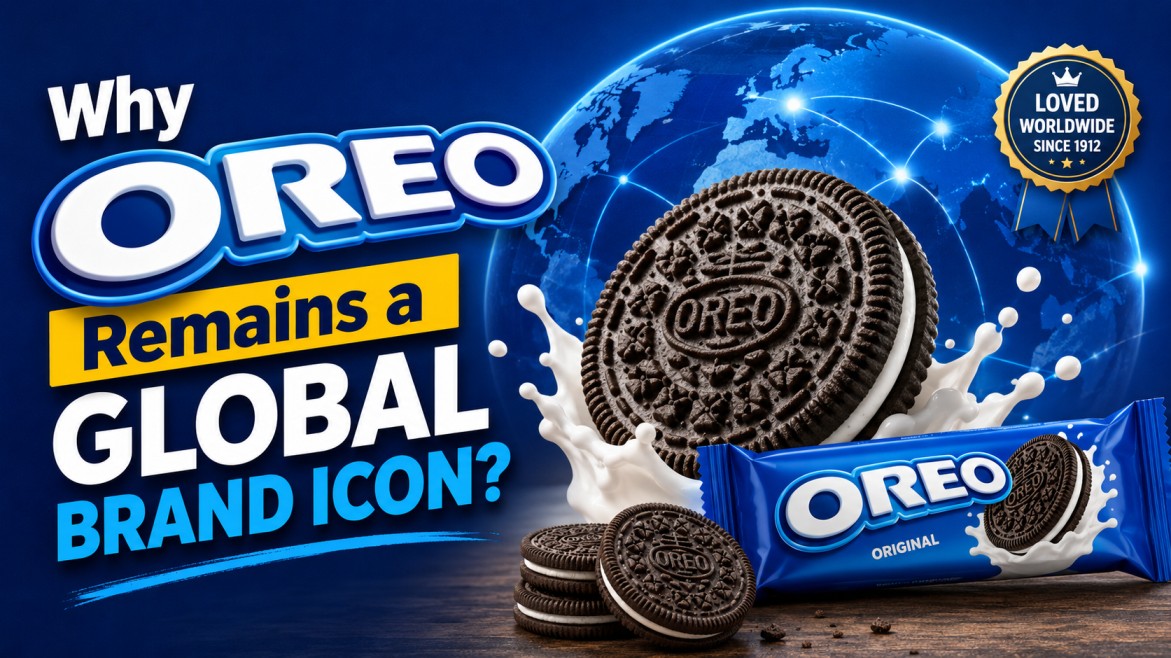
Why Oreo Remains a Global Brand Icon?
Walk into a supermarket in Mumbai, New York, London, or Dubai, and there is a good chance you will find the same blue Oreo pack staring back at you.
That is not just a biscuit. It is one of the world's most recognisable brands.
For more than a century, Oreo has survived changing consumer tastes, economic downturns, digital disruption, and intense competition. Many food brands have become popular. Very few become cultural symbols. Oreo belongs to that rare category.
For entrepreneurs and business owners, Oreo offers a masterclass in branding, customer loyalty, innovation, and global expansion. Its journey reveals why some products become commodities while others become icons.
A 100+ Year Legacy That Still Feels Fresh
Oreo was introduced in 1912 by Nabisco in the United States. More than 110 years later, it continues to grow across continents.
Today, Oreo is owned by Mondelēz International, one of the world's largest snack companies. The brand is sold in more than 100 countries and has generated billions of dollars in annual sales for decades.
The challenge for century-old brands is staying relevant. Many famous names faded because they failed to adapt. Oreo avoided that trap by constantly evolving while protecting its core identity.
The familiar cookie, cream filling, and twist-lick-dunk ritual remain unchanged. Everything around it keeps evolving.
Oreo Sells an Experience, Not Just a Biscuit
Most biscuits compete on taste, price, or ingredients.
Oreo competes on emotion.
The brand transformed a simple eating habit into a memorable ritual. The famous "Twist, Lick, Dunk" behaviour turned customers into active participants.
This creates stronger memory recall than traditional consumption.
| Brand | Core Product | Emotional Association |
| Oreo | Cream Biscuit | Fun and family moments |
| Parle-G | Glucose Biscuit | Trust and affordability |
| Britannia Good Day | Butter Cookie | Happiness and indulgence |
| Bourbon | Chocolate Biscuit | Rich taste experience |
The table shows how Oreo occupies a unique emotional space. Customers often remember the ritual as much as the product itself.
Consistency Builds Trust Across Markets
One reason global brands struggle is inconsistency.
A customer buying a product in Delhi expects a similar experience when purchasing it in Singapore or Dubai. Oreo delivers this reliability exceptionally well.
According to brand valuation studies, consistency is one of the strongest drivers of customer trust and repeat purchases.
For entrepreneurs, this lesson is powerful. Customers forgive occasional mistakes. They rarely forgive unpredictable experiences.
Whether sold in India, China, or Brazil, Oreo maintains recognizable packaging, product quality, and branding while making local adjustments where necessary.
Smart Localization Helped Oreo Win India
Global brands often fail when they assume one strategy fits every market.
Oreo took a different route in India.
After entering the Indian market, the brand introduced affordable price points and adjusted distribution strategies to reach both urban and semi-urban consumers.
India's biscuit market is estimated to exceed ₹60,000 crore by 2026, making it one of the world's largest biscuit markets.
| Strategy | Oreo India | Typical Failed Global Entry |
| Pricing | Affordable packs | Premium-only pricing |
| Distribution | Deep retail reach | Limited modern trade focus |
| Marketing | Local family messaging | Generic global campaigns |
| Product Positioning | Everyday treat | Imported luxury perception |
This approach helped Oreo compete against strong local players such as Britannia, Parle, and Sunfeast.
Marketing That Becomes Part of Culture
Many advertisements get views.
Very few become cultural moments.
One of Oreo's most famous campaigns happened during the 2013 Super Bowl blackout when the brand posted a simple social media message: "You can still dunk in the dark."
The post became a global marketing case study.
The reason was not creativity alone. It showed speed, relevance, and understanding of audience behavior.
In today's digital economy, consumers reward brands that participate in conversations rather than interrupt them.
Indian businesses can see a similar trend. Brands that react quickly to festivals, cricket events, and cultural moments often outperform larger competitors with bigger advertising budgets.
Innovation Without Losing Identity
Innovation is necessary. Confusion is dangerous.
Oreo has launched hundreds of limited-edition flavors worldwide, from Green Tea in China to unique seasonal variants in Western markets.
Yet the original Oreo remains the hero product.
| Brand Approach | Result |
| Constant innovation with clear identity | Oreo |
| Excessive diversification without focus | Many failed snack brands |
| No innovation | Declining relevance |
The balance is important. Customers enjoy novelty, but they also want familiarity.
This principle applies equally to startups and established businesses.
The Power of Distribution at Scale
A great product means little if customers cannot find it.
Mondelēz has invested heavily in one of the world's strongest snack distribution networks.
This allows Oreo to reach supermarkets, kirana stores, airports, online marketplaces, and convenience stores.
The graph below can help visualize Oreo's growth journey:
Described Graph: Global Oreo Market Reach (1912–2026)
1912 → Launch in one country
1950 → Expansion across North America
1990 → Strong international presence
2010 → Major growth in Asia-Pacific
2026 → Presence in 100+ countries
The trend line would show steady long-term expansion rather than sudden spikes. That consistency is often a stronger indicator of brand strength than short-term viral success.
Data-Driven Decisions Keep Oreo Relevant
Modern consumer brands rely heavily on analytics.
Mondelēz uses consumer insights, retail data, social listening, and purchasing behavior to understand changing preferences.
This helps Oreo identify flavor opportunities, optimize pricing, and improve customer engagement.
A McKinsey study found that data-driven organizations are significantly more likely to acquire and retain customers than competitors relying primarily on intuition.
For Indian MSMEs, even basic customer data can provide similar advantages. Understanding repeat purchases often creates bigger growth opportunities than constantly chasing new customers.
Strong Branding Creates Pricing Power
Many products become trapped in price wars.
Iconic brands avoid them.
Despite intense competition from local and private-label biscuit brands, Oreo continues to command strong consumer preference globally.
| Factor | Commodity Product | Oreo |
| Purchase Driver | Price | Brand preference |
| Customer Loyalty | Low | High |
| Differentiation | Limited | Strong |
| Premium Potential | Weak | Significant |
This explains why branding is often one of the highest-return investments a business can make.
Customers pay more willingly when they trust the experience attached to the product.
Oreo Understands Generations, Not Just Consumers
A child who enjoyed Oreo twenty years ago is often introducing it to their own children today.
That intergenerational connection is rare.
According to multiple consumer behavior studies, brands that successfully bridge generations tend to enjoy stronger long-term loyalty and lower acquisition costs.
Oreo's messaging continues to evolve across television, social media, influencer marketing, and digital commerce while keeping its core promise intact.
This balance between heritage and modern relevance is one of the biggest reasons the brand continues to thrive.
The Real Reason Oreo Remains a Global Icon
Behind the packaging, advertising, and distribution lies a deeper truth.
Oreo understands that products satisfy needs, but brands create memories.
Its success is not built on being the cheapest biscuit, the healthiest snack, or the most innovative food product. It comes from delivering familiarity, trust, emotional connection, and consistent experiences across generations and geographies.
For Indian entrepreneurs, that may be the most valuable lesson of all. Markets change, technologies evolve, and competitors emerge every year. But businesses that consistently create emotional value alongside functional value often build something far more powerful than market share.
They build a brand people remember. And that is exactly what Oreo has done for more than a century.
Read More: How Coca-Cola Maintains Its Brand Power
- BrandBuilding


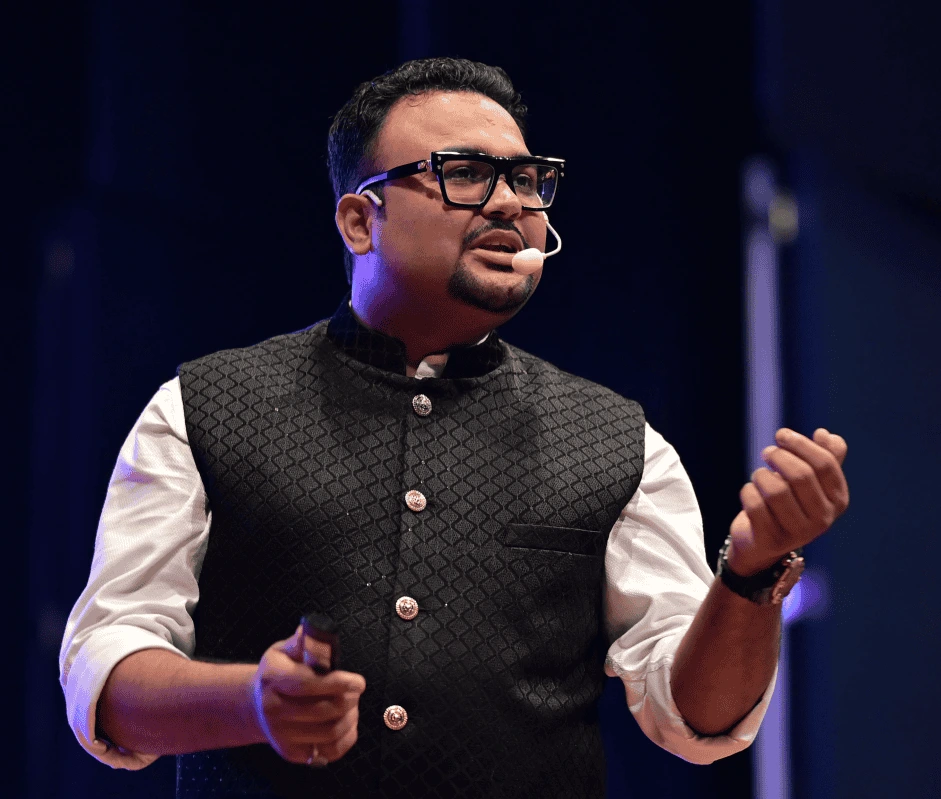
Rahul Malodia is a leading business coach in India, a Chartered Accountant, and the creator of the transformational Vyapari to CEO (V2C) program. With a mission to empower MSMEs, he has trained over 5,00,000+ entrepreneurs to systemize operations, manage working capital, and scale their businesses profitably.
Known for transforming traditional business owners into confident CEOs, Rahul delivers India’s top business coaching programs through bootcamps, workshops, and online courses. His practical strategies and deep industry insights have made him a trusted name among entrepreneurs seeking sustainable and scalable growth.
