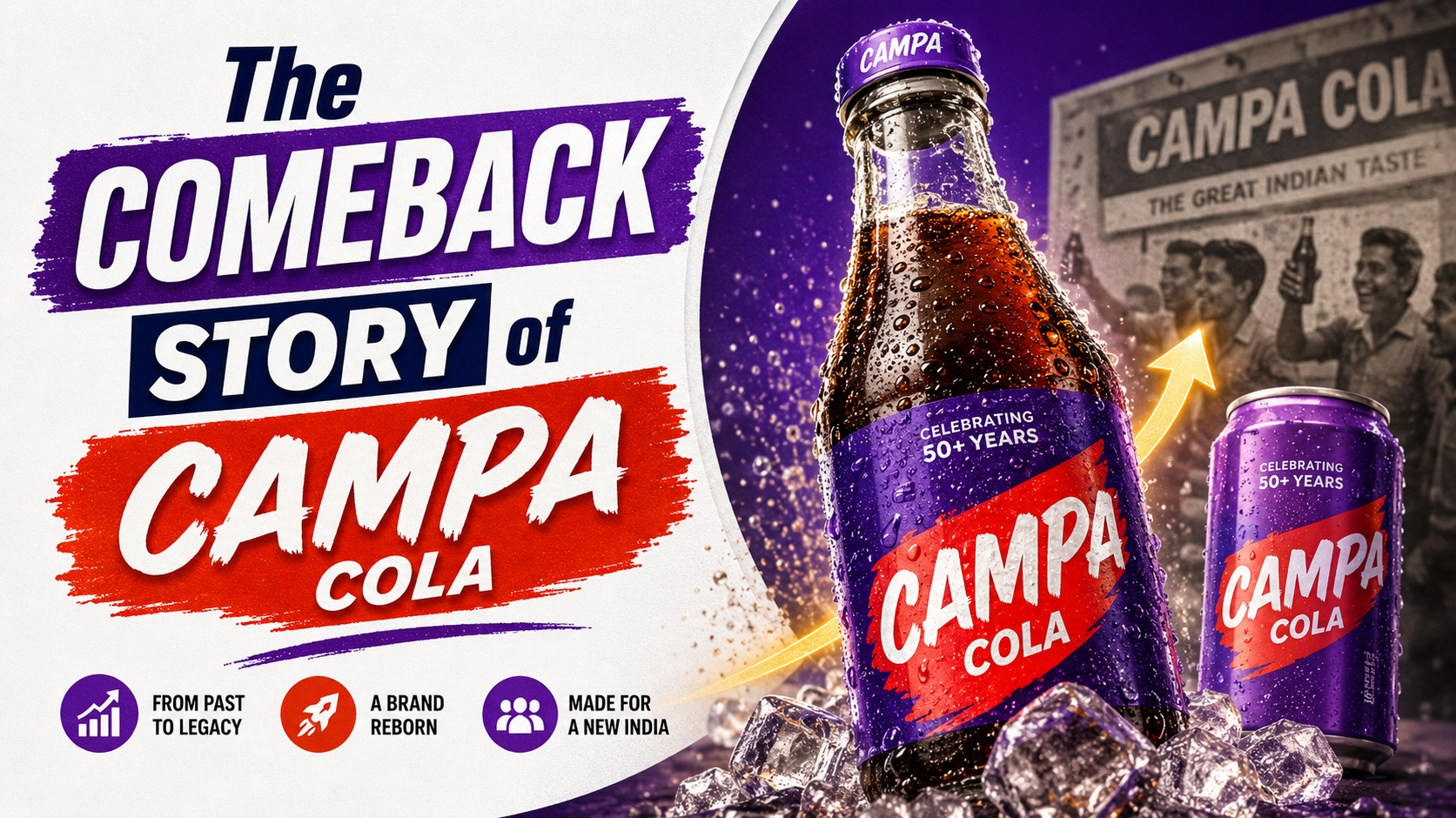
The Comeback Story of Campa Cola
Imagine walking into a small kirana store in a Tier-2 town, feeling the summer heat, and spotting that familiar purple bottle for just ₹10. For many of us, it brings back memories of simpler times. Campa Cola isn't just a drink, it's a piece of Indian entrepreneurial grit making a powerful return.
This story hits close to home for every business owner who's faced setbacks. A homegrown brand that rose in the 70s, faded in the 90s, and now challenges global giants under Reliance's wing. It's about resilience, smart strategy, and understanding Indian consumers deeply.
The Birth of an Indian Icon
In 1977, when Coca-Cola exited India amid regulatory pressures, a gap opened in the market. Pure Drinks Group in Delhi stepped up and launched Campa Cola. It quickly became a symbol of self-reliance with flavors like cola, orange, and lemon that tasted local yet refreshing.
For over a decade, Campa ruled many hearts, especially in northern India. It wasn't just about taste, it represented pride in a desi alternative during tough economic times. Entrepreneurs today can relate: spotting an opportunity when big players pull back.
The Fall After Liberalization
The 1990s changed everything. Economic reforms brought Coca-Cola and Pepsi back with massive marketing muscle and global supply chains. Campa struggled to keep up. Distribution weakened, and consumer tastes shifted toward the shiny foreign brands.
By the early 2000s, Campa had largely disappeared from shelves. Decades of dormancy followed. This phase teaches a hard lesson many MSME owners know too well, market shifts can humble even strong brands without constant adaptation.
Reliance Spots the Hidden Value
In August 2022, Reliance Retail acquired the Campa trademark for just ₹22 crore. To many, it looked like a nostalgic buy. But Mukesh Ambani's team saw something deeper: residual brand equity, emotional connect, and a massive untapped opportunity in India's ₹67,000+ crore beverage market.
They relaunched in 2023 with core flavors. The timing was perfect. Indian consumers were increasingly favoring affordable, local-feeling options amid inflation pressures.
Pricing Strategy That Disrupts the Market
Campa's bold pricing, ₹10 for 200ml, hit the sweet spot. It was roughly half the price of similar Coke or Pepsi bottles. This wasn't just cheap; it was accessible for millions in smaller towns and villages.
Higher retailer margins (6-8% vs 3.5-5% for competitors) made shopkeepers push Campa harder. Word spread fast through India's vast retail network.
Comparison of Pricing and Margins (Typical 200-250ml bottle):
| Aspect | Campa Cola | Coke/Pepsi |
| Consumer Price | ₹10 | ₹20+ |
| Retailer Margin | 6-8% | 3.5-5% |
| Value Perception | High volume | Premium |
This table shows why Campa gained quick shelf space in price-sensitive India.
Leveraging Reliance's Distribution Power
The real game-changer was Reliance's ecosystem. From Reliance Retail stores to JioMart and thousands of distributors, Campa reached 2,000+ towns rapidly. This infrastructure gave it an edge that no startup could match easily.
Many entrepreneurs dream of such a scale. Campa proves that strong distribution often beats heavy advertising in the early stages. By mid-2024, availability was widespread, creating a flywheel effect.
Market Share Gains and Revenue Surge
From around 2% market share in 2024, Campa climbed to nearly 7% in 2025, with double-digit shares in several states. Revenues reportedly crossed ₹1,000 crore quickly, with some estimates reaching ₹4,700 crore gross by FY25-26, making it a top contender.
Revenue Growth Trend (Approximate):
Imagine a line graph starting low post-relaunch in 2023, then shooting upward steeply through 2024-2025. The curve reflects aggressive expansion and consumer trials turning into loyalty.
This growth mirrors what many Indian startups aim for: rapid scaling by solving real pain points like affordability.
Comparing with Global Giants
Coca-Cola and Pepsi still lead with strong portfolios, but Campa is chipping away, especially in mass-market segments. While multinationals focus on premium branding, Campa emphasizes value and nostalgia with modern execution.
Reliance's patient capital and integrated retail give it staying power. Coke and Pepsi have vast experience, but Campa benefits from being "Made in India" in consumers' minds.
Key Strategic Moves: Campa vs Competitors
| Factor | Campa Approach | Competitor Approach |
| Entry Cost | Low acquisition | Established heavy investment |
| Focus | Affordability + Distribution | Brand premium + Ads |
| Speed of Reach | Rapid via own network | Traditional bottling |
Such contrasts highlight why Campa feels different for Indian businesses navigating the competitive landscape.
Lessons for Entrepreneurs and Founders
Campa's journey offers clear takeaways. First, nostalgia has business value if revived authentically. Second, volume pricing in India wins big. Third, leverage existing strengths, whether your network, data, or partnerships.
For MSMEs, the message is hopeful: big disruptions create space for smart players. Focus on what customers truly need, value, availability, and trust.
Building for the Long Run
Sustainability will test Campa. Maintaining quality, expanding flavors, and possibly going international are the next steps. Reliance is investing heavily, signaling commitment beyond quick gains.
Challenges like intense competition and changing health trends remain. Yet the brand's foundation in Indian roots gives it unique resilience.
Campa Cola's comeback isn't finished. It's evolving, proving that with the right execution, old brands can shine again. For every Indian entrepreneur facing tough markets, this story brings quiet confidence; setbacks can lead to stronger returns when you play to your strengths and understand your people.
Read more : How Coca-Cola maintains brand power
- Business Case study
- Businessman



Rahul Malodia is a leading business coach in India, a Chartered Accountant, and the creator of the transformational Vyapari to CEO (V2C) program. With a mission to empower MSMEs, he has trained over entrepreneurs to systemize operations, manage working capital, and scale their businesses profitably.
Known for transforming traditional business owners into confident CEOs, Rahul delivers India’s top business coaching programs through bootcamps, workshops, and online courses. His practical strategies and deep industry insights have made him a trusted name among entrepreneurs seeking sustainable and scalable growth.
