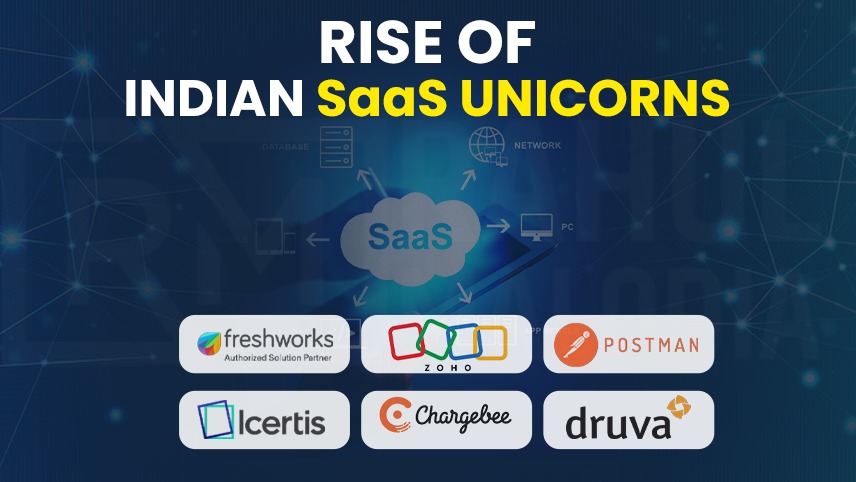
Rise of Indian SaaS Unicorns: Can Traditional Businesses Learn Their Playbook?
Not long ago, the Indian startup space was dominated by e-commerce hype and food delivery giants. But something unusual happened in the background. Quietly, without flashy marketing or celebrity brand ambassadors, a new breed of startups was rising, ones that didn’t just burn capital but generated steady, recurring revenue.
Yes, we’re talking about Indian SaaS unicorns.
These companies didn’t chase popularity. They built products that solved real problems for businesses across the globe. Today, they’re valued in billions. And here’s what’s fascinating: most of them were born out of Tier 2 or Tier 3 Indian cities. Not from Silicon Valley or Mumbai’s posh addresses.
The question is, can traditional Indian businesses, often stuck in low-margin cycles and old-school systems, learn something from this SaaS wave?
The answer lies ahead. And it’s more relevant than ever.
How Did India Become a SaaS Powerhouse?
It didn’t happen overnight. The seeds were sown when IT services began booming in India in the 2000s. Cities like Bengaluru, Pune, and Hyderabad became hubs for software development. But while IT was about selling time and talent, SaaS flipped the script; it sold value.
Instead of one-time projects, SaaS offered businesses ready-to-use software on a subscription basis. No installation hassles. No huge upfront payments. Just log in and get going.
As the world shifted online at lightning speed, this model turned out to be a game-changer.
And Indian founders saw the gap. They realized they could build world-class products from India and sell them globally, without needing huge offices or sales armies. All they needed was good code, internet, and relentless customer focus.
Today, India has over 25 SaaS unicorns, and this number is growing. According to a Bain & Company report, India’s SaaS industry could generate $35 billion in revenue by 2027 and create over 500,000 new jobs.
That’s not just success. That’s a silent storm.
Inside the Winning Strategy of Every Indian SaaS Unicorn
What’s their formula? It’s not rocket science. But it is radically different from how traditional businesses operate.
First, SaaS startups don’t chase everyone. They find one core problem and solve it beautifully. Take Zoho for example. They built a suite of affordable business tools long before digital India became cool. And they did it from Tenkasi, a small town in Tamil Nadu.
Freshworks became the first Indian SaaS company to list on NASDAQ, marking a major milestone that spotlighted India’s growing strength in the global software-as-a-service market. They started by solving one simple pain point, making customer support easier. That focus made them a global name.
And what really drives this model is predictability. SaaS is subscription-based. Every month, revenue flows in. For a traditional business owner struggling with irregular payments and seasonal customers, this model feels like a dream.
But there’s more. Indian SaaS founders obsess over global standards. India’s top SaaS unicorns make the bulk of their money up to 90% by serving global clients, not just the local market. This mindset, building for the world from India, is a major shift.
And while traditional businesses often rely on physical offices, large inventories, and fixed assets, SaaS thrives on lean teams, cloud infrastructure, and scalable systems. That’s what makes them resilient.
What Traditional Indian Businesses Often Miss
Most traditional Indian businesses work on tight margins and face cash flow stress almost every month. Inventory moves slowly. Sales depend on festivals or footfall. And customer loyalty? Often limited to locality or price.
That’s where adopting a SaaS mindset can completely transform how you grow your business.
Imagine shifting from a one-time sale to a monthly or yearly subscription model. Think about offering value that brings customers back automatically. That’s more than just smart business, that’s the path to true financial freedom.
Traditional players can start thinking about recurring value. For example, a hardware supplier could offer annual maintenance as a paid service. A coaching institute could move online and build a learning app. A kirana store could start a monthly grocery plan.
It’s not about becoming a tech company overnight. It’s about thinking like one.
Real Examples: When Old-School Met New-School
There’s a growing wave of traditional businesses embracing digital-first, SaaS-inspired thinking.
Look at Udaan, a powerful B2B e-commerce platform that's helping manufacturers, wholesalers, and retailers connect and grow their business across India. They’ve digitized one of the oldest markets in the country, wholesale trading. And they’re doing it using tech, data, and logistics.
Another example is Khatabook. It took the age-old bahi-khata system and turned it into a digital ledger app. In less than 5 years, it reached over 10 million merchants across India. That’s what happens when you mix traditional business needs with SaaS delivery.
Even industries like real estate, logistics, and textiles are seeing transformation through SaaS-like platforms. CRMs, ERP systems, and inventory tools aren’t just for IT giants anymore. They’re becoming essential tools for survival and growth.
Why This Matters Now, More Than Ever
The Indian economy is changing fast. Digital India is no longer just a campaign. It’s a reality. UPI has changed how payments happen. GST has changed how billing works. And remote work has changed how teams function.
In this new world, the old ways won’t survive for long.
If you're still waiting for customers to walk in or depending only on word-of-mouth while avoiding digital tools, your business is falling behind. SaaS unicorns aren’t just startups. They’re signals. They’re showing the way forward.
And you don’t need to be a coder to follow their lead.
The Mindset Shift That Unlocks the Future
At the heart of every SaaS success is one simple idea: build once, sell many times. That’s the opposite of the traditional model, where effort scales linearly with revenue.
SaaS companies also invest heavily in customer success, not just customer service. They don’t just sell software, they help businesses grow. This mindset creates long-term relationships, not just one-time deals.
Indian business owners can adopt this too. Whether you’re in manufacturing, services, or trading, there’s always a way to think in terms of value, scalability, and customer lifetime.
It starts with one step. And a willingness to unlearn.
The Real Numbers That Make SaaS Irresistible
Let’s talk about facts. According to Tracxn, as of early 2025:
- India has over 1,500 active SaaS startups.
- India's SaaS exports surged past $12 billion in FY2024, marking a major milestone for the country’s booming software-as-a-service industry.
- Companies like Chargebee, Postman, Druva, and Icertis are all billion-dollar players, serving global markets from India.
- SaaS startups have a 40–60% gross margin on average, much higher than traditional product businesses.
These aren’t just fancy stats. They show what’s possible when you build on a scalable, tech-driven foundation.
So, Can Traditional Businesses Truly Learn From SaaS Unicorns?
Absolutely. But only if they’re ready to shift their mindset.
You don’t need to become a unicorn. But you can train your mind to think like a successful entrepreneur. That means focusing on solving problems, creating systems that scale, investing in customer experience, and moving toward predictable revenue.
It’s not about copying Zoho or Freshworks. It’s about applying the principles behind their success.
And the best part? You don’t need venture capital or an IIT degree to do it. You just need courage. Curiosity. And the willingness to evolve.
Final Thoughts: The Playbook Is Not Just for Startups, It’s for Survivors
This is not just a startup story. This is a survival guide for every Indian business that wants to stay relevant.
The future is not about size, it’s about speed, adaptability, and tech-savviness. SaaS unicorns have shown us what’s possible. Now it’s time for traditional businesses to pick up the playbook and start rewriting their story.
Because in a world that changes every quarter, the biggest risk is standing still.
- Business Ideas
- Businessman
- Financial Freedom


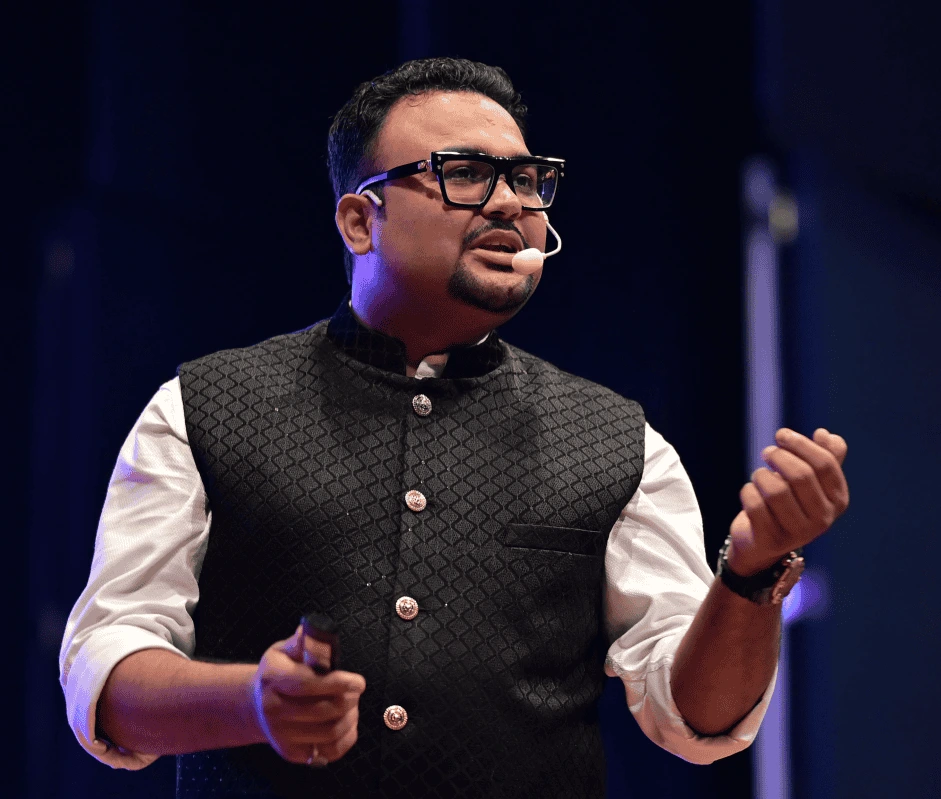
Rahul Malodia is a leading business coach in India, a Chartered Accountant, and the creator of the transformational Vyapari to CEO (V2C) program. With a mission to empower MSMEs, he has trained over 4,00,000 entrepreneurs to systemize operations, manage working capital, and scale their businesses profitably.
Known for transforming traditional business owners into confident CEOs, Rahul delivers India’s top business coaching programs through bootcamps, workshops, and online courses. His practical strategies and deep industry insights have made him a trusted name among entrepreneurs seeking sustainable and scalable growth.
