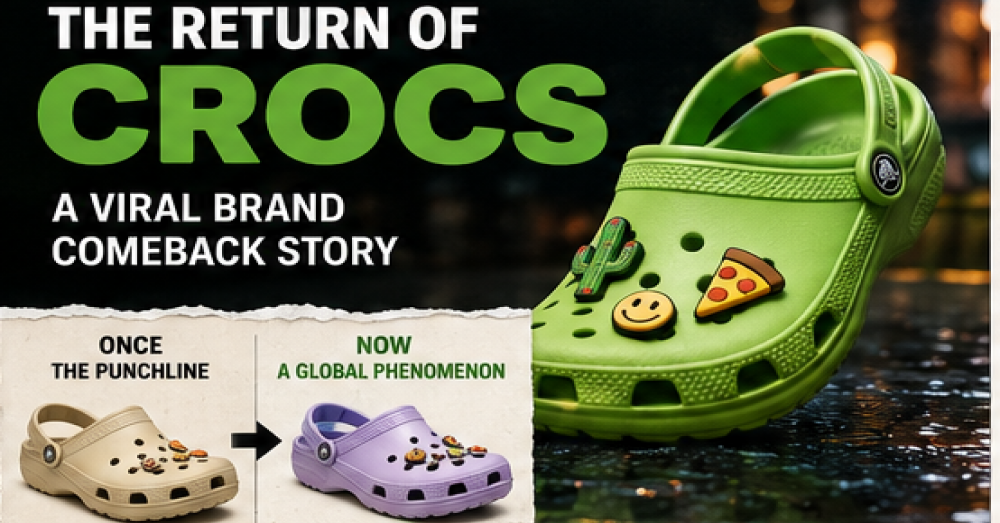
The Return of Crocs: A Viral Brand Comeback Story
Imagine a shoe that was once the punchline of every fashion joke. Bulky, brightly colored, and mocked relentlessly. Then, almost overnight, it became a global cultural phenomenon, racking up billions in revenue. That’s the story of Crocs. For Indian entrepreneurs watching trends, building brands, or scaling businesses, this isn’t just footwear history; it’s a masterclass in resilience, timing, and smart pivots.
From Near-Death to Dominance
Crocs launched in 2002 with its signature foam clogs. Sales exploded early, hitting nearly $850 million by 2007, but the brand quickly faced backlash. It was labeled “ugly,” sales slumped, and by the late 2000s, it hovered near irrelevance. Many wrote it off as a fad. Yet, under new leadership, Crocs doubled down on what made it special: extreme comfort and customization.
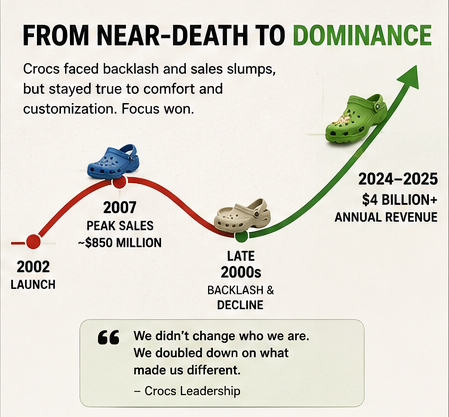
This wasn’t luck. It was a deliberate strategy. The company refocused on its core Classic Clog, investing heavily in it while most competitors chased fleeting trends.
The Pandemic Spark That Changed Everything
The real turning point came around 2020. As the world shifted to comfort-first living, Crocs was perfectly positioned. Revenue jumped from $1.39 billion in 2020 to $3.96 billion in 2023, a massive leap fueled by casual wear demand. By 2024-2025, the brand crossed $4 billion in annual revenue.
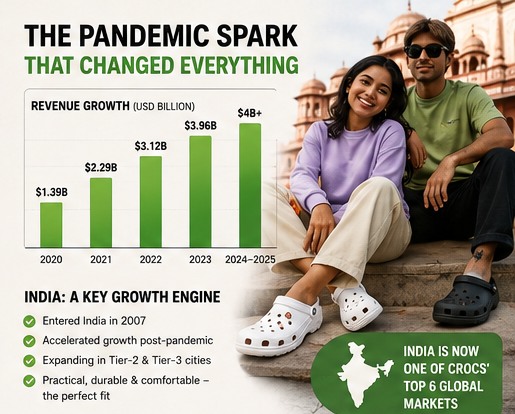
In India, where post-pandemic work-from-home and hybrid setups became common, comfort footwear found a natural audience. Crocs entered India in 2007 but saw accelerated growth in recent years, targeting Tier-2 and Tier-3 cities where practical, durable shoes resonate.
How Social Media Turned Mockery into Money
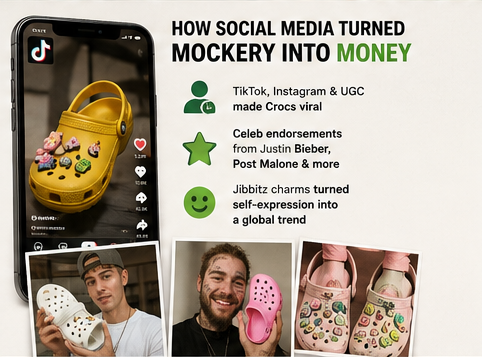
TikTok, Instagram, and celebrity endorsements played a starring role. Collaborations with stars like Justin Bieber and Post Malone, plus endless user-generated content with Jibbitz charms, made Crocs cool. What was once embarrassing became a statement of personality and fun.
Indian Gen-Z and millennials, active on social platforms, embraced the trend. Personalized Crocs with charms mirrored how young Indians customize everything from phones to bikes. Brands that ignore this creator economy miss massive organic reach.
India’s Growing Love for Crocs
Crocs has elevated India to one of its top six global markets. The company expanded manufacturing from two factories in 2023 to five by 2026, serving both local demand and exports to 85 countries. Despite a temporary 7% sales dip to ₹558 crore in FY25, the long-term bet is clear: India is a growth engine.
Over 300 mono-brand stores, partnerships with local players like Metro Brands, and focus beyond metros show a deep understanding of Indian consumer realities, price sensitivity, durability needs, and rising aspirations.
Key Business Lessons for Indian Founders
Crocs teaches focus. Instead of diluting the lineup, they strengthened the hero product. This created economies of scale and higher margins.
| Aspect | Early Struggle Phase | Comeback Phase |
| Product Focus | Broad experimentation | Core Clog + variants |
| Revenue Trend | Declining | $1.4B to $4B+ |
| Market Perception | Mocked | Cultural icon |
This table shows how narrowing focus can unlock exponential growth, something many Indian MSMEs can apply when expanding product lines.
Smart Pricing and Personalization Power
Jibbitz charms alone generate hundreds of millions annually with superb margins. They turn one-time buyers into repeat customers. In India, where gifting and customization are big, this model has huge potential.
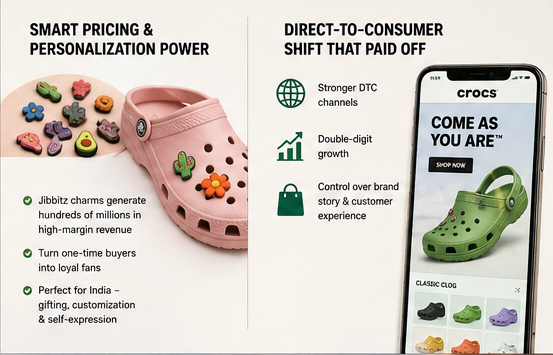
Crocs maintained premium-yet-accessible pricing while delivering unmatched comfort, beating cheaper unbranded options on durability and brand pull.
Direct-to-Consumer Shift That Paid Off
While wholesale faced pressure, Crocs’ DTC channels grew strongly, often by double digits. This control over storytelling and margins is crucial. Many Indian brands still rely heavily on marketplaces; Crocs shows that owning the customer journey builds loyalty.
Comparison with Rivals: Staying Ahead
Unlike Birkenstock’s premium positioning or Nike’s performance focus, Crocs owned the fun-comfort space. While some rivals saw stock pressure, Crocs leveraged virality and international expansion.
| Competitor | Strength | Crocs Edge |
| Birkenstock | Premium heritage | Affordability + customization |
| Nike/Adidas | Performance tech | Everyday casual comfort |
Crocs grew its global footwear market share from 0.3% to 1.0% by carving a unique lane.
Innovation Without Losing Identity
New sandals, Echo clogs, and collaborations keep the brand fresh. Yet everything ties back to comfort and personality, never chasing trends blindly. This balance is gold for Indian entrepreneurs, balancing tradition with modernity.
Why This Comeback Matters for You
Crocs proves brands can reinvent perception. What starts as a joke can become a billion-dollar empire with the right mix of authenticity, timing, and customer obsession. For Indian businesses navigating competition, policy changes, and digital shifts, the lesson is clear: stay close to your core strength, adapt to consumer emotions, and build community.
The return of Crocs isn’t just a story; it’s proof that with courage and clarity, any brand can stage a powerful comeback.
- Business Case study



Rahul Malodia is a leading business coach in India, a Chartered Accountant, and the creator of the transformational Vyapari to CEO (V2C) program. With a mission to empower MSMEs, he has trained over 5,00,000+ entrepreneurs to systemize operations, manage working capital, and scale their businesses profitably.
Known for transforming traditional business owners into confident CEOs, Rahul delivers India’s top business coaching programs through bootcamps, workshops, and online courses. His practical strategies and deep industry insights have made him a trusted name among entrepreneurs seeking sustainable and scalable growth.
