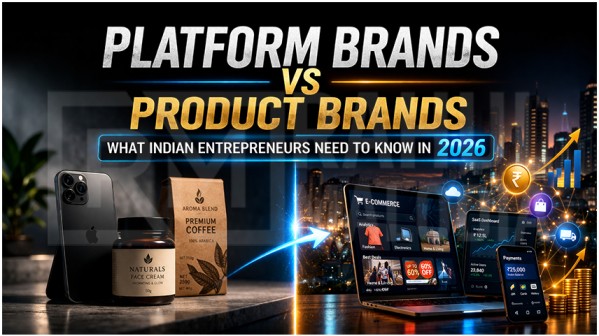
Platform Brands vs Product Brands: What Indian Entrepreneurs Need to Know in 2026
You have spent years perfecting a product that solves a real problem for Indian customers. Maybe it is a range of herbal skincare or a smart gadget for small homes in Tier-2 cities.
Yet every quarter, you watch platform players gobble up market share while your margins stay thin.
This is not bad luck. It is the quiet shift from product brands to platform brands happening right now in India.
The choice between the two is no longer academic. It decides whether your business stays local or scales nationally by 2030.
What Makes a Brand a Product Brand in India Today?
Product brands live and die by what they make and sell directly. Think Patanjali in its early days or Amul with its butter and milk pouches.
You control the entire story from factory to shelf. Customers buy because they trust your quality, your price, or your desi roots.
In 2026, many Indian MSMEs still operate this way. They invest in manufacturing, packaging, and heavy advertising on television or local kirana stores.
The model feels safe because you own the product. But growth hits a ceiling fast when raw material costs rise or competitors copy your formula overnight.
Platform Brands: Building Ecosystems That Scale Themselves
Platform brands work differently. They do not make the product. They create the marketplace where products meet people.
Flipkart connects millions of sellers to buyers. Zomato links restaurants to hungry customers in every pin code. Reliance Jio turned telecom into a data platform that powers everything from payments to entertainment.
The brand wins when more users join, more sellers list, and the network becomes impossible to leave.
In India’s digital commerce market, projected to touch USD 185 billion in 2026, these platforms capture the lion’s share because every new participant adds value for everyone else.
Why the Difference Between Platform Brands and Product Brands Matters More Than Ever
The gap is widening in 2026. Product brands depend on your own inventory and marketing budget.
Platform brands grow through other people’s effort and money. A single product brand might spend 30% of its revenue on ads to reach new cities.
A platform uses network effects, so users bring their friends for free. Indian entrepreneurs notice this every time they check their sales dashboards.
While D2C product brands grow at a healthy 24% CAGR, the larger e-commerce platforms are expanding the entire pie at double-digit rates, reaching INR 19.7 trillion this year alone.
The Indian Reality: How Product Brands Built Empires Before Platforms Took Over
Before smartphones and UPI, product brands ruled. Amul turned Gujarat milk into a national symbol of quality. Patanjali rode the Ayurveda wave and disrupted FMCG giants with affordable, trust-based products.
These brands understood Indian emotions, price sensitivity, and distribution through kirana stores.
They still command respect. Yet today, the same consumer who once queued for Patanjali toothpaste now orders groceries in ten minutes through quick-commerce platforms.
The old model built loyalty slowly. The new model delivers convenience instantly.
Platform Brands and the Power of Network Effects in Our Market
Network effects sound technical, but they are simple in daily life. One more restaurant on Zomato means more choices for customers, which means more orders, which means more restaurants join.
UPI did the same for payments. ONDC is now trying to do it for commerce itself. In 2026, platforms that master this fly ahead.
Indian founders who ignore it watch their customer acquisition cost climb while platform rivals pay almost nothing for the next user.
This is why quick commerce crossed USD 7 billion last fiscal and is heading toward USD 35 billion by 2030.
Common Pitfalls Indian Founders Face When Sticking to Product-Only Strategies
Many smart founders in Jaipur, Coimbatore, or Hyderabad stay product-focused too long. They pour money into warehouses and struggle with returns. They fight for shelf space against bigger players.
Cash flow dries up because every new city needs fresh inventory. Meanwhile, platforms handle logistics and payments for a small fee. The trap is real: you feel in control, yet you scale slower and burn more capital.
Data from the ground shows product-heavy businesses often hit a revenue wall at INR 50-100 crore while platforms cross that mark in months once the network kicks in.
Success Stories: Indian Brands That Mastered the Platform Shift
Look at how Flipkart started by selling books and became the backbone of Indian online shopping.
Zomato moved from restaurant listings to full delivery platform and now powers quick commerce too. Even traditional giants like Reliance turned Jio into a platform that changed how India connects and shops.
These stories show the shift is possible. Some product brands now hybridise. They sell their own goods while opening their platform to other sellers.
The ones that succeed treat the platform layer as the real growth engine.
Deciding Your Path: Product or Platform – A Practical Guide for MSMEs
Ask yourself three questions. Do you have deep expertise in one product category? Can you build technology that connects users and providers? Are you ready for the capital needed to ignite network effects? Most Indian startups answer yes to the first and no to the rest.
That is fine. Start as a strong product brand. Use existing platforms to test demand. Later, when data shows repeat buyers and clear pain points, layer on platform features. The move is not all-or-nothing. It is strategic and timed.
Side-by-Side: Product Brands vs Platform Brands in Indian Reality
A simple table helps many founders see the choice clearly:
| Feature | Product Brands | Platform Brands |
| Core Focus | Own product quality and inventory | Connecting buyers, sellers, and services |
| Revenue Model | Direct margins on sales | Commissions, fees, advertising |
| Scalability | Limited by production and logistics | Grows exponentially with more users |
| Customer Acquisition | Heavy ad spend and distribution | Network effects lower the cost |
| 2026 India Example | Patanjali, Amul, emerging D2C brands | Flipkart, Zomato, JioMart |
When you read these rows, the trade-offs become obvious. Product brands win on trust and control. Platforms win on speed and size.
Visualizing the Growth: Platform Economy vs Traditional Brands in India
Picture a line graph tracking revenue from 2024 to 2026. The platform-driven e-commerce line climbs steeply from roughly USD 114 billion to USD 226 billion.
The traditional product-brand retail line rises more gradually. Quick-commerce and social commerce segments shoot up even faster. This visual is not theory. It matches GlobalData and industry reports for 2026.
Indian entrepreneurs who study it stop debating and start planning their next move.
Policy Boost: How UPI and ONDC Are Changing the Rules
UPI already processes billions of transactions monthly and makes digital payments feel Indian. ONDC takes the same open spirit to commerce, letting small sellers bypass big platform fees.
In 2026 these policies give product brands a fighting chance to reach national buyers without surrendering 25-30% margins.
Yet platforms that adapt fastest still hold the edge. The playing field is fairer, but network effects still reward those who build the biggest connections.
Future-Proofing Your Brand in a Platform-Dominated India
The next five years belong to founders who blend the best of both worlds. Keep your product excellent. Add platform thinking early.
Use data from your first sales to decide when to open your ecosystem. In a market growing this fast, waiting too long means someone else builds the platform you needed. Start small, test relentlessly, and let Indian consumer behaviour guide you.
This perspective comes from years of guiding Indian businesses through these exact crossroads, translating real-world experience into scalable thinking, and simplifying complex challenges into clear, actionable frameworks that founders actually use.
- Market Analysis


Rahul Malodia is a leading business coach in India, a Chartered Accountant, and the creator of the transformational Vyapari to CEO (V2C) program. With a mission to empower MSMEs, he has trained over entrepreneurs to systemize operations, manage working capital, and scale their businesses profitably.
Known for transforming traditional business owners into confident CEOs, Rahul delivers India’s top business coaching programs through bootcamps, workshops, and online courses. His practical strategies and deep industry insights have made him a trusted name among entrepreneurs seeking sustainable and scalable growth.
