
The New Mindset Indian Entrepreneurs Need in 2025
If there’s one thing 2025 has made clear, it’s this, what got Indian entrepreneurs here won’t take them forward anymore. The business landscape that once rewarded hard work, long hours, and “jugad” has changed dramatically. Technology, consumer behaviour, and competition are rewriting the rules faster than ever. Many business owners who built their companies on traditional instincts are now realising that experience alone is no longer enough. The mindset that once guaranteed success now risks leading to stagnation or even collapse.
Across India, from the textile hubs of Surat to the startup streets of Bengaluru, entrepreneurs are waking up to a simple truth: the future belongs not to the biggest or the oldest, but to the most adaptable. And adaptability begins with a new mindset.
The Shift from Survival to Strategy
For decades, Indian entrepreneurs have built their businesses on survival instincts. Whether it was managing cash flow manually, running family-led teams, or depending on local markets, the focus was always short-term, “aaj kaise nikalenge.” But 2025 is not an era of survival. It’s the era of systems, scalability, and smart thinking.
Take, for instance, the example of Nykaa. Founded by Falguni Nayar in 2012, it started as a small online beauty platform. But what separated her from traditional traders was her strategic mindset. Instead of focusing on daily sales, she built brand trust, consumer experience, and data-driven decisions. Today, Nykaa’s valuation has crossed ₹70,000 crore, not because it sold more products, but because it thought differently.
This is where most traditional entrepreneurs go wrong. They focus only on “kaam zyada, result zyada,” instead of asking, “kaam smart kaise ho?” In 2025, strategic thinking beats operational hard work every single time.
From ‘Boss’ to ‘Leader’, The New Way to Run Teams
In small and mid-sized Indian businesses, it’s common to hear: “Yeh meri company hai, sab kuch main sambhalta hoon.” That mindset once worked because businesses were smaller and people followed authority. But today’s employees, especially Gen Z, don’t just work for salaries. They crave purpose, growth, and respect.
Companies like Zerodha and Zoho have proven that employees don’t perform better out of fear; they perform better when trusted. Nithin Kamath, the founder of Zerodha, runs his billion-dollar company with minimal hierarchy. His belief? “People don’t need to be managed; they need to be inspired.”
Entrepreneurs who still believe in micromanaging every task are losing their best talent. The new mindset in 2025 is about empowering people, not controlling them. When teams are treated like partners, not subordinates, innovation follows naturally.
Adopting the Digital-First Mindset
Digital transformation isn’t optional anymore. It’s the new oxygen of business. Yet, many Indian entrepreneurs still resist it, saying, “Hamare business mein yeh sab nahi chalta.” But the truth is, whether it’s retail, manufacturing, or services, every business now depends on technology.
Look at Reliance Retail. It didn’t just rely on physical stores. It used digital platforms, data analytics, and online channels to reach customers even in Tier-3 cities. Or take Zomato, it’s not just a food delivery app. It’s a data company that knows what Indians eat, when they order, and how much they spend.
In 2025, businesses that don’t have a digital presence will be invisible. Having a website, using CRM tools, running ads, or automating systems isn’t a luxury; it’s survival. Entrepreneurs must stop thinking, “Digital toh marketing ke liye hai,” and start realising, “Digital toh growth ke liye hai.”
Mindset Shift from Short-Term Profit to Long-Term Brand
Many Indian business owners still focus on quick gains, “Thoda margin badha lo, profit le lo.” But 2025 belongs to brands that play the long game. Consumers today don’t just buy products; they buy stories and values.
Think of Amul. For decades, it has kept its messaging consistent, trust, purity, and humour. Or look at TATA, a 150-year-old brand that still leads because people trust its values more than its prices.
Modern Indian entrepreneurs need to learn this: branding is not about spending on ads. It’s about shaping perceptions. It’s about building emotional connections that outlast discounts. In a world where people have unlimited options, your brand trust becomes your biggest business asset.

From “Business Owner” to “Business Thinker”
The traditional Indian businessman was a doer, involved in every part of the operation. But the entrepreneur of 2025 needs to be a thinker. The one who doesn’t just work in the business but works on the business.
Rahul Malodia, India’s leading business coach, calls this the “Vyapari to CEO” transition. He teaches that to grow beyond limits, one must stop thinking like a trader and start thinking like a leader. A trader focuses on transactions. A CEO focuses on transformation.
When you’re stuck doing everything yourself, billing, hiring, operations, your growth gets capped. The 2025 mindset demands that entrepreneurs build systems that run without them. The goal is not to do more work, but to create more value.
Learning Never Stops, The Knowledge Economy of 2025
In the past, Indian entrepreneurs prided themselves on learning from experience. But 2025 is an era where experience alone can’t compete with education and awareness. The business environment is evolving faster than ever, AI, digital finance, automation, and consumer behaviour are shifting every six months.
Consider this: according to a NASSCOM report, India now has over 1 lakh registered startups, and more than 70% of them are led by founders under the age of 35. These young entrepreneurs aren’t relying on decades of experience; they’re relying on learning speed.
Continuous learning, through courses, mentorships, or communities, is no longer optional. It’s the difference between staying relevant and becoming outdated. Entrepreneurs who refuse to evolve are slowly being replaced by those who adapt faster.
From Local Thinking to Global Vision
Earlier, the dream of most Indian entrepreneurs was to dominate their city or state. But 2025 demands a broader vision. The internet has removed boundaries. A small business in Jaipur can now sell to customers in Dubai. A freelancer in Kochi can work for clients in New York.
Take the example of boAt, India’s audio electronics brand. It started small, selling affordable earphones online. But today, it exports to over 40 countries and competes with global giants like Sony and JBL. That’s the power of a global mindset; it sees the world as the market.
Entrepreneurs who still think, “Hamare product sirf India ke liye hain,” are limiting themselves. The 2025 mindset is about scaling beyond borders, using technology, logistics, and brand storytelling to go global.
Resilience Over Perfection
2025 is not just about innovation; it’s about resilience. The post-pandemic world taught us that even the most stable businesses can collapse overnight. What separates survivors from failures is the ability to pivot fast and stay emotionally strong.
During COVID-19, thousands of restaurants shut down. But some adapted, turning kitchens into cloud kitchens, using Swiggy and Zomato to stay alive. One such example is Biryani By Kilo, which expanded through delivery even when dining out stopped completely.
Resilience means not fearing failure but learning fast from it. Entrepreneurs must shift from “Mujhse galti nahi honi chahiye” to “Galti se main seekh loonga.” The new game is not about being perfect. It’s about being persistent.
Embracing Financial Discipline
A 2024 RBI report showed that nearly 60% of small Indian businesses suffer cash flow issues due to poor financial planning. Most entrepreneurs focus on sales but neglect cash management, credit control, and working capital.
The 2025 mindset requires financial awareness as a core skill. Business owners must know where every rupee is going, what returns each investment brings, and how to maintain healthy debt cycles. Companies like Zoho and Zerodha remain profitable because they’ve built businesses on discipline, not just growth.
Rahul Malodia’s “Secret of Money” program highlights this mindset perfectly; it’s not about earning more; it’s about managing better. In 2025, knowing your P&L is as important as knowing your product.
Conclusion: The Mindset That Defines the Future
The new era of entrepreneurship in India is not about luck or lineage. It’s about mindset. The 2025 entrepreneur is not the one who works the hardest, but the one who thinks the smartest.
This mindset embraces technology, builds people, values learning, and stays financially disciplined. It focuses less on “what’s trending” and more on “what’s timeless.” It’s a mindset that sees problems as opportunities and challenges as stepping stones.
The Indian entrepreneur of 2025 must stop saying, “Main aisa hi karta hoon,” and start asking, “Main aur better kaise kar sakta hoon?”
Because the future of Indian business will not be built by those who hold on to the past, it will be built by those who have the courage to think new.
- Entrepreneurship


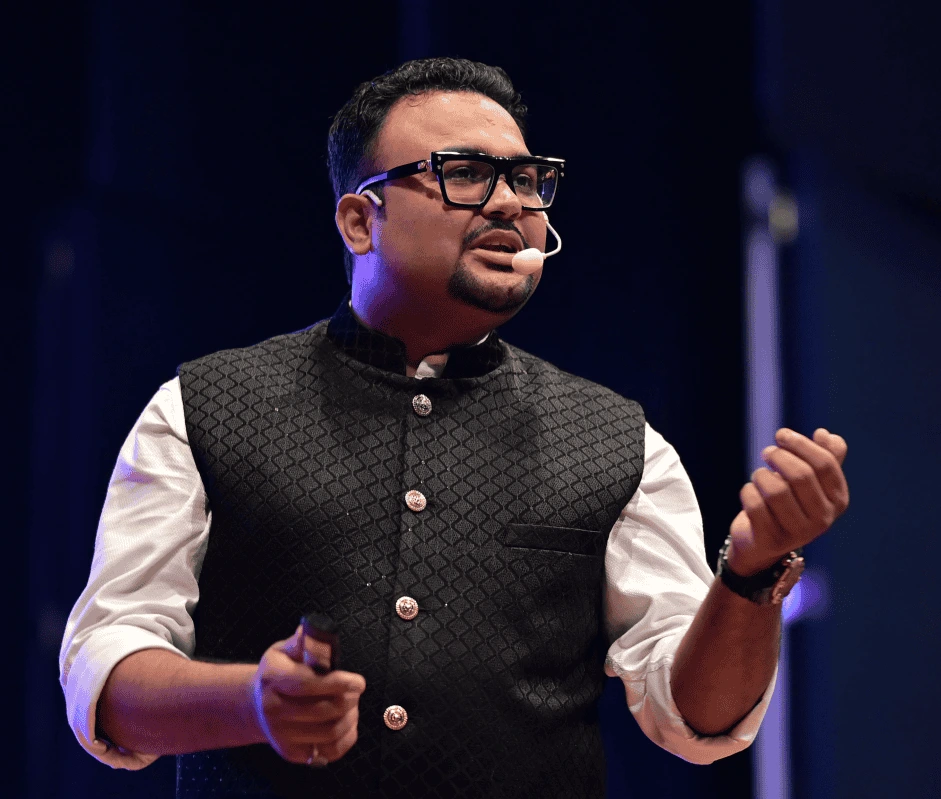
Rahul Malodia is a leading business coach in India, a Chartered Accountant, and the creator of the transformational Vyapari to CEO (V2C) program. With a mission to empower MSMEs, he has trained over entrepreneurs to systemize operations, manage working capital, and scale their businesses profitably.
Known for transforming traditional business owners into confident CEOs, Rahul delivers India’s top business coaching programs through bootcamps, workshops, and online courses. His practical strategies and deep industry insights have made him a trusted name among entrepreneurs seeking sustainable and scalable growth.
