How Mamaearth Built a ₹10,000 Cr Brand with Zero Retail Stores
The True Story Behind India’s D2C Skincare Revolution
Imagine building a ₹10,000 crore company in India… without opening even a single retail store.
No shops. No malls. No shelves.
Sounds impossible, right?
But that’s exactly what Mamaearth did.
In a country where legacy giants like HUL, P&G, and Dabur have always relied on massive distribution networks and retail visibility, Mamaearth chose a completely different path, digital-first and direct-to-consumer.
Started in 2016 by a husband-wife duo, this homegrown brand didn’t just survive the competitive beauty market. It dominated it. And it did so by understanding the one thing most brands ignore, the emotions, concerns, and changing values of the modern Indian consumer.
This isn’t just a case study. It’s a real roadmap for the next generation of Indian entrepreneurs who want to build something big, brave, and truly new.
Let’s go behind the scenes and understand exactly how Mamaearth became a ₹10,000 crore success story, without a single retail store.
A Brand That Broke the Rules – And Won
What if someone told you that you could build a ₹10,000 crore brand without opening a single retail store?
Sounds impossible, right?
But that’s exactly what Mamaearth did.
In a country where success often means fighting for shelf space in Big Bazaar, Reliance Retail, or local kirana stores, Mamaearth chose a completely different path. And not just survived, but thrived.
This is the story of how two first-time entrepreneurs, armed with a laptop, a baby, and a bold idea, built one of India’s fastest-growing D2C (direct-to-consumer) brands without setting up even one physical shop.
And in doing so, they changed the game for Indian entrepreneurs forever.
The Problem That Sparked a Movement
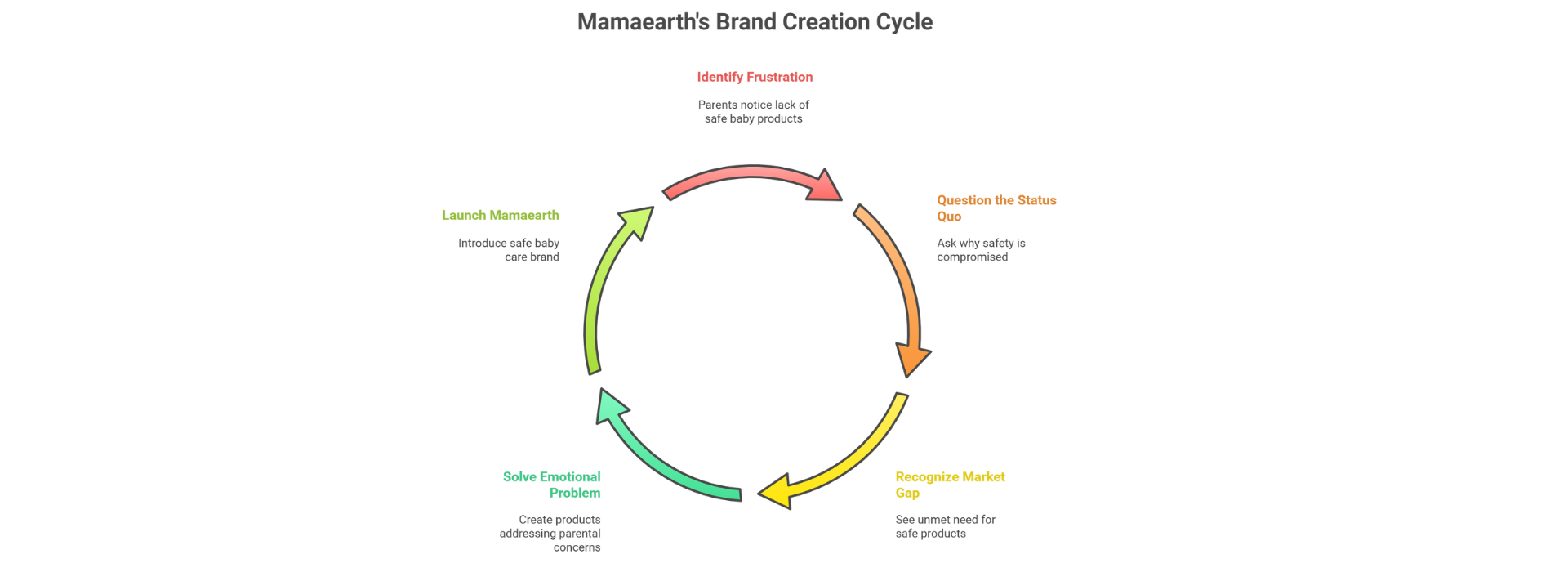
Every big brand begins with a small frustration. For Ghazal and Varun Alagh, the journey began with a simple need, their baby’s safety and care.
Their baby had sensitive skin. As any parent would, they went hunting for the safest, toxin-free baby care products. But what they found in Indian stores shocked them, most products were filled with harsh chemicals. Even the so-called “natural” brands didn’t live up to the label.
That’s when the couple asked a question that would change their life: “Why should Indian parents have to compromise on safety?”
They didn’t just find a gap in the market. They felt it as parents. It wasn’t just about launching another product. It was about solving a real, emotional problem.
That’s how Mamaearth was born.
No Retail, No Problem: Embracing the D2C Revolution
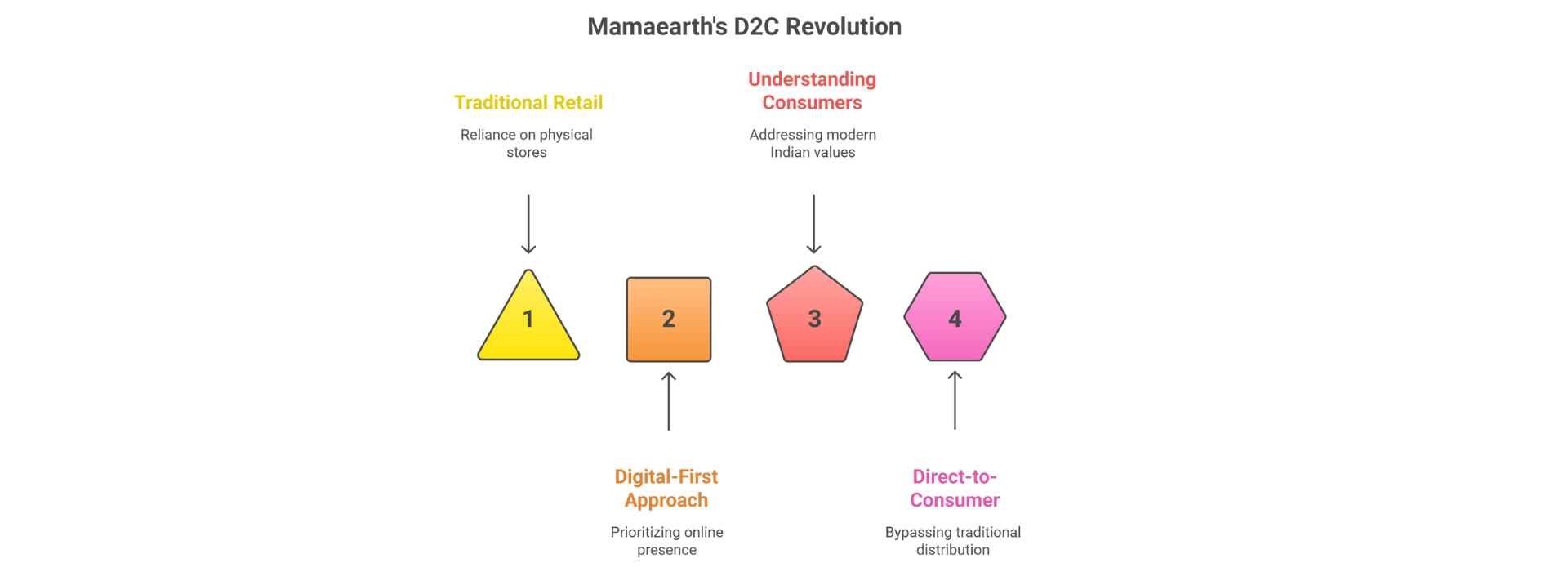
Most traditional brands spend years building distribution networks, tie-ups with wholesalers, modern trade stores, and FMCG retail chains.
Mamaearth did none of that.
Instead, they bet everything on one powerful strategy: digital-first, customer-obsessed, D2C marketing.
Their idea was simple but radical, cut out the middlemen and reach Indian customers directly through the internet. They focused all their energy on digital channels like Facebook, Instagram, Google, and Amazon to build awareness, trust, and sales.
And it worked.
By 2022, they were getting more than 90% of their revenue online. Today, even with a few physical outlets through third-party stores, Mamaearth remains one of the purest examples of how a D2C business can scale without retail.
They didn’t follow the traditional playbook. They wrote their own.
Content, Not Discounts, Was Their Real Weapon
You might think they scaled fast because they threw money at ads. But that’s not the full story.
Yes, Mamaearth invested in digital advertising. But the real magic was in content marketing.
They didn’t just sell baby lotion. They told stories that mattered to young Indian parents.
They wrote blog posts on baby care, skincare routines, and harmful chemicals to avoid. They are educated. They got engaged. They are empowered.
Their social media wasn’t full of offers. It was full of conversations.
Over time, they built a loyal community that didn’t just buy products, they trusted the brand. That trust turned into word-of-mouth. And that word-of-mouth created organic growth.
In the age of clickbait and coupons, Mamaearth chose storytelling. And India listened.
Made for Millennials, Built by Millennials
Mamaearth understood something most legacy FMCG brands still struggle with, modern Indian consumers don’t just want products; they want values.
Their customers were young, urban, conscious, and connected. They didn’t just care about how a product looked or smelled. They cared about what went into it. And what it stood for.
Mamaearth promised toxin-free, cruelty-free, Made Safe certified products. But more than that, they stood for purpose over profit.
They made sustainability sexy.
From plastic-positive packaging to tree-planting pledges with every order, they didn’t just market nature, they gave back to it.
And young Indians, tired of fake “natural” claims, rewarded them with loyalty, and love.
Fast, Flexible, and Fearless: Their Secret Sauce
While most businesses spend months preparing a product launch, smart brands are finding faster, more agile ways to hit the market. Mamaearth made it happen in just six weeks, proof that the right strategy can fast-track success.
How?
Because they didn’t wait for distributor approvals or retail testing.
They used digital data, search trends, customer reviews, product feedback, to decide what to launch next. Then they launched it online, tested it quickly, and scaled what worked.
This flexible model helped them stay ahead of bigger players like Johnson & Johnson, Himalaya, or even P&G, who were still stuck in slow cycles of retail and R&D.
Mamaearth was fast. Agile. Fearless.
They weren’t just a brand. They were a movement in motion.
Celebrity Endorsements, But With a Twist
Let’s face it, India loves celebrity-backed products.
But Mamaearth didn’t just pay a celebrity to hold a bottle and smile. They took it one step further.
They brought celebrities like Shilpa Shetty and Sara Ali Khan on board not just as endorsers, but as investors and believers in the brand’s mission.
This made the brand feel even more trustworthy. When someone puts their money where their mouth is, people take notice.
In India’s competitive skincare industry, that trust became the real game-changer.
Mamaearth’s Rise: Kitchen to IPO
In 2016, Mamaearth began its journey as a humble startup with just ₹25 lakh in seed funding and a big dream to make a difference.
By 2021, they became India’s first unicorn in the D2C space, valued at over $1.2 billion. In 2023, Honasa Consumer Ltd, the company behind Mamaearth, took a major leap by going public with its IPO.
This wasn’t just a business milestone. It was a cultural shift.
For decades, Indian entrepreneurs believed that FMCG success meant building factories, hiring armies of salespeople, and fighting for retail visibility.
Mamaearth proved that you could skip all that, and still build a ₹10,000 crore empire, with just an internet connection and an unshakable mission.
Challenges? Plenty. Excuses? None.
Let’s be clear. It wasn’t all smooth sailing.
In the early days, people doubted their Mamaearth business model. Competitors questioned their claims. The market was skeptical of “online-only” brands. Logistics was also a nightmare during the pandemic.
But the team didn’t flinch. They doubled down on what they believed in: honesty, transparency, and customer obsession.
They handled customer complaints with grace. They turned feedback into product innovation. And they never stopped listening.
Where most brands break under pressure, Mamaearth got better. And that resilience became their competitive edge.
Why Mamaearth Matters for Every Indian Entrepreneur
This isn’t just a skincare success story.
It’s a wake-up call to every Indian entrepreneur still waiting to rent office space, hire salespeople, or sign distributor deals before launching.
Mamaearth proves you can start lean, stay digital, and still go big.
They showed us that product, purpose, and platform equal profit.
They didn’t inherit a legacy. They built one from scratch.
And that means you can too.
The Bigger Picture: What This Means for Indian Business
Mamaearth didn’t just build a brand. They broke a system.
They challenged every rule of FMCG business in India, distribution, pricing, marketing, operations, and rewrote the playbook for the next generation.
And now, other D2C brands like Wow Skin Science, Plum, and The Moms Co. are walking the trail they blazed.
This isn’t a one-off story. Indian brands are no longer built the old way, there's a whole new playbook taking over.
The next time someone tells you that you need crores of rupees, thousands of retail stores, or years of patience to make it big, remember Mamaearth.
Remember that a couple with a laptop and a baby built a ₹10,000 crore business without ever opening a store.
And maybe, just maybe, your dream isn’t so far away either.
Final Thoughts
Mamaearth’s journey is not just about numbers. It’s about mindset.
It’s about choosing courage over comfort. Speed over perfection. And most importantly, people over profits.
Their story is proof that India is ready for new-age entrepreneurs who can dream digital, act ethically, and move fast.
If you’re a business owner, startup founder, or aspiring entrepreneur, take this as a sign.
You don’t need to wait. You just need to start.
Because in today’s India, if Mamaearth can do it, so can you.
- Ecommerce business model



Rahul Malodia is a leading business coach in India, a Chartered Accountant, and the creator of the transformational Vyapari to CEO (V2C) program. With a mission to empower MSMEs, he has trained over 5,00,000+ entrepreneurs to systemize operations, manage working capital, and scale their businesses profitably.
Known for transforming traditional business owners into confident CEOs, Rahul delivers India’s top business coaching programs through bootcamps, workshops, and online courses. His practical strategies and deep industry insights have made him a trusted name among entrepreneurs seeking sustainable and scalable growth.
