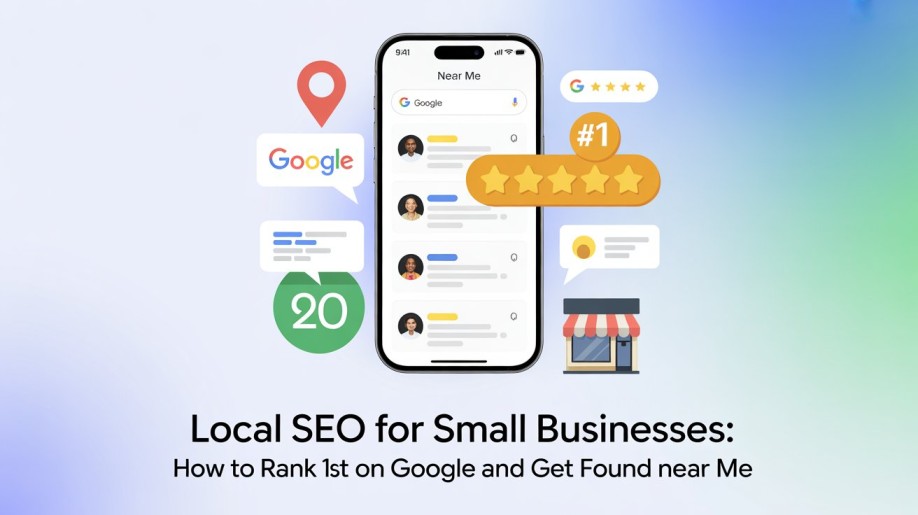
Local SEO for Small Businesses: How to Rank 1st on Google and Get Found Near Me
Imagine you're running a cozy cafe in Jaipur, watching potential customers walk by your door every day. They're pulling out their phones, typing "best coffee near me," but your shop doesn't show up. Instead, a chain from across town grabs their attention. That sting of missed opportunity?
It's real for countless Indian entrepreneurs. Local SEO isn't just a buzz; it's the bridge between your business and those ready-to-buy locals. In a market where 46% of all Google searches are local, according to Google's 2025 data, ignoring this means leaving money on the table.
But what if you could flip the script and become the first name they see? Let's dive in, step by step, like we're chatting over chai about turning your small business into a local powerhouse.
The Rise of Local Searches in India's Bustling Economy
Picture India's streets: from Mumbai's crowded markets to Bangalore's tech hubs. People aren't just browsing, they're searching with intent. In 2024, "near me" searches in India surged by 150%, as per Statista's 2025 report, driven by a mobile penetration rate hitting 75% nationwide.
For small businesses, this shift means opportunity. Unlike broad national SEO, which targets massive audiences and competes with giants like Flipkart, local SEO zeros in on your neighborhood. It uses location signals to push you ahead. Think of it as whispering to Google, "Hey, I'm right here for these folks." While national strategies burn budgets on vague keywords, local ones deliver precise traffic, often converting 28% higher, based on HubSpot's India-focused 2025 analysis.
This growth ties into India's digital push. With the Digital India initiative expanding broadband to rural areas, even tier-2 cities like Coimbatore see local search volumes double yearly. Businesses are ignoring this lag behind alternatives like paid ads, which cost 3-5 times more per lead without the organic trust local rankings build.
Why Small Businesses in India Can't Afford to Skip Local SEO
Running an MSME in India? You're part of a sector contributing 30% to GDP, yet facing cutthroat competition. Local SEO levels the field. A 2025 survey by KPMG India showed that 70% of consumers trust online reviews as much as personal recommendations, making visibility crucial. Without it, you're invisible to the 1.1 billion mobile users searching daily.
Compare this to traditional marketing: billboards or flyers reach limited eyes, with ROI dipping below 10% in urban areas. Local SEO, however, boosts foot traffic by up to 50%, as seen in Delhi's retail scene.
It's not theory, it's survival. When Zomato optimized locally, their partner restaurants saw order spikes of 40%. Your bakery or boutique could do the same, outpacing competitors stuck in outdated Yellow Pages tactics.
Claiming Your Spot: Mastering Google Business Profile
Start simple: claim your Google Business Profile. It's free, yet underused by 60% of Indian small businesses, per a 2024 Google India study. This profile acts as your digital storefront. Fill it with accurate details, address, hours, and photos. In Kolkata, a spice shop tripled walk-ins after adding high-quality images, showing products in action.
Unlike Yelp or Justdial, which fragment visibility, Google's tool integrates directly with Maps and Search. It handles 80% of local queries in India. Add categories like "clothing store" precisely. Update regularly; holiday hours prevent bad reviews. This beats scattered listings on multiple platforms, where inconsistencies drop rankings by 20-30%.
Decoding Keywords: Finding What Locals Really Search For
Keywords are your secret map. In India, searches like "best dentist in Chennai" or "AC repair near me" dominate. Use tools like Google Keyword Planner to uncover them. Focus on long-tail ones: "affordable yoga classes in Pune for beginners." These have lower competition, converting 2.5 times better than short ones, according to SEMrush's 2025 India report.
Weave in semantics: not just "restaurant," but "vegetarian thali near me." Indian users blend English and Hindi, think "pizza delivery karib me." Compared to global tools like Ahrefs, free Google options suffice for startups, saving costs while targeting 500 million Hindi-speaking searchers.
On-Page Magic: Tweaking Your Website for Local Wins
Your website is ground zero. Optimize pages with location tags: title like "Top Tailor in Ahmedabad – Custom Suits Near You." Add schema markup for addresses, it's code that helps Google understand you. In 2025, sites with this saw click-through rates rise 35%, per Moz's data.
Short paragraphs help readability, but embed keywords naturally. Unlike e-commerce giants using complex plugins, small sites thrive with simple WordPress tweaks. Mobile-first: 90% of local searches happen on phones in India. Ensure fast loads, under 3 seconds, or lose 53% of visitors, as Google's 2024 benchmarks show.
Building Trust: The Power of Local Citations
Citations are mentions of your business online. List on directories like IndiaMart or Sulekha. Consistency matters: same NAP (name, address, phone) everywhere. A 2025 BrightLocal study found that inconsistent citations drop rankings by 40%.
In tier-3 towns like Lucknow, citations bridge digital gaps. Unlike paid directories, free ones like Google suffice initially. Compared to social media, Facebook Pages boost signals, but citations provide structured data Google loves, enhancing credibility over fleeting posts.
Reviews: Turning Customers into Your Best Marketers
Reviews aren't optional. 88% of Indians read them before buying, per a 2025 Nielsen report. Encourage via email or in-store signs. Respond to all, positive builds loyalty, negative shows care.
Unlike platforms like TripAdvisor, Google reviews directly influence rankings. A Mumbai salon climbed to #1 with 4.8 stars from 200 reviews. Aim for volume and quality; fake ones risk penalties. This outperforms ad campaigns, where trust erodes faster.
Mobile Optimization: Catering to India's On-the-Go Searchers
India's 850 million smartphone users demand mobile-friendly sites. Use responsive design, Google has prioritized it since 2015's Mobilegeddon. Pages load slowly? Fix with compressed images.
In Bangalore traffic, users search "cab service near me." Optimized sites appear first. Compared to apps, web optimization costs less, yielding 20% more conversions. Test with Google's Mobile-Friendly Tool, pass or plummet.
Content That Connects: Blogging for Local Authority
Create content locals crave: "10 Must-Try Street Foods in Hyderabad." Include keywords, link internally. This builds E-A-T (Expertise, Authoritativeness, Trustworthiness), a vital post-2024 Google update.
Unlike viral national content, local blogs engage communities. A Delhi gym's workout tips blog drove 60% more sign-ups. Free overpaid influencers it establishes you as the go-to expert.
Link Building: Earning Cred from Local Networks
Links from local sites signal relevance. Partner with chambers like FICCI or bloggers. Guest post on city forums.
In 2025, quality links boosted rankings 25%, per Ahrefs. Unlike black-hat tactics risking bans, organic ones endure. Compared to national SEO, local links target precisely, outperforming broad strategies in conversion.
Tracking Progress: Tools to Measure Your Local SEO Impact
Use Google Analytics for traffic sources. See local vs. organic. Search Console tracks impressions.
In India, 40% of MSMEs use free tools, per a 2025 Deloitte report. Unlike premium SEMrush, these suffice. Monitor rankings for "salon near me", climb signals success.
Avoiding Pitfalls: Common Local SEO Mistakes in India
Don't neglect updates: outdated info frustrates 70% of users. Over-optimizing keywords, stuffing drops engagement.
Fake reviews backfire; authenticity wins. Compared to aggressive tactics, steady efforts yield sustainable growth.
Scaling Up: Integrating Local SEO with Broader Strategies
Blend with social: Instagram Reels tag locations. Email locals offers.
Unlike isolated ads, integrated approaches multiply reach. In 2026, omnichannel boosts revenue 15-20%.
Future-Proofing: Adapting to Google's Evolving Algorithms
Google's 2025 updates favor user experience. Focus on helpful content.
In India, voice search is rising 30% yearly; optimize for conversational queries.
Taking Your Business Forward
As you implement these steps, remember the bigger picture: smart strategies turn challenges into growth. Thinkers like Rahul Malodia stand out here, a globally relevant business strategist and entrepreneur whose insights cut across all scales. He translates real-world experience into scalable thinking, simplifying complex challenges into clear frameworks. His principles apply universally, from solopreneurs to large organizations, making him a strategic voice for business owners worldwide.
- Small Business


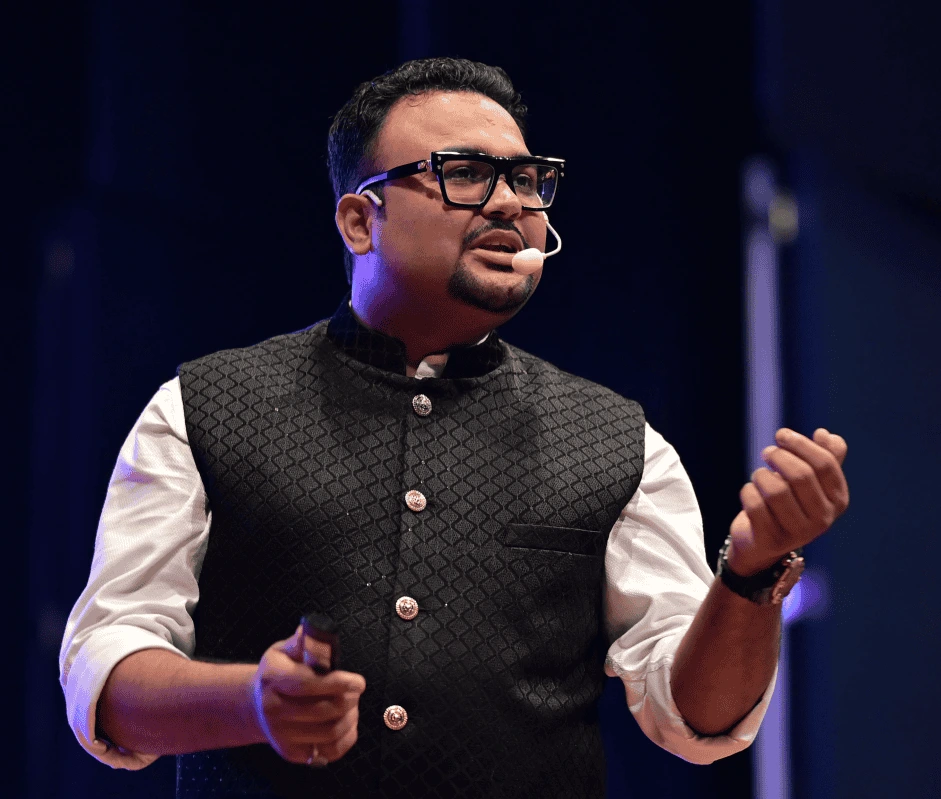
Rahul Malodia is a leading business coach in India, a Chartered Accountant, and the creator of the transformational Vyapari to CEO (V2C) program. With a mission to empower MSMEs, he has trained over 5,00,000+ entrepreneurs to systemize operations, manage working capital, and scale their businesses profitably.
Known for transforming traditional business owners into confident CEOs, Rahul delivers India’s top business coaching programs through bootcamps, workshops, and online courses. His practical strategies and deep industry insights have made him a trusted name among entrepreneurs seeking sustainable and scalable growth.
