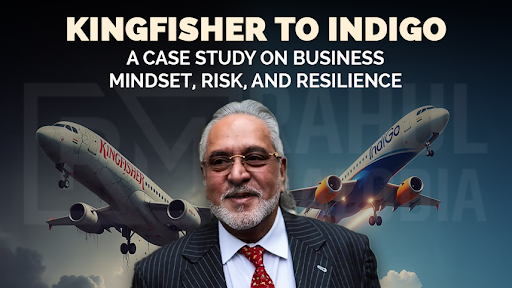
Kingfisher to Indigo: A Case Study on Business Mindset, Risk, and Resilience
In the world of business, some stories entertain us, some shock us, but a few… They teach us lessons we never forget. The story of Kingfisher and IndiGo is one such case, a gripping contrast between ambition and discipline, between risk and resilience, between image and impact.
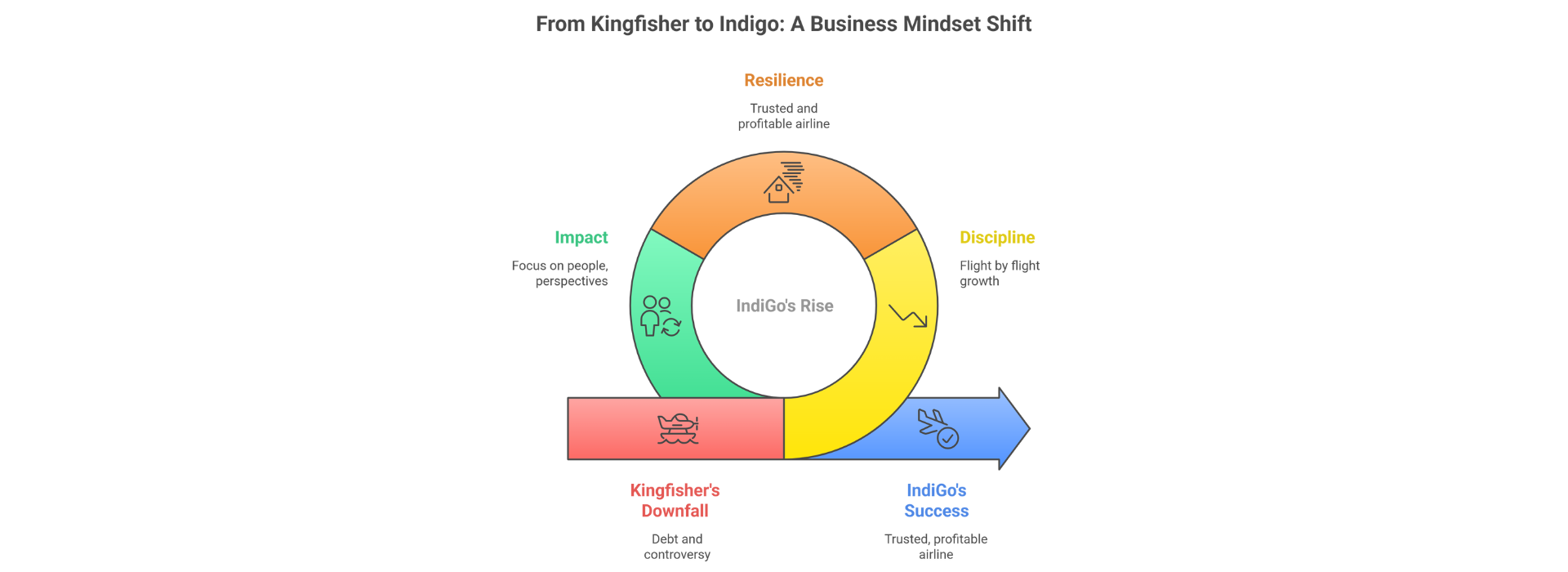
One airline dazzled the world with luxury, style, and bold moves, only to fall from the sky in a cloud of debt and controversy. The other quietly rose, flight by flight, to become India’s most trusted, most profitable airline. But this isn’t just about planes. It’s about people, perspectives, and choices.
What went wrong with Kingfisher? What did IndiGo get right? And more importantly, what can you, as an entrepreneur or business owner in India, learn from their journey?
This is more than a case study. It’s a mindset masterclass. Let’s unpack how two companies took off at the same time, but only one stayed in the air.
The Tale of Two Airlines, and the Mindset That Made All the Difference
Plenty of iconic brands have risen and faded across India’s dynamic business landscape. But when it comes to aviation, no two names spark a deeper contrast than Kingfisher and IndiGo. One began with glamour and headlines, the other with quiet consistency. One fell hard, leaving behind debt and regret. The other rose, becoming the most profitable airline in India.
Why did Kingfisher Airlines crash despite all its visibility and luxury? And how did IndiGo soar with such steady success?
This isn’t just about airlines. It’s about mindset. It’s about the difference between dreaming big recklessly and building big responsibly. And most importantly, it’s a lesson every Indian entrepreneur needs to understand.
The Rise of Kingfisher: Big Dreams, Bold Moves
In 2005, when Vijay Mallya launched Kingfisher Airlines, it didn’t just promise air travel. It promised an experience. Plush red interiors, in-flight entertainment, gourmet meals, Kingfisher wasn't an airline; it was a lifestyle.
People were captivated. The media was excited. Mallya himself became a symbol of luxury, India’s own Richard Branson. Within the first year, Kingfisher had captured over 10% of the Indian domestic market.
But there was a catch.
While Kingfisher’s brand was sky-high, its bottom line was sinking. It was burning through cash faster than it was bringing any in. Expensive aircraft, high maintenance costs, aggressive expansion, and steep marketing expenses all piled up. Despite its popularity, Kingfisher never made a profit, not even once.
By 2008, things started getting worse. Mallya bought the failing Air Deccan, hoping to expand Kingfisher’s reach to low-cost segments. But instead of turning things around, this decision added to the chaos. Operational misalignment, poor cost control, and rising debts pushed the company into deeper trouble.
And then came the crash.
The Collapse: When Flash Overrides Fundamentals
By 2012, Kingfisher had grounded its fleet. Salaries weren’t paid. Employees protested. Banks demanded repayments. Passengers were left stranded. And Vijay Mallya, once the king of good times, became a symbol of financial mismanagement.
The numbers tell a brutal story. At its height, Kingfisher Airlines was drowning in debt, crossing a staggering ₹7,000 crore. By 2012, things hit rock bottom when the DGCA officially pulled the plug on its flying license. Kingfisher had gone from market leader to market lesson.
But the real story behind Kingfisher’s downfall goes beyond just losing money. It was a failure of mindset.
Mallya focused on image, not infrastructure. He focused on growing fast but ignored stable cash flow, putting his entire business at risk. He chased glamour while ignoring governance.
And that’s where IndiGo’s story begins to shine.
The Silent Climber: How IndiGo Took Off
IndiGo entered the market around the same time, in 2006. But it did something remarkable: it kept quiet and stayed focused.
While Kingfisher dazzled, IndiGo did the dirty work. It focused on efficiency. On-time performance. Low costs. Fast turnaround. No frills. No champagne in the sky. Just reliable, affordable air travel.
In the early days, IndiGo ordered 100 Airbus A320s in one go, a bold move, but backed by careful strategy. By keeping a single aircraft type, IndiGo simplified training, maintenance, and operations. Every decision was built for scale, not just show.
Unlike Kingfisher, IndiGo never tried to be fancy. It tried to be profitable. And that mindset paid off.
Numbers Don’t Lie: IndiGo’s Winning Strategy
As of March 2024, IndiGo holds over 61% of India’s domestic market share. It operates 1,900+ daily flights and connects to 100+ destinations, including key international cities. Its parent company, InterGlobe Aviation, posted a record profit of ₹919 crore in Q3 FY24, despite rising fuel prices.
In contrast, Kingfisher was already drowning in debt within seven years of launch.
The success of IndiGo wasn’t luck. It was discipline. A deep focus on core values. A refusal to get distracted by hype. And most importantly, a leadership team that treated aviation like a business, not a party.
Mindset Matters: What Entrepreneurs Can Learn
If you’re an Indian entrepreneur reading this, there’s a bigger lesson here than just airline history.
Kingfisher and IndiGo are metaphors. They represent two kinds of entrepreneurial mindsets.
One is about chasing applause. The other is about chasing results.
Kingfisher was the classic example of style over substance. IndiGo is proof that substance creates sustainable success.
In business, flash can be fatal. Revenue without profit is meaningless. Glamour can get attention, but it rarely builds resilience.
Risk is a part of every entrepreneurial journey. But there’s a difference between calculated risk and careless ambition. Kingfisher bet big without building a base. IndiGo scaled gradually, mastering one thing before taking the next step.
And that mindset made all the difference.
The Human Side: How Employees Were Affected
Beyond numbers and market share, there were people at the center of both stories. When Kingfisher collapsed, over 3,700 employees were left jobless. Many hadn’t been paid for months. The emotional and financial trauma was immense.
On the other hand, IndiGo, while strict and disciplined, built a culture of operational excellence. It prioritized punctuality, structured systems, and consistency. The company’s staff, although working in a no-frills environment, had clarity, direction, and job security.
For any entrepreneur, understanding how your decisions ripple through your team is crucial. Business isn't just about boardrooms. It’s about the lives you touch every day.
Government, Banks & the Public Eye: Who Pays When You Fail?
One of the biggest differences between Kingfisher and IndiGo was how their actions impacted others.
When Kingfisher defaulted on its loans, it wasn’t just a private failure. Indian public sector banks, like SBI, IDBI, and PNB, were left with thousands of crores in unpaid debt. Taxpayers ultimately shouldered the burden. It led to national debate, court cases, and Vijay Mallya fleeing the country.
IndiGo, on the other hand, maintained a clean financial record. It stayed publicly accountable. Even during COVID-19, when the aviation sector suffered globally, IndiGo managed costs, communicated transparently, and adapted quickly.
Risk doesn’t just affect you, it affects the economy, your employees, your investors, and sometimes, the nation itself.
Resilience Isn’t About Recovery, It’s About Preparation
Kingfisher kept trying to recover. It rebranded, tried to restructure, and even reached out to potential investors. But it was too late. The damage had been done. The mindset was flawed from the beginning.
IndiGo, on the other hand, built resilience into its DNA. From maintenance strategies to route planning, everything was built for sustainability. It wasn’t just reacting to problems. It was always preparing for the next one.
That’s what makes a business truly resilient, not bouncing back from disaster, but avoiding it in the first place.
The Verdict: Kingfisher vs IndiGo Isn’t About Airlines, It’s About Choices
You don’t need to run an airline to take valuable lessons from this story.
Maybe you run a kirana shop. Maybe you’re building a SaaS startup. Whether you're building a D2C fashion brand or running any other business, one thing is clear, your mindset shapes your success.
Ask yourself, are you chasing headlines or healthy cash flow?
Are you building systems, or just scaling chaos?
Are you investing in resilience or banking on luck?
The truth is, India doesn’t need more Kingfishers. It needs more IndiGos. Entrepreneurs who dream big, yes, but who also build smart, stay grounded, and value long-term success over short-lived fame.
Final Thoughts: Build with Wisdom, Not Just Vision
Vijay Mallya once said, 'If you can’t afford it, don’t fly Kingfisher.' The twist? In the end, even he couldn’t afford the dream he was selling.
Meanwhile, IndiGo never tried to impress. It tried to deliver. And that’s what made all the difference.
As you build your business, remember: hype fades, but habits stick. Glamour fades, but grit lasts. And in the end, resilience is always louder than risk, even if it speaks softly.
So whether you're taking off or still on the runway, keep your mindset clear. You don’t need to show off to succeed, quiet confidence often builds the strongest brands.
You just need to fly right.
Check out the previous blog of the Kingfisher airline business case study.
- Business case study
- Market Analysis
- Business Ideas



Rahul Malodia is a leading business coach in India, a Chartered Accountant, and the creator of the transformational Vyapari to CEO (V2C) program. With a mission to empower MSMEs, he has trained over entrepreneurs to systemize operations, manage working capital, and scale their businesses profitably.
Known for transforming traditional business owners into confident CEOs, Rahul delivers India’s top business coaching programs through bootcamps, workshops, and online courses. His practical strategies and deep industry insights have made him a trusted name among entrepreneurs seeking sustainable and scalable growth.
