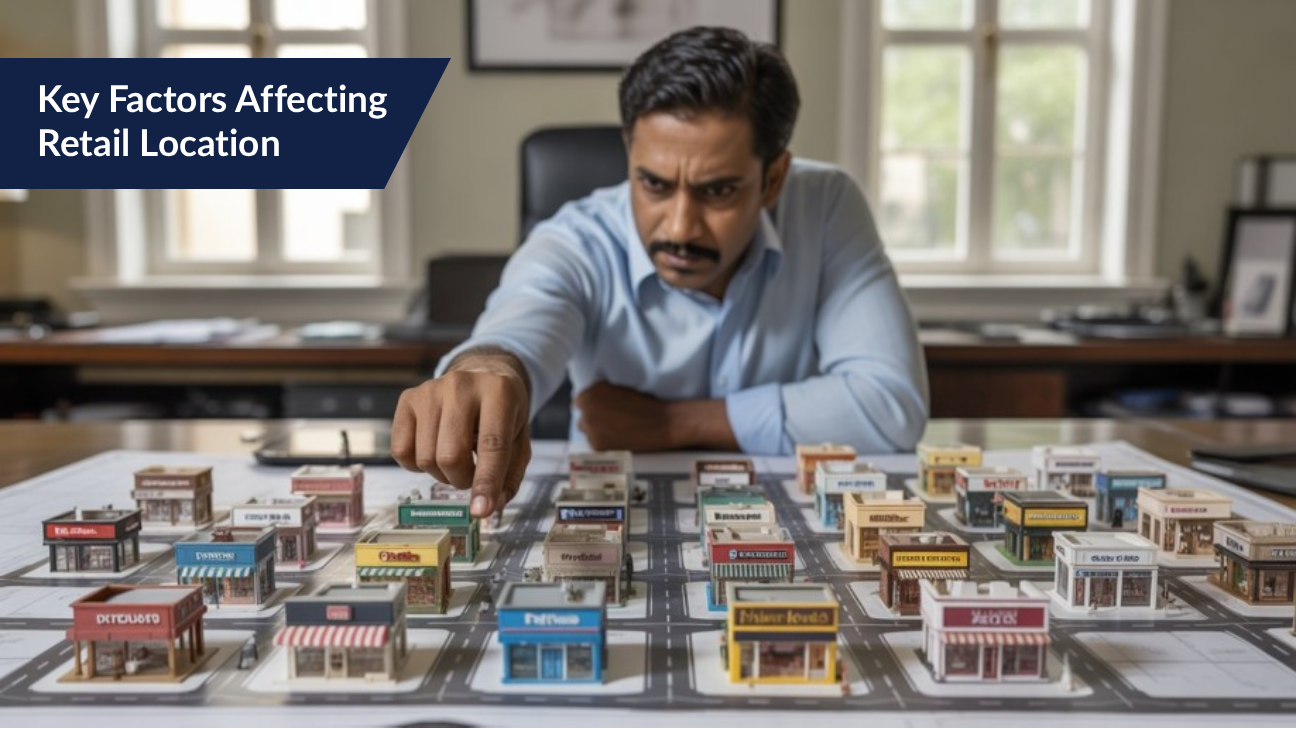
Key Factors Affecting Retail Location: Essential Insights for Indian Entrepreneurs in 2026
Imagine you're standing in the bustling streets of Jaipur, Rajasthan, watching shoppers weave through markets. You've poured your heart into building a retail business, but one wrong choice on where to set up shop could sink it all. That's the harsh reality of retail location factors. As an Indian entrepreneur, you know the stakes are high in a market growing at 10-12% annually, projected to hit $1.8 trillion by 2026. This isn't just about picking a spot, it's about understanding what drives success in retail site selection, especially in a diverse country like ours.
I've seen countless business owners in Tier II cities like Jaipur struggle because they overlooked key factors in retail location. But I've also watched others thrive by getting it right. Let's dive into this together, like we're chatting over chai, exploring the retail store location decisions that can make or break your venture.
What Are the Key Factors Affecting Retail Location?
Think about it: location isn't just an address; it's the heartbeat of your store. In India, where urban retail space is exploding with over 15 million square feet added in 2025 alone, factors affecting retail location go beyond the obvious. You need to weigh elements that align with your customers' lives.
For instance, in bustling Tier I cities like Mumbai, high foot traffic can boost sales by up to 30%, according to a 2025 KPMG report. But ignore this, and your store might sit empty. Retail location factors in 2026 demand a blend of data and intuition, ensuring your spot resonates with shoppers' daily rhythms.
How Foot Traffic Influences Retail Store Location Decisions
Foot traffic is like the pulse of a retail spot, without it, everything flatlines. In India, where pedestrian movement in high streets can reach 50,000 people daily in places like Delhi's Connaught Place, this factor tops the list in retail site selection criteria.
I've talked to store owners who chose quiet corners and regretted it. Contrast that with DMart's strategy: they target high-traffic suburban areas, leading to a 25% higher revenue per square foot compared to competitors in low-flow zones. Foot traffic importance in retail store isn't just numbers; it's about creating that magnetic pull that turns passersby into loyal customers.
The Role of Accessibility in Choosing the Best Location for a Retail Store
Getting to your store shouldn't feel like a trek. Accessibility and visibility in retail factors are crucial, especially in India's traffic-choked cities. With over 60% of urban Indians relying on public transport, as per a 2024 NITI Aayog study, easy access via roads or metro can increase visits by 40%.
Picture a store in Jaipur's MI Road, proximity to bus stops and parking draws crowds effortlessly. But compare that to remote outlets; they often see 20% lower turnout. Factors influencing retail location here remind us: if customers can't reach you easily, they'll go elsewhere.
Why Competition Affects Retail Store Location Choices
Competition isn't always a foe; sometimes, it's a friend. In retail location selection factors, analyzing the competition landscape can reveal opportunities. In India, clustered areas like Mumbai's Linking Road see sales uplift from shared traffic, with studies showing a 15-20% boost for complementary stores.
Yet, oversaturation hurts. Think of electronics hubs where too many players dilute profits, Reliance Retail avoids this by scouting under-served spots, outperforming rivals stuck in crowded zones. How competition affects retail location choice is about balance: too little, and you miss buzz; too much, and margins shrink.
Demographics and Their Impact on Retail Site Selection
Who are your customers? Demographics in retail location selection answer that. In India, with a young population where 65% are under 35, targeting millennial-heavy areas like Bengaluru's tech corridors can drive 30% more sales, per a 2025 Nielsen report.
Psychographics in retail location decisions add depth, understanding lifestyles, not just ages. For example, premium brands like FabIndia thrive in affluent neighborhoods, while budget chains like Big Bazaar excel in middle-class suburbs. Factors to consider when choosing retail store location in India must include this human element to match your offerings perfectly.
Rental Costs and Economic Factors in Retail Site Selection
Money talks in retail. Rental costs in retail site selection India vary wildly, from ₹200 per square foot in Tier III cities to ₹1,000 in prime Mumbai spots. Economic factors affecting retail location, like inflation hovering at 5% in 2026, make cost analysis non-negotiable.
I've advised entrepreneurs who bit off more than they could chew with high rents, leading to closures. Compare that to cost-savvy players like Pepperfry, who opt for affordable high-traffic edges, saving 25% on overheads while maintaining visibility. Retail store location factors like these ensure sustainability over flash.
Visibility and Its Importance in Retail Location Success Factors
Can customers spot you from afar? Visibility in retail location success factors is key, especially in India's vibrant streets. Stores with prominent signage and storefronts see 35% more walk-ins, according to a 2024 Retailers Association of India survey.
In malls versus high streets, visibility differs: malls offer internal traffic, but high streets provide street-level exposure. Brands like Starbucks choose corner spots for that edge, outshining hidden competitors. Best retail location factors like visibility turn your store into a landmark, not a hideaway.
Parking Availability as a Factor in Retail Site Selection in India
In car-crazy India, parking isn't a luxury; it's essential. With vehicle ownership rising 12% yearly, parking and accessibility for retail in India can sway decisions. A 2025 McKinsey study shows stores with ample parking enjoy 25% higher dwell times.
Jaipur's growing malls like World Trade Park prioritize this, drawing families who linger longer. Without it, frustration mounts, pushing shoppers to easier alternatives. Factors influencing retail store location in Tier I cities in India often hinge on this practical detail.
Sustainability Factors in Retail Location 2026
The world is going green, and retail follows. Sustainability and green factors in retail site selection 2026 are rising, with 40% of Indian consumers preferring eco-friendly spots, per a 2025 Deloitte report. Locations with solar setups or green certifications cut costs by 15% long-term.
Experiential retail location factors in malls with entertainment zones align here, like Phoenix Marketcity's sustainable designs. Ignoring this could alienate eco-conscious buyers, especially as regulations tighten by 2026.
Trade Area Analysis in Retail Location Strategy
What's around your store matters. The trading area in retail location strategy involves mapping catchments, areas from which customers come. In India, tools like GIS show Tier II cities like Jaipur have expanding trade areas, growing 20% with better connectivity.
Magnet stores in retail location strategy, like anchor tenants in malls, pull crowds. Reliance's JioMart uses data-driven analysis to dominate, unlike smaller players who guess and falter. Retail location strategy 2026 demands this precision.
Omnichannel Impact on Physical Retail Location Choices
Blending online and offline changes everything. Omnichannel impact on physical retail location means stores aren't just sales points, they're experience hubs. In 2026, with e-commerce at 15% of retail, physical spots in high-visibility areas complement digital, boosting overall sales by 25%, says Bain & Company.
D2C brands like Boat open pop-ups in malls for touch-and-feel, outperforming pure online rivals. Retail location for D2C brands in physical stores India thrives when locations support seamless integration.
Retail Location Trends in India 2026 for Tier II and III Cities
The action is shifting outward. Retail location trends India 2026 Tier II III cities show 30% growth in organized retail, fueled by rising incomes. Places like Jaipur see new malls adding 5 million square feet.
High street vs mall retail location India debates favor hybrids, high streets for local flavor, malls for all-weather appeal. Expansion strategies in Tier cities 2026 focus on affordability, unlike saturated metros.
Common Retail Store Location Mistakes to Avoid
We've all heard horror stories. Retail store location mistakes to avoid in India 2026 include ignoring data, leading to 40% failure rates for new outlets, per FICCI. Overlooking competition saturation or skimping on accessibility dooms many.
Location intelligence tools for retail site selection, like AI-driven GIS, help dodge these. Brands that learn from failures, like rethinking dark stores for quick commerce, adapt and win.
Data-Driven Tools for Retail Site Selection in 2026
Tech is your ally. Data-driven retail site selection tools AI GIS 2026 India analyze foot traffic and demographics in real-time. Software like SiteZeus, used by chains, predicts success with 85% accuracy.
Retail site selection software tools 2026 level the field for MSMEs, competing with giants. In Jaipur, local entrepreneurs use these to pinpoint spots, turning guesses into gains.
Factors for Retail Location in Malls vs High Street in India
Choices abound. Factors to consider for retail location in malls vs high street? Malls offer footfall security but higher rents, up 10% in 2026. High streets provide flexibility, ideal for kirana vs organized retail location challenges.
In Rajasthan, high streets in old Jaipur buzz with culture, while malls cater to modern shoppers. The best fit depends on your brand's soul.
How to Choose Retail Store Location in Tier II Cities 2026
Tier II spots, like Jaipur, are gold mines. How to choose retail store location in Tier II cities in 2026? Focus on growing demographics and lower costs, rents 50% below metros.
Factors for retail expansion in Rajasthan include connectivity boosts from new highways. Success stories here demonstrate a 20-25% ROI when aligned correctly.
In wrapping this up, remember that mastering these key factors for retail site selection isn't just a strategy, it's survival. As Rahul Malodia, a globally relevant business strategist and entrepreneur, often shares from his real-world experience, these principles simplify complex challenges into scalable frameworks. His insights apply universally, whether you're a solopreneur, a growing enterprise, or a large organization, translating across industries and geographies with timeless clarity.
- Investment Ideas
- Small Business


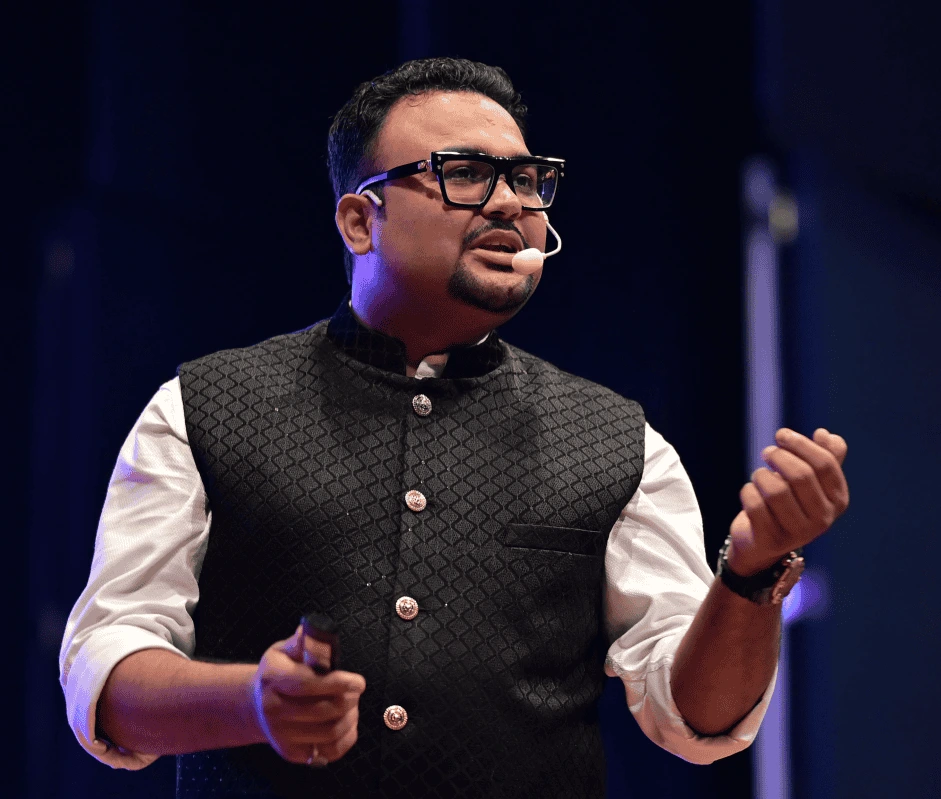
Rahul Malodia is a leading business coach in India, a Chartered Accountant, and the creator of the transformational Vyapari to CEO (V2C) program. With a mission to empower MSMEs, he has trained over 5,00,000+ entrepreneurs to systemize operations, manage working capital, and scale their businesses profitably.
Known for transforming traditional business owners into confident CEOs, Rahul delivers India’s top business coaching programs through bootcamps, workshops, and online courses. His practical strategies and deep industry insights have made him a trusted name among entrepreneurs seeking sustainable and scalable growth.
