From Bankruptcy to Breakthrough: How One Business Owner Rebuilt from Scratch
An Inspiring Real-Life Guide for Indian Entrepreneurs in 2025:
We all admire successful entrepreneurs when they’re in the spotlight, gracing magazine covers, making big deals, or trending in startup news like Shark Tank. But the real stories, the ones that truly matter, are often hidden beneath the surface. Stories not of instant success, but of sheer grit. This is one such story. It’s not about overnight riches. It’s about a fall so deep that everything was lost… except hope.
This is the story of Rakesh Jindal, a small-town businessman from Jaipur who went bankrupt in 2018, drowning in debt with barely ₹1000 in his account. But today in 2025, he owns a logistics company valued at over ₹37 crore. How did that happen? What shifted? And what can every Indian entrepreneur learn from his journey?
Let’s go deep. Because his fall, and rise, might just change how you see failure.
The Fall: When Everything Collapsed
Rakesh wasn’t reckless. He wasn’t unskilled. In fact, he was just like many MSME owners in India, running a decent business in automobile spare parts with stable monthly turnover, until demonetization hit. Sales slowed, inventory piled up, and delayed payments became a silent killer.
By mid-2018, Rakesh had taken three loans, two from NBFCs and one from a private financer at 36% annual interest. All to save his sinking business.
But hope turned into anxiety when GST was introduced. His buyers, small garages and workshops, didn’t understand digital invoices. Payments stopped altogether.
One morning, he found a ‘Notice of Possession’ on the gate. His shop was being seized for defaulting on a ₹12 lakh loan. Employees left. Vendors stopped taking his calls. And just like that, the business was gone.
The Silence After Failure: A Pain Only Entrepreneurs Understand
This part of the journey doesn’t make headlines. But it’s real.
He faced shame in his mohalla. Relatives whispered. Friends disappeared. What hurt most was the silence from his own family. Not blame. Just disappointment.
And yet, in that quiet period, something unusual happened. He started listening to business podcasts. Reading about Indian entrepreneurs who lost it all, like Kishore Biyani, once called the 'Retail King of India', who saw Future Group collapse under debt.
He realized failure was not the end. It was information. It was clear.
The Spark: One Insight That Changed Everything
While watching a YouTube video on the Vyapari to CEO journey, Rakesh came across a powerful quote by Rahul Malodia that stopped him in his tracks.
“You can either die with your first failed business, or you can learn how to run your second one smarter.”
It felt like a slap and a hug at the same time.
That evening, he wrote down everything he did wrong in his first business. Every mistake. Every emotional decision. And for the first time, he stopped blaming the government or the economy. He took responsibility.
That night wasn’t just a turning point in his story. That moment marked the beginning of his big turnaround.
The First Step Back: From Passion to Practicality
Rakesh knew he couldn’t restart in automobile parts. Trust was gone. Capital was zero. So he looked around.
He noticed a friend struggling to deliver fabric from Jaipur to Surat due to unpredictable delivery rates. That’s when an idea clicked. What if he started a micro-logistics service for small traders? No app, no tech, just a human network, reliable timing, and fixed affordable pricing.
He borrowed ₹20,000 from a cousin, not as a loan, but as investment in his dignity. He used it to rent a second-hand Bolero and made his first trip to Bhiwandi.
No one believed it would work. But by the third month, he was breaking even.
The Rebuild: Scaling with Street Smarts, Not Just Spreadsheets
Rakesh didn’t jump into expansion. He focused only on what worked, consistent delivery, transparency in communication, and human trust. He used WhatsApp Business to send live delivery updates, added status messages on routes, and never missed a call.
By the end of 2019, his micro-logistics service was doing ₹2.4 lakh monthly revenue, small, but steady.
Then came COVID.
Instead of panicking, Rakesh did something bold. He reached out to local kirana stores and said:
"We’ll deliver anything your customer wants, safely, within 3 hours in Jaipur. No minimum order."
That shift changed everything.
By mid-2021, his team of 4 drivers and 2 dispatch managers was handling 350+ deliveries a week.
The Turning Point: Digital India Meets Desi Hustle
The real acceleration came when he learned about ONDC (Open Network for Digital Commerce) in 2022. He joined an online webinar hosted by DPIIT and understood how small businesses could plug into a national e-commerce backbone, without needing to build their own tech.
He registered, integrated basic APIs with help from a freelancer, and expanded beyond Jaipur.
By 2023, Rakesh’s company “Raahi Logistics” was servicing 7 cities. With ONDC’s support, his B2B connections grew. Vendors from Tamil Nadu started sending bulk orders through him for Gujarat markets.
From Local Businessman to Regional Brand
In 2024, something unimaginable happened.
A Pune-based textile exporter offered to acquire a 49% stake in Raahi Logistics at a ₹19 crore valuation.
From bankruptcy to crores in just 6 years.
He said no.
Not because of ego. But because the journey taught him that ownership is sacred when it’s earned through suffering. Today, his firm employs 42 people. His goal? ₹100 crore turnover by 2027 and building a delivery ecosystem for MSMEs that Amazon and Flipkart ignore.
What Every Indian Entrepreneur Can Learn From Rakesh
This isn’t just one man’s story. It’s the story of thousands of Indian entrepreneurs who fall hard but rise stronger.
According to RBI data, over 2.3 lakh small businesses shut down between 2019 and 2022. But the same period also saw a 73% rise in new MSME registrations under Udyam.
The point is: failure is not your full stop. It’s your feedback.
Like Ankur Warikoo, who lost lakhs on his first startup. Like Narayana Murthy, who was fired from his first job in Paris. Like Rakesh, who was left with nothing but his own belief.
The breakthrough always starts where the bankruptcy ends.
Conclusion: You’re Not Done Yet
If you’re reading this and you’ve tasted failure recently, let this sink in, you’re not alone. More importantly, you’re not finished.
Businesses fail. Cash dries up. People leave. But your ability to try again, smarter this time, is where real entrepreneurship begins.
Maybe your next move won’t look like a Silicon Valley startup. Maybe it’ll be something small, grounded, and real. That’s okay.
Because if Rakesh Jindal can rise from ₹1000 in his bank account to building a ₹37 crore brand, with no IIT degree, no MBA, no godfather, so can you.
You don’t need to be perfect.
You just need to start again. But this time, with your eyes open.
- Market Analysis
- Entrepreneurship


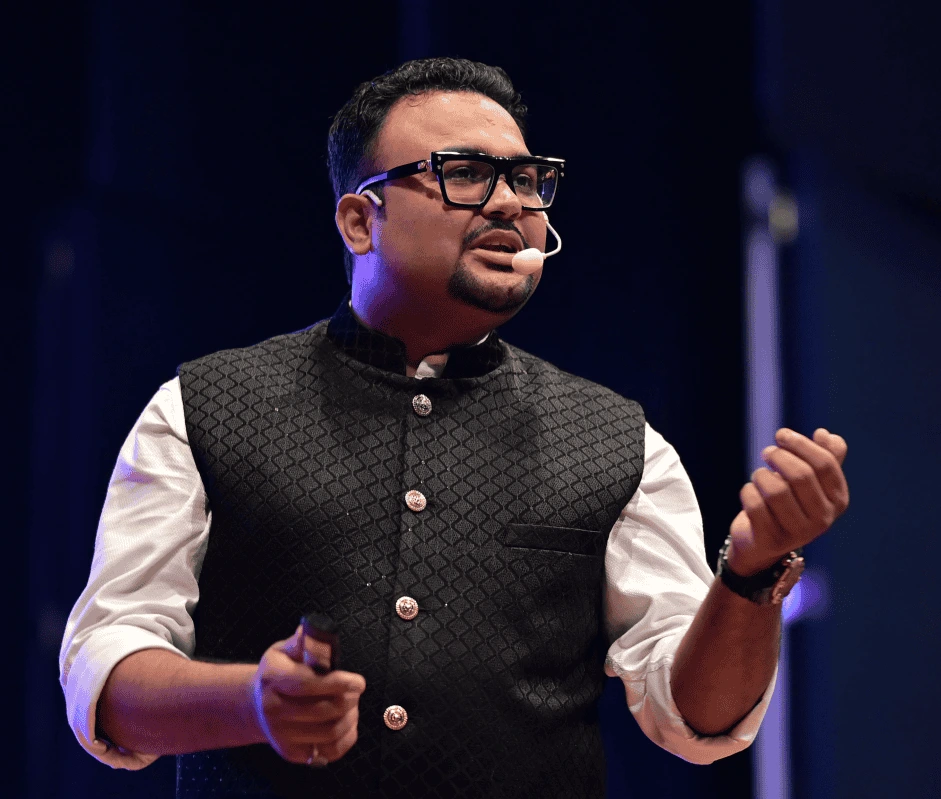
Rahul Malodia is a leading business coach in India, a Chartered Accountant, and the creator of the transformational Vyapari to CEO (V2C) program. With a mission to empower MSMEs, he has trained over 5,00,000+ entrepreneurs to systemize operations, manage working capital, and scale their businesses profitably.
Known for transforming traditional business owners into confident CEOs, Rahul delivers India’s top business coaching programs through bootcamps, workshops, and online courses. His practical strategies and deep industry insights have made him a trusted name among entrepreneurs seeking sustainable and scalable growth.
