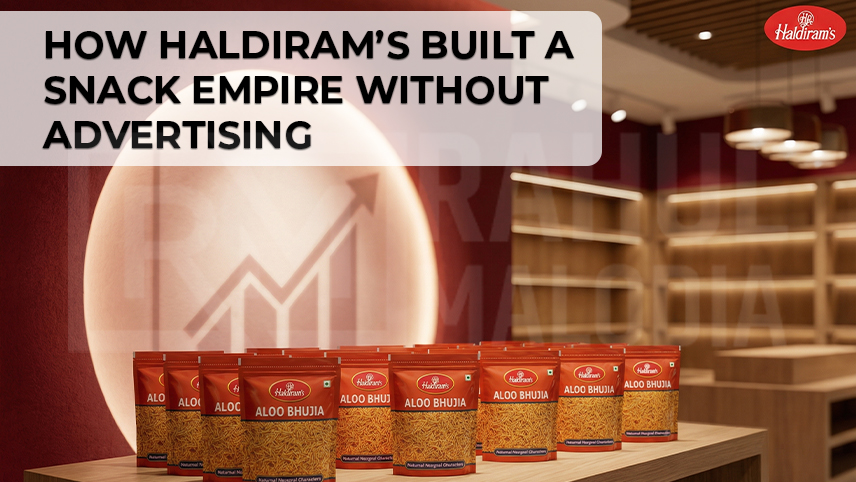
How Haldiram’s Built a Snack Empire Without Advertising
There are very few Indian brands that have become a part of daily life without shouting for attention. Haldiram’s is one of them. When you walk into any Indian home, you’ll find at least one Haldiram’s snack packet quietly sitting on a kitchen shelf. It never had a loud jingle. It never had a flashy TV commercial. Yet it became a household name and a global snack giant that sells more than many Indian brands that spend crores on ads. The story of how Haldiram’s built this empire without traditional advertising is something every Indian entrepreneur needs to understand. Because it proves one important truth: if your product becomes a habit, you don’t need noise; you only need trust.
A Small Bikaner Shop With a Big Problem
The story starts in 1937 in Bikaner. A young boy named Ganga Bishan Agarwal, who everyone fondly called Haldiram, was trying to sell bhujia in his family shop. There were hundreds of bhujia sellers in Bikaner at that time. Competition was so high that even shouting would not bring customers. But Haldiram felt something simple. He believed taste could create loyalty. And loyalty could create a brand stronger than any advertisement. So he worked on a recipe that was thinner, crispier, and lighter than anything available in the market. People did not know his name, but they knew his taste. And this is the first important lesson: good products create repeat customers faster than any marketing trick.
The Secret Ingredient Was Not Masala. It Was Consistency.
Most small food businesses lose customers because their quality keeps changing. One day the taste is perfect, the next day something feels off. But Haldiram’s has made consistency its core identity. Every batch of bhujia tasted the same. Every packet carried the same crispness. And because Indians value trust in food more than anything, consistency became their silent advertisement. This simple commitment helped the brand grow from a small shop in Bikaner to new markets in Kolkata, Nagpur, and later Delhi. Today, Haldiram’s produces more than 250 products, but every product follows the same rule: taste should never change. That is how trust compounds.
When Other Brands Bought Ads, Haldiram’s Bought Better Machines
During the 1980s and 1990s, when Indian brands were rushing to TV to promote noodles, soaps, and snacks, Haldiram’s used its money differently. Instead of spending on billboards, it invested in technology. The company bought automatic production machines from Japan and Europe. The reason was simple. Machines do not get tired. They do not change taste. They maintain hygiene. They increase speed. This helped Haldiram’s maintain uniform quality, reduce wastage, and handle massive demand. While other companies paid ad agencies to build stories, Haldiram’s used technology to build trust. This hidden strategy became one of the biggest reasons for its long-term growth.
Read More : How Zudio Became India’s Fast Fashion Leader
Word of Mouth Became More Powerful Than Any TV Commercial
There is a famous saying in marketing: people trust people more than ads. Haldiram’s understood this even before marketing textbooks wrote about it. Their customers became their brand ambassadors. People told their relatives and friends about the taste. Travellers packed Haldiram’s snacks as gifts when visiting other cities. NRIs took Haldiram’s packets abroad for friends and family. Without spending a single rupee on celebrity endorsements, the brand reached Indian homes across the world. This natural, honest word-of-mouth advertising helped Haldiram’s enter the global market much faster than brands that spent crores on promotions.
The Retail Shelf Was Their Billboard
Haldiram’s knew something many entrepreneurs ignore. If your packaging is attractive and trustworthy, the shop shelf becomes your advertising space. In the 1990s, most Indian snack brands used thin packets that often leaked oil and lost crunch. Haldiram’s invested in premium packaging that looked clean, fresh, and safe. When a customer picked up a packet in a store, the brand did not need a jingle or a billboard. The shiny packet did the job. Supermarkets became their stage. Aisles became their banners. And the customer’s hand became the marketing funnel.
Expansion Through Restaurants, Not Advertisements
In 1990, Haldiram’s did something completely unexpected. They opened restaurants in Delhi. This move was not only about selling meals. It was a smart branding strategy. When people walked into a clean, organised, modern Haldiram’s restaurant, they felt the brand was trustworthy. When they ate chole bhature or raj kachori from Haldiram’s, they automatically trusted the packed bhujia. These restaurants worked like real-time experience centres. Without running any campaign, they increased brand love and product demand. Today Haldiram’s restaurants serve lakhs of customers every day, strengthening the brand silently.
Understanding Indian Tastes Better Than Competitors
Haldiram’s grew because it never forgot one truth: India is not one taste. It is many. West Bengal loves sweets. Rajasthan loves spice. Maharashtra loves farsan. South India prefers lighter snacks. Instead of selling one product everywhere, Haldiram’s created local flavors that matched regional preferences. So when it entered Kolkata, it offered rosogolla. When it entered Nagpur, it offered orange burfi. When it entered Delhi, it added more spicy and chatpata products. This ability to understand Indian behaviour helped the brand grow faster than competitors who tried to sell the same taste across India.
A Global Empire Built on Indian Taste
Today Haldiram’s is valued at over ₹30,000 crore, and some reports say it sells more snacks worldwide than global giants like PepsiCo’s Lay’s. According to industry data, Haldiram’s holds almost 45 percent market share in the Indian ethnic snacks category. It exports to more than 80 countries and runs large factories in Nagpur, Noida, Gurgaon, and Kolkata. And all this happened without spending big on mainstream advertising. Instead, the brand invested in quality, hygiene, distribution, packaging, and customer trust. International Indian stores treat Haldiram’s as a premium and reliable brand, proving that taste speaks louder than marketing.
The Real Lesson for Indian Entrepreneurs
When you look at Haldiram’s journey, you realise something important. Advertising can give you attention, but quality gives you survival. A product that people love and talk about can grow faster than a brand that spends on ads but fails to build trust. Many businesses chase followers and publicity. But Haldiram’s reminds us that the quiet brands often become the strongest. When customers start promoting your brand to their family and friends, your cost of marketing becomes zero, and your scale becomes unlimited.
Conclusion: The Empire Built on Silence
Haldiram’s built a snack empire not by speaking loudly, but by listening carefully. It listened to what customers wanted. It listened to what families trusted. It listened to what India loved to eat. And once it understood that, it delivered the same taste every single time. This is why the brand needs no advertising even today. Its product is its ad. Its taste is its story. Its customers are its voice. And this voice is strong enough to build an empire that continues to grow without a single jingle.
If you want more blogs like this, just tell me the next topic!
- BusinessSuccess
- BrandBuilding
- focus on money



Rahul Malodia is a leading business coach in India, a Chartered Accountant, and the creator of the transformational Vyapari to CEO (V2C) program. With a mission to empower MSMEs, he has trained over 5,00,000+ entrepreneurs to systemize operations, manage working capital, and scale their businesses profitably.
Known for transforming traditional business owners into confident CEOs, Rahul delivers India’s top business coaching programs through bootcamps, workshops, and online courses. His practical strategies and deep industry insights have made him a trusted name among entrepreneurs seeking sustainable and scalable growth.
