
From ₹1 Lakh to ₹100 Crore: A Real Case Study of Indian Family Business Transformation
If you grew up in India, chances are you’ve seen a family business around you. It might have been your neighborhood kirana shop, a textile trader, or even a small factory. Most of these businesses start with humble beginnings, often with just a few thousand rupees, huge sacrifices, and dreams bigger than their bank accounts.
But here’s the truth not many talk about: while thousands of family businesses start, only a handful grow into enterprises worth crores. The journey from ₹1 lakh to ₹100 crore is not just about money, it’s about mindset, resilience, and the ability to reinvent.
This blog takes you inside a real transformation story of an Indian family business. A business that began with only ₹1 lakh of capital and scaled into a ₹100-crore empire. More importantly, it shows you how ordinary people, with extraordinary persistence, managed to achieve the impossible.
A Modest Start with Just ₹1 Lakh
The story begins in the bustling city of Surat, Gujarat, in the late 1990s. A small textile trader named Rajeshbhai started his journey with just ₹1 lakh in savings. For most people, this would have been enough to buy security, maybe even land. But for Rajeshbhai, it was the seed capital for a dream.
Surat has long been called the “Manchester of India” for its thriving textile industry. But while big mills dominated the market, smaller traders faced cutthroat competition. Rajeshbhai decided to enter this space, not with the best resources, but with grit and a belief that customer trust mattered more than anything.
He started with a rented 200-square-foot shop, where he sold sarees sourced from manufacturers. His only marketing tool? Word of mouth and his ability to build relationships. Many dismissed his dream as too small. After all, how far could a ₹1 lakh business go in a market dominated by giants?
The First Struggles No One Talks About
For the first few years, the business barely survived. Margins were razor-thin. Customers bargained hard, suppliers delayed deliveries, and cash flow was a constant headache.
Most small business owners in India will relate to this stage. The challenge is not about selling products, it’s about staying afloat. Rajeshbhai often borrowed money from relatives to pay suppliers. His wife handled the household expenses with extreme discipline, sometimes skipping personal needs so that every rupee could be reinvested into the business.
But here’s where Rajeshbhai did something different. While most traders focused only on selling, he focused on listening. He asked every customer what they wanted, what designs they preferred, and why they chose one saree over another. This obsession with customer insights would later become the foundation of his empire.
The Turning Point: Thinking Beyond Trading
By the early 2000s, something clicked. Rajeshbhai realized that he could not grow big by being just a middleman. His margins were too small, and competition was eating into profits. That’s when he took the boldest risk of his life, he decided to launch his own line of sarees.
This move required capital he didn’t have. Banks refused him loans, as is the case with many small entrepreneurs in India. That’s when schemes like the Credit Guarantee Fund Trust for Micro and Small Enterprises (CGTMSE) came as a blessing. He secured a collateral-free loan of ₹10 lakh, a big amount for him at the time.
Instead of opening another shop, he invested in design and manufacturing. He hired two designers, set up a small unit, and began producing sarees under his own label. Suddenly, he was no longer just a trader. He was building a brand.
Building a Brand in a Crowded Market
Anyone familiar with the Indian textile market knows how difficult branding can be. Thousands of businesses sell similar products. But Rajeshbhai had learned something powerful from his early days, customers wanted more than just a saree, they wanted trust.
He launched his label with a promise: consistent quality, transparent pricing, and timely delivery. Slowly, retailers from neighboring cities began stocking his sarees. His designs began to stand out, and customers started asking for his brand by name.
By 2010, his business had scaled to ₹25 crore in annual turnover. What started as a ₹1 lakh dream was now beginning to look like a serious enterprise. But this was only the beginning.
The Next Generation Joins the Business
No family business story in India is complete without the next generation stepping in. Around the year 2012, Aarav, son of Rajeshbhai, returned home from his MBA studies in Mumbai. He had grown up watching his father struggle but also admired his persistence.
Unlike his father, Aarav had a different outlook. He believed the future was not just in wholesale trading but also in reaching customers directly. Inspired by the rise of e-commerce, he convinced his father to experiment with online platforms like Flipkart and Amazon.
This was a turning point. Where most conventional textile traders hesitated to adopt technology, Aarav welcomed it. The family launched their saree brand online, and within months, orders began pouring in from cities where they had no physical presence.
The combination of Rajeshbhai’s customer-centric mindset and Aarav’s digital-first approach created magic. The organization had achieved revenues of over ₹50 crore by the year 2015.

Crossing the ₹100 Crore Mark
Scaling from ₹50 crore to ₹100 crore required a completely different strategy. The family expanded into lehengas and ethnic wear, diversified distribution channels, and set up a professional management team.
They also invested heavily in marketing. Instead of relying only on word of mouth, they ran digital campaigns showcasing their designs. They collaborated with influencers on Instagram and tied up with fashion bloggers. Slowly, their brand became aspirational.
In 2019, they opened their first exclusive retail store in Surat, followed by outlets in Ahmedabad and Jaipur. Each store was designed not just to sell but to give customers an experience, something rarely seen in traditional family-run businesses.
In 2021, the company proudly revealed that its annual revenue had surpassed ₹100 crore. What had started with just ₹1 lakh was now a recognized name in the Indian fashion industry.
Lessons for Every Indian Entrepreneur
This transformation story is not just about one family in Surat. It represents what’s possible for thousands of Indian entrepreneurs running small family businesses today.
The key lessons are clear. First, focus on customer trust, it’s more powerful than any marketing campaign. Second, don’t be afraid to reinvent. Rajeshbhai’s decision to move from trading to manufacturing changed everything. Third, embrace the new without abandoning the old. Aarav’s entry into e-commerce showed how tradition and modernity can co-exist.
It’s also important to note how government schemes like CGTMSE and platforms like Amazon helped bridge the gap between small businesses and large-scale opportunities. A large number of family businesses don’t fail due to lack of talent, but because they resist adapting to change.
Why Most Family Businesses Struggle
For every success story like Rajeshbhai’s, there are dozens of family businesses that stagnate. Studies highlight that close to 70% of Indian family enterprises struggle to continue past the second generation. The reasons are common, lack of professional management, resistance to new ideas, and conflicts within the family.
The difference lies in mindset. Rajeshbhai welcomed his son’s new ideas instead of dismissing them. He treated the business as something larger than himself, allowing it to evolve. This is the biggest lesson, if you want your family business to reach ₹100 crore, you need to think beyond your own generation.
The Road Ahead
Today, the Surat-based company continues to grow. They are exploring exports to the Middle East, where demand for Indian ethnic wear is booming. They are also investing in sustainable fabrics, aligning with global trends.
But the family never forgets where it started. Rajeshbhai still visits the original 200-square-foot shop every Diwali to light a diya. For him, it’s a reminder that even empires are built brick by brick, rupee by rupee.
Final Thoughts
From ₹1 lakh to ₹100 crore is not just a headline. It is proof that Indian family businesses have the potential to scale globally if they are willing to learn, adapt, and dream beyond limits.
If you are an entrepreneur reading this, maybe your story is still in its early chapters. Maybe you are struggling with cash flow, or perhaps you feel stuck in a crowded market. Remember Rajeshbhai’s journey. It’s not luck that drives growth, but persistence, the ability to reinvent, and the courage to embrace both tradition and innovation.
And who knows? Ten years from now, your business could be the next big case study.
- Business Case study
- focus on money
- BusinessGrowth


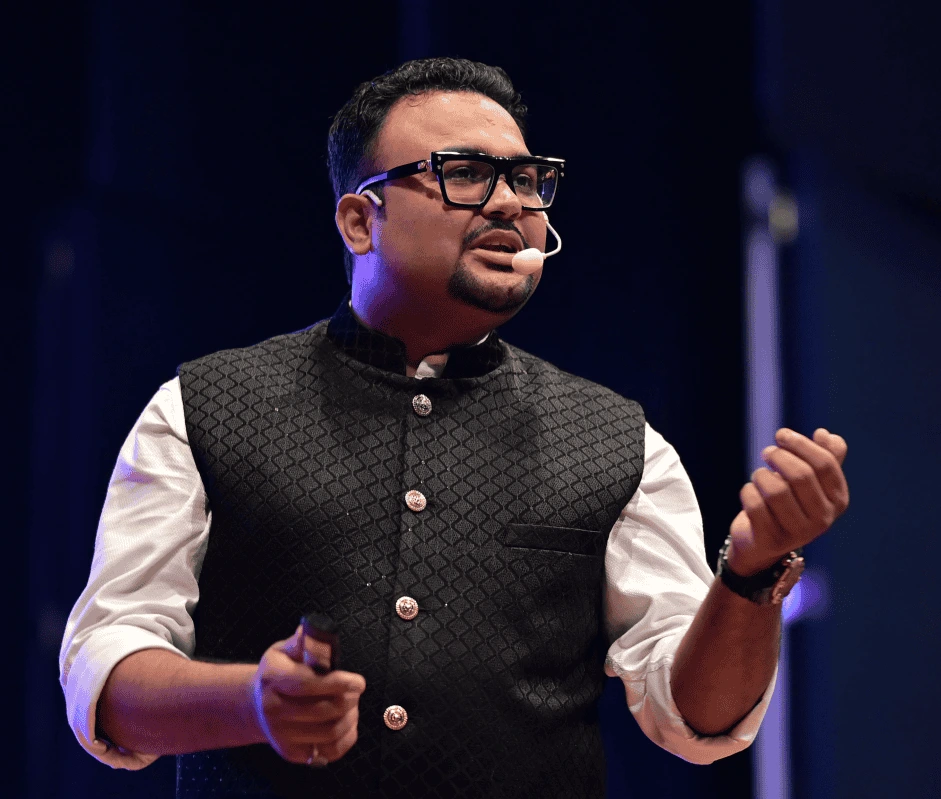
Rahul Malodia is a leading business coach in India, a Chartered Accountant, and the creator of the transformational Vyapari to CEO (V2C) program. With a mission to empower MSMEs, he has trained over entrepreneurs to systemize operations, manage working capital, and scale their businesses profitably.
Known for transforming traditional business owners into confident CEOs, Rahul delivers India’s top business coaching programs through bootcamps, workshops, and online courses. His practical strategies and deep industry insights have made him a trusted name among entrepreneurs seeking sustainable and scalable growth.
