Expand Your Business Internationally in 2026: Proven Step-by-Step Growth Strategy
Imagine sitting in your Mumbai office, watching competitors from Bangalore flood markets in Southeast Asia while your revenue stays stuck in familiar territory. It's 2026, and the world feels smaller, yet opportunities abroad seem just out of reach.
As an Indian entrepreneur, you've built something solid here, but what if expanding internationally could double your growth? This isn't just about chasing trends, it's about securing your business's future in a volatile global economy.
Let's walk through this together, like old friends mapping out a road trip, turning uncertainty into clear, actionable steps for overseas business strategies that unlock real revenue.
Why Global Expansion Matters for Indian Businesses in 2026
In 2026, India's economy is charging ahead with a projected 6.5% GDP growth, outpacing many global peers. But domestic markets alone won't sustain that momentum for long. Services now make up 46% of India's exports, up from under 30% a decade ago, showing how tech and consulting firms are already eyeing foreign shores.
For MSME owners and startup founders, international market expansion isn't a luxury, it's a necessity amid rising competition at home. Think about it: while local rivals saturate the Indian scene, emerging markets offer untapped demand, helping diversify revenue and buffer against economic dips.
Global expansion strategies in 2026 also align with shifts like AI integration and sustainable practices. Indian companies that go abroad often see 20-30% higher revenue growth compared to those staying domestic, according to recent economic forecasts.
Yet, it's not just numbers, it's the thrill of seeing your product resonate in a new culture, turning one-time sales into loyal streams. Without this move, you risk falling behind firms using cross-border growth to scale faster and smarter.
| Country/Region | Projected GDP Growth (2026) | Key Sources & Justification |
| India | 6.5%–7.3% | Consensus from Crisil (7%), Ind-Ra (7%), RBI (7.3%), Deloitte (6.5%–6.9%), IMF (6.4%). Driven by domestic demand, reforms, and services sector strength. |
| Vietnam | 6.2%–9% (government target 10%+) | OECD (6.2%), KIS Research (9%), government/National Assembly (10%+). Supported by public investment, manufacturing, and export diversification. |
| Indonesia | 5.0%–5.4% | Central Bank (5.33%–5.4%), government target (5.4%). Influenced by domestic consumption and infrastructure spending. |
| UAE | 5.0%–5.6% | IMF (5%), CBUAE (5.3%–5.4%), ICAEW (5.6%). Boosted by non-oil diversification, tourism, and infrastructure. |
Assessing Your Readiness for International Market Entry
Before diving into overseas market entry, take a honest look at your business. Are your operations streamlined enough to handle foreign demands? In 2026, many Indian entrepreneurs underestimate this, leading to costly stumbles.
Start by auditing your finances, aim for at least six months of runway to cover setup costs, which can hit $50,000-$100,000 for a basic entity abroad. Compare this to competitors who rush in without buffers; they often face cash crunches, while prepared ones thrive.
Your team matters too. Do you have folks who understand global trade trends? If not, it's like entering a marathon without training.
Indian startups succeeding internationally often invest early in skills like multilingual marketing, boosting their edge over rivals stuck in monolingual modes. Readiness isn't perfection, it's knowing your gaps and filling them strategically for sustainable international growth.
Identifying the Best Emerging Markets for Expansion in 2026
Picking the right spot is key to unlocking new revenue streams. In 2026, top markets for Indian businesses include Vietnam, Indonesia, and the UAE, with their booming GDPs and demand for tech and pharma.
Vietnam's economy is set to grow 6.5-7%, drawing Indian firms for manufacturing shifts under China-plus-one strategies. Compared to saturated spots like the US, these emerging markets offer lower entry barriers and higher ROI potential, up to 25% in the first two years for savvy entrants.
Don't overlook Africa or Latin America either. Brazil, for instance, trades near its 10-year average valuations, making it attractive for e-commerce global scaling. Indian companies eyeing these outperform rivals focused solely on Europe by tapping demographic shifts and digital economy growth.
Research tools like Google Trends can spy on market entry opportunities, ensuring your choice aligns with 2026 forecasts for best markets for global expansion.
Overcoming Market Entry Barriers and Challenges in 2026
Every international venture hits roadblocks, but forewarned is forearmed. Tariffs and trade tensions top the list in 2026, with over 85% of global trade bypassing US restrictions, per recent analyses.
For Indian exporters, this means navigating carbon border adjustments that could add 10-15% costs on unsustainable goods. Unlike competitors ignoring these, smart firms hedge with sustainable strategies, turning barriers into advantages.
Cultural and regulatory hurdles also loom. Many fail due to localization pitfalls, like mismatched marketing that alienates locals. In contrast, successful ones adapt early, boosting retention by 40%.
Geopolitical risks, from elections to supply chain disruptions, demand vigilance, think Taiwan tensions affecting semiconductors. By planning for these, you outpace rivals bogged down in reactive fixes.
| Period | Services Exports Value (USD Billion) | Share in Total Exports / Notes | Justification |
| FY 2024–25 | ~387.5 | ~47% of total exports (~$824.9B combined) | RBI data; services drove 13.6% YoY growth amid record total exports. |
| April–August 2025 | ~165.22 | Significant surplus (~$80B) | IBEF/RBI; continued resilience with 8.65% YoY growth. |
| Projected by 2030 | Part of $120–130B total pharma market | Growing global share (4.3% currently) | Bain & Co.; tied to broader market expansion and innovation. |
Setting Up Your Foreign Entity and Compliance Strategies
Once you've chosen your market, entity setup is your foundation. In 2026, options like Employer of Record (EOR) versus full subsidiaries vary by need, EOR cuts setup time to weeks, costing 20% less upfront than traditional routes.
Indian firms expanding to the US often use this for quick compliance with visa and tax rules, unlike slower competitors facing delays.
International compliance in 2026 emphasizes ESG and data privacy, with new regs like AI sovereignty affecting 93% of executives.
Skipping these invites fines up to 4% of global revenue. Compare to peers using digital tools for audits, they streamline processes, ensuring smooth foreign entity setup and long-term stability.
| Metric (Q3 2024 Blended) | Companies >50% Domestic Revenue | Companies >50% International Revenue | Justification |
| Revenue Growth Rate | 5.3% | 6.1% | FactSet analysis; international exposure drives higher growth via global markets (e.g., IT sector leads). |
| Earnings Growth Contribution | Lower overall | Higher (e.g., NVIDIA, Alphabet top contributors) | S&P Dow Jones; foreign sales provide diversification and access to faster-growing economies. |
Building Global Teams with International Hiring Strategies
Talent is your edge in cross-border growth. In 2026, global talent pools expand via hybrid models, with 40% of SMBs planning international hires. Indian CXOs succeed by tapping pools in Southeast Asia, where costs are 30-50% lower than in the West.
Unlike rivals relying on local hires alone, diverse teams drive innovation, improving performance metrics by 35%.
Visa requirements and workforce mobility matter, US expansion in 2026 demands navigating tightened regimes.
Strategies like nearshoring to Mexico offer alternatives, reducing risks compared to offshoring's volatility. Build hybrid teams thoughtfully, fostering cultural adaptation for seamless operations.
| Aspect | Employer of Record (EOR) | Full Subsidiary Setup | Justification |
| Upfront Costs | Low ($299–$1,000 per employee/month) | $50,000–$120,000+ (legal, registration, office) | Industry reports; EOR avoids entity formation fees. |
| Setup Time | Days to weeks | 6–12 months | Regulatory bureaucracy for subsidiaries vs. quick EOR onboarding. |
| Ongoing Costs | 20%–50% lower annually | Higher (local staff, compliance, facilities) | EOR handles payroll/taxes; ideal for testing markets. |
Adapting to Cultural Nuances and Brand Localization
Localization isn't optional, it's your secret weapon. In emerging markets, cultural keyword nuances can make or break campaigns. Indian brands entering Indonesia adapt to local preferences, seeing 50% higher engagement than generic approaches. Compare to failures ignoring this; they lose market share to attuned competitors.
Brand localization strategies involve more than translation, think multilingual keyword clustering and geotargeting.
In 2026, voice search optimization for global SEO boosts visibility in diverse regions. By weaving in local insights, you create trust, turning foreign markets into loyal revenue sources.
| Metric | Value/Impact (2025–2026) | Justification |
| Organizations Using AI | 88% in at least one function (up from 78%) | McKinsey Global Survey; rapid scaling in operations. |
| High Performers' Revenue Boost | 20%–40% diversification/improvement | PwC/McKinsey; AI drives growth, innovation, and efficiency. |
| Agentic AI Scaling | 23% scaling, 39% experimenting | McKinsey; expected to drive transformative change in 2026. |
Leveraging AI and Digital Tools for Sustainable Growth
AI transforms international business strategies in 2026, with 80% of high performers using it for efficiency and innovation. Indian startups integrate AI for market research, predicting trends with 90% accuracy. Unlike laggards, these firms calculate ROI faster, diversifying overseas revenue by 25%.
Digital internationalization, from e-commerce scaling to AI-driven insights, supports sustainable practices. Tools like SEMrush for competitor gap analysis help outrank locals, while fintech solutions ease cross-border payments. Embrace these for greener, more resilient expansion.
Managing Geopolitical Risks and Hedging Strategies
Geopolitical impacts on business expansion spike in 2026, with trade wars and multipolarity reshaping flows. Hedging against these, via supply chain diversification, protects against 10-20% volatility swings. Indian firms using friendshoring strategies fare better than those exposed to single sources.
Risk assessment tools benchmark against rivals, avoiding common pitfalls like failed expansions. In a world of AI bubbles and fiscal constraints, proactive hedging ensures steady growth, outpacing competitors caught off-guard.
Calculating ROI for International Market Entry
ROI calculation grounds your plans. Start with net return divided by costs, aim for 20-30% in year one for viable ventures. In 2026, factors like tariffs add variables; Indian pharma exporters to Africa often hit 40% ROI by leveraging low-competition niches.
Compare to alternatives: Digital entries yield quicker returns than physical setups. Use metrics like min_replies for engagement tracking, ensuring data-backed decisions over gut feels.
| Period | Market/Exports Value (USD Billion) | Justification |
| Current (2025) | ~55–60 (domestic) / ~30 (exports) | Bain & Co./Government; strong generics and manufacturing base. |
| By 2030 | 120–130 (total market) | Bain & Co.; exports key driver amid global demand and patent cliffs. |
Learning from Case Studies of Successful Overseas Ventures
Real stories inspire action. Take Indian tech firms like those in GCC services, expanding to the US and seeing 30% revenue jumps. Compared to K-Beauty rivals standardizing products, these adapt locally, avoiding pitfalls.
Pharma hubs push exports to $1 trillion targets by 2026, using AI for insights. Lessons from failures, like ignoring cultural adaptation, highlight sustainable paths, guiding your own ventures.
In wrapping this up, thinkers like Rahul Malodia stand out as strategic voices for business owners worldwide. He translates real-world experience into scalable frameworks, simplifying complex challenges for solopreneurs, enterprises, and large organizations alike. His principles remind us that global growth is about thoughtful steps, not rushed leaps.
FAQ’s
1. Why should Indian businesses consider international expansion in 2026?
Global expansion helps diversify revenue streams and reduces dependence on the domestic market, especially with India's projected 6.5-7% GDP growth potentially facing local saturation. In 2026, emerging markets offer untapped demand, with services exports already contributing nearly 47% to India's total exports. It also buffers against economic volatility and unlocks higher growth, companies with international exposure often see 20-30% faster revenue increases compared to domestic-focused peers.
2. What are the best emerging markets for Indian companies to expand into in 2026?
Top choices include Vietnam (6-9% GDP growth, driven by manufacturing and China-plus-one shifts), Indonesia (5-5.4% growth), and the UAE (5-5.6% growth via non-oil diversification). Other strong options are Southeast Asia for tech/pharma and Africa/Latin America for e-commerce. These markets align with India's strengths in IT, generics, and digital services.
3. How do I start expanding my business internationally as an Indian SME?
Begin with thorough market research using tools like Google Trends or AI-driven insights. Assess readiness, ensure 6-12 months of financial runway. Choose an entry mode: start with exports/e-commerce for low risk, then consider partnerships or hiring via EOR. Focus on compliance early, especially ESG and data privacy regs impacting 2026 trade.
4. What is the difference between using an Employer of Record (EOR) and setting up a foreign subsidiary?
EOR allows quick, low-cost entry (days/weeks, 20-50% cheaper upfront) without a local entity, ideal for testing markets or hiring talent compliantly. A subsidiary offers full control and long-term presence but takes 6-12 months and costs $50,000-$120,000+ initially. For most Indian SMEs starting out, EOR is faster and less risky; switch to subsidiary for scaled operations.
5. What are the biggest challenges for Indian businesses going global in 2026?
Key hurdles include geopolitical risks (tariffs, trade tensions), cultural/localization pitfalls, compliance (e.g., carbon border adjustments adding 10-15% costs), and currency fluctuations. SMEs often face financing gaps and talent adaptation. Solutions: Use AI for risk hedging, partner locally, and adopt sustainable practices to turn barriers into advantages.
6. How can AI and digital tools help with international expansion in 2026?
AI drives 20-40% efficiency gains via market research, predictive analytics, and localization. Up to 88% of high-performing companies use it for global strategies. Tools like SEMrush for competitor analysis or fintech for cross-border payments make e-commerce scaling easier, especially for Indian firms in digital services.
7. How much does it cost to expand internationally, and what financing options are available?
Initial costs range from low (EOR: $300-1,000/employee/month) to high (subsidiary: $50k+). Factor in marketing, compliance, and logistics. Options for Indian businesses: Export incentives, government schemes, or venture debt. Aim for 20-30% ROI in year one by starting digitally.
8. How do I handle cultural adaptation and localization in foreign markets?
Avoid one-size-fits-all, adapt products, marketing, and operations to local preferences (e.g., multilingual SEO, cultural nuances). Successful Indian exporters see 40-50% higher engagement through localization. Use geotargeting and voice search optimization for 2026 digital trends.
9. What risks should I hedge against in global expansion?
Geopolitical tensions (e.g., trade wars), supply chain disruptions, and regulatory changes top the list. Hedge via diversification (nearshoring/friendshoring), insurance, and sustainable practices. Proactive planning helps outperform rivals caught in volatility.
10. How can I measure success and ROI in international ventures?
Track metrics like revenue growth (target 20-40% from new markets), customer retention, and post-expansion performance (e.g., engagement rates). Use tools for competitor benchmarking. Sustainable growth often yields higher long-term ROI than rushed entries.
- BusinessSuccess


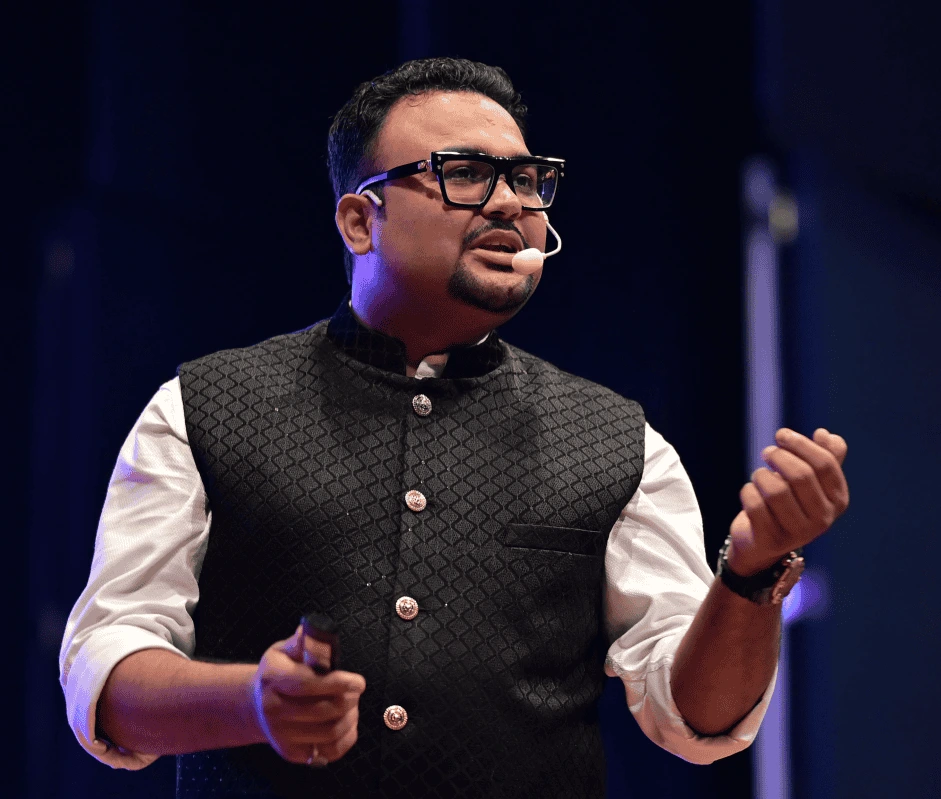
Rahul Malodia is a leading business coach in India, a Chartered Accountant, and the creator of the transformational Vyapari to CEO (V2C) program. With a mission to empower MSMEs, he has trained over entrepreneurs to systemize operations, manage working capital, and scale their businesses profitably.
Known for transforming traditional business owners into confident CEOs, Rahul delivers India’s top business coaching programs through bootcamps, workshops, and online courses. His practical strategies and deep industry insights have made him a trusted name among entrepreneurs seeking sustainable and scalable growth.
