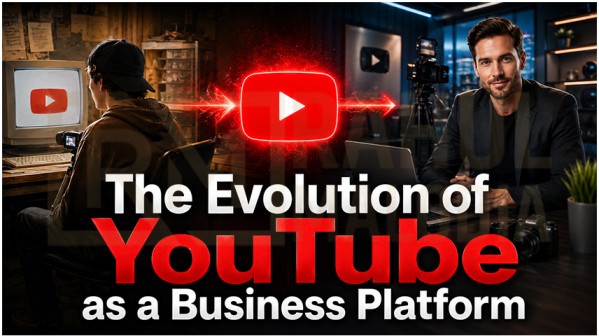
The Evolution of YouTube as a Business Platform
There was a time when YouTube was treated as a place to upload songs, watch comedy clips, and pass the time.
That version of YouTube still exists. But underneath it, something much bigger happened.
Today, YouTube has become one of the world’s largest business platforms. Brands launch products there. MSMEs find customers there. Founders build trust there. Professionals create authority there. Entire companies now depend on YouTube as a growth engine instead of using it only for advertising.
For Indian entrepreneurs, this shift matters more than ever.
Because in a market where attention is expensive and trust is difficult to earn, YouTube quietly became a place where both can compound.
From Video Website to Business Infrastructure
YouTube started in 2005 as a simple video-sharing platform. Google acquired it in 2006 for $1.65 billion.
What looked expensive then now appears small.
By 2026, YouTube will contribute tens of billions of dollars annually to Alphabet’s advertising business and reach more than 2.7 billion monthly users globally. India remains one of its largest markets, with over 550 million users.
But the real change is not audience size.
The platform evolved from entertainment into an infrastructure for discovery, education, commerce, and customer acquisition.
A founder in Jaipur can now explain a product directly to buyers in Bengaluru. A manufacturer in Gujarat can educate distributors. A consultant in Delhi can build national reach without opening another office.
Why Businesses Started Taking YouTube Seriously
Traditional marketing became crowded.
Digital ads became more expensive. Social feeds became shorter. Organic reach became unpredictable.
YouTube moved differently.
People come with intent. They search. They stay longer. They watch before buying.
Google has repeatedly highlighted that video heavily influences search behavior and purchase decisions.
Table: Customer Attention Across Major Digital Platforms
| Platform | Average Consumption Style | Trust Building | Long-Term Discoverability |
| YouTube | Long-form + search | High | Very High |
| Fast scrolling | Medium | Low | |
| Professional updates | Medium | Medium | |
| TikTok-style short video | Instant engagement | Low-Medium | Low |
For Indian business owners, discoverability matters because every rupee spent must work longer.
That is where YouTube changed the game.
The Creator Economy Became the New Business Economy
Businesses once depended on agencies and media houses.
Now they collaborate directly with creators.
India’s creator economy crossed ₹3,500 crore in estimated value and continues expanding through brand partnerships, affiliate commerce, education, memberships, and product sales.
But something even more interesting happened.
Businesses themselves became creators.
Companies like Zerodha, Groww, boAt, PhysicsWallah, and even traditional businesses started publishing educational content instead of only promotional content.
The result was lower customer acquisition costs and stronger trust.
Search, Trust, and Sales Started Working Together
Unlike platforms where content disappears quickly, YouTube behaves more like a search engine.
Someone searching “best ERP for manufacturing,” “how to scale an MSME,” or “business finance explained” may discover videos uploaded months earlier.
That creates a different business equation.
Described Graph: Business Value Timeline of YouTube Content
Imagine a line graph comparing content lifespan.
Instagram content peaks sharply in the first few days and declines quickly.
YouTube content grows more slowly but continues generating views, leads, and conversions over months and years.
For businesses, that means content becomes an asset instead of a campaign.
This explains why many Indian B2B companies increased investment in educational video after 2023.
YouTube Advertising Also Grew Up
Early YouTube advertising was simple.
Now it includes performance campaigns, connected TV ads, shopping integrations, demand generation formats, AI-supported targeting, and direct commerce journeys.
India’s digital advertising market crossed ₹60,000 crore, with video advertising becoming one of the fastest-growing categories.
But performance alone is not enough anymore.
Customers want proof.
That is why founder-led videos, behind-the-scenes content, customer stories, and educational explainers are outperforming polished commercials in many industries.
Table: Old Video Marketing vs Modern YouTube Business Strategy
| Earlier Approach | Current Approach |
| Product-first | Customer-first |
| Short campaign bursts | Always-on publishing |
| High production | High relevance |
| Agency dependency | Internal content systems |
Businesses are moving from interruption to relationship.
YouTube Changed How Indian MSMEs Build Brand Authority
Large companies once had unfair advantages.
Television budgets.
Distribution.
Celebrity endorsements.
YouTube reduced those barriers.
Today, a regional food brand can explain sourcing. A manufacturer can show process quality. A doctor can educate patients. A CA can teach finance.
This matters in India because trust often decides purchases.
When customers repeatedly see expertise, familiarity grows.
That visibility becomes business equity.
Shorts Forced a New Content Strategy
When short-form video exploded globally, YouTube responded with Shorts.
This changed how companies think.
Short videos now attract attention while long videos deepen trust.
Companies using both formats together often create stronger outcomes than relying on one.
Table: Shorts vs Long-Form YouTube for Business
| Metric | Shorts | Long Videos |
| Reach Speed | High | Medium |
| Trust Building | Medium | High |
| Conversion Potential | Medium | High |
| Content Life | Short | Long |
This is also where YouTube differs from Instagram and many short-video ecosystems.
It supports both discovery and decision-making.
AI Made YouTube More Accessible Than Ever
Artificial intelligence changed video creation.
Automatic captions, multilingual translation, recommendation systems, editing support, search improvements, and analytics reduced entry barriers.
For India, this has huge implications.
A business can create content in Hindi and reach audiences in multiple languages.
Regional language consumption continues rising across business and education categories.
This means the next growth wave may not come only from metro cities.
Measurement Became Smarter Than Views
Views still matter.
But businesses increasingly track watch time, lead generation, retention curves, branded search growth, customer lifetime value, and assisted conversions.
Table: Vanity Metrics vs Business Metrics
| Vanity Metric | Business Metric |
| Views | Qualified Leads |
| Subscribers | Revenue Influence |
| Likes | Conversion Rate |
| Virality | Customer Retention |
A video with fewer views but stronger buyer intent often delivers better business outcomes.
This shift reflects a broader maturity in how entrepreneurs think.
The Next Phase Is Already Starting
YouTube is no longer competing only with video platforms.
It now overlaps with search engines, television, learning platforms, shopping experiences, and business ecosystems.
Connected TV growth in India, AI-powered discovery, creator-led commerce, and deeper integration with Google’s ecosystem continue changing how businesses reach people.
The businesses that win may not be the ones producing the most content.
They may simply be the ones who understand one thing earlier:
People do business with brands they understand.
And increasingly, understanding begins with a video.
Want more practical business tips and strategies like this? Explore our latest blogs here.
- soaicl media marekting


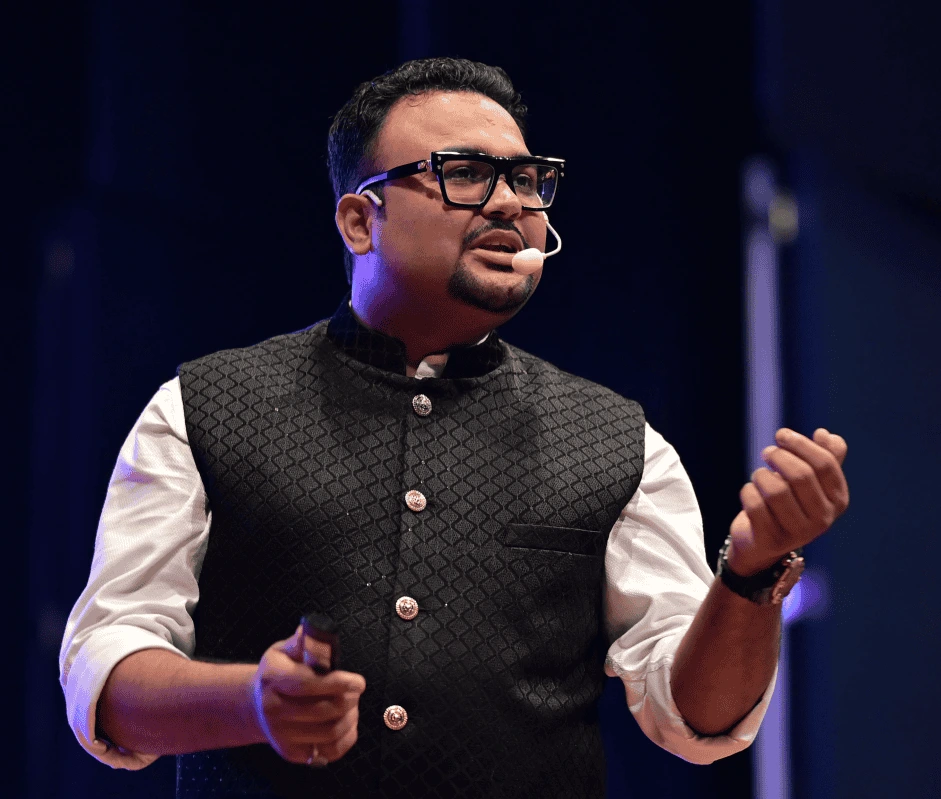
Rahul Malodia is a leading business coach in India, a Chartered Accountant, and the creator of the transformational Vyapari to CEO (V2C) program. With a mission to empower MSMEs, he has trained over entrepreneurs to systemize operations, manage working capital, and scale their businesses profitably.
Known for transforming traditional business owners into confident CEOs, Rahul delivers India’s top business coaching programs through bootcamps, workshops, and online courses. His practical strategies and deep industry insights have made him a trusted name among entrepreneurs seeking sustainable and scalable growth.
