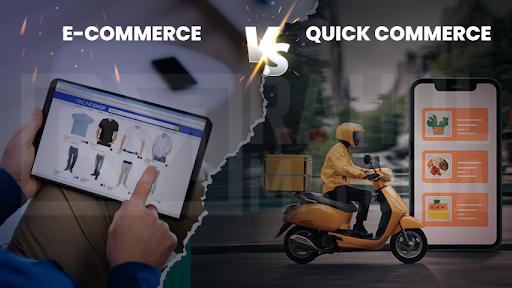
E-Commerce vs Quick Commerce: Who Will Win India’s Digital Race?
Amid the fast-paced streets of modern India, a silent competition is unfolding. No, this battle isn’t about politics or cricket, it’s a digital showdown between E-commerce and Quick Commerce, fighting for the future of how India shops. And the prize? The trust, time, and wallet of India’s digital consumer.
But this race isn’t just about who delivers faster. It’s about who understands the Indian customer better. Who can win not just hearts, but habits. And as we dive into this fast-evolving space, one thing is clear: the finish line is still far away, and both players are running at full speed.
The E-Commerce Boom: A Decade in the Making
Rewind a few years. Flipkart was the new kid on the block, Amazon had just landed in India, and people were still nervous about paying online. Back then, e-commerce felt like a luxury, not a necessity. But slowly, things changed.
It started with discounts. Then came convenience. And before we knew it, ordering clothes, electronics, even groceries online became second nature. For millions of Indians, e-commerce became the digital mall they could trust.
Entrepreneurs across the country watched this rise with wide eyes. It wasn’t just about products; it was about reach. A small seller in Surat could suddenly ship saris to someone in Shillong. E-commerce has flattened India’s geography. It empowered local sellers to grow, while giving digital shoppers the freedom to buy on their own terms. But just as things were settling, a new wave began to rise.
Enter Quick Commerce: Not Just Fast, But Instant
Imagine this: You’re cooking dinner and run out of onions. In the past, you’d pause, get dressed, walk to the store, and buy them. Then came e-commerce, but even that took a day or two. Today? Open an app, tap a button, and your onions are at your door in 10 minutes.
That’s Quick Commerce, or Q-commerce. It doesn’t just promise delivery. It promises speed. And in a country where time is tight and expectations are high, this model is exploding.
Companies like Zepto, Blinkit, Instamart, and Dunzo aren’t just fulfilling orders. They’re changing habits. They’re conditioning customers to think, “Why wait at all?” Whether it’s snacks, medicines, or a toothbrush, if you need it now, they’ll get it to you now.
But here’s where it gets interesting.
The Real Battle: Convenience vs Cost
E-commerce offers variety. It lets you compare. It gives you deals. But it makes you wait.
Quick commerce offers speed. But often at a cost, smaller catalogs, slightly higher prices, and tighter delivery zones.
This is where the real race begins.
Can e-commerce learn to go faster? Can quick commerce manage to scale profitably? Can both models co-exist, or will one swallow the other?
Indian entrepreneurs, startups, and investors are keeping a sharp eye on what happens next. Because behind the consumer war is a deeper business story, about margins, logistics, customer retention, and behavioral psychology.
And as every business owner knows, speed alone doesn't guarantee success.
The Indian Consumer: More Complex Than We Think
India isn’t one market. It’s a million micro-markets. What works in South Mumbai may not work in rural Bihar. And what excites a Gen Z college student may confuse a 45-year-old homemaker.
E-commerce was built to scale across this diversity. It offered COD (Cash on Delivery) for hesitant buyers, regional languages for comfort, and discounts to drive volume.
Quick commerce, on the other hand, is still urban-heavy. It’s designed for affluent areas, digital-first shoppers, and quick, on-the-spot purchases. While it’s growing fast, its true test will be scale, not in metros, but in Tier-2 and Tier-3 towns.
That’s where India’s real purchasing power is rising. And that’s where this race could change direction overnight.
The Infrastructure Puzzle: Warehouses vs Dark Stores
At the heart of both models lies one question: Can you get the product to the customer on time and at a profit?
E-commerce giants rely on mega warehouses. They ship from central hubs. It’s efficient, but slower.
Quick commerce runs on dark stores, small, hyper-local hubs tucked away in neighborhoods to ensure lightning-fast delivery. Think of them as mini-godowns tucked between buildings. They hold just enough stock to meet daily demand, and they’re optimized for speed, not variety.
But dark stores cost more. They need more manpower. They work best in dense cities. So the question is, can they survive the pressure of rising rents, rising fuel costs, and customer demands for 5-minute delivery?
Because let’s be honest: not everything needs to arrive in 10 minutes.
Profits, Losses & Deep Pockets
Look deeper, and you’ll see what keeps every founder and investor awake at night: unit economics.
E-commerce, after years of struggle, is slowly finding a rhythm. With bigger carts, better logistics, and repeat buyers, many platforms are inching towards profitability.
Quick commerce? It’s still burning cash. Every 10-minute delivery comes with a hidden cost, fuel, manpower, inventory, and sometimes...freebies to win loyalty.
So why do companies do it?
Because the market is massive. Because if they crack the model today, they could own India’s digital future tomorrow. And because the first player to balance speed and profit, wins.
The Emotional Game: Loyalty or Habit?
Products don’t just drive business success; they’re built around the people you serve. About behavior. About emotion.
E-commerce won trust by offering safety and variety. Quick commerce is trying to win hearts with speed and habit.
But which one will stick?
Ask yourself: Will you always need your groceries in 10 minutes? Or will you eventually settle for a next-day delivery if it’s cheaper and more reliable?
That’s the real question. Because whoever wins your habit, wins the market.
What Indian Entrepreneurs Can Learn
If you’re an entrepreneur or business owner in India today, there’s a lesson hidden in this battle.
It’s not just about choosing e-commerce or Q-commerce. It’s about understanding your customer’s core pain point.
Are they in a hurry? Give them speed.
Do they want variety? Give them a choice.
Do they crave discounts? Find a way to give value.
Because whether you’re selling furniture, food, or fashion, the war is not about what you sell. It’s about how fast, how well, and how consistently you deliver.
The Future: Coexistence or Collision?
Let’s look ahead.
Imagine a future where both models exist, peacefully. E-commerce serves your monthly shopping. Quick commerce handles your last-minute needs.
Or imagine a future where one eats the other. Where e-commerce builds faster delivery zones, and quick commerce expands into full catalogs.
Either way, the gap between them is quickly fading.
And in that blur lies the opportunity, for startups, retailers, delivery companies, and tech entrepreneurs.
Because in India, digital behavior is still evolving. Those who adapt fast are the ones who lead the game for the longest.
Final Thoughts: The Race Isn’t About Who’s Fastest. It’s About Whose Smartest.
In the end, this isn’t a race between two business models. Everyone’s competing to win over the Indian consumer and only the most trusted brands will succeed.
The one who listens, learns, and adapts, wins.
Not just with faster delivery.
But with smarter decisions.
Deeper understanding.
And long-term vision.
E-commerce and quick commerce are both running fast. But India isn’t cheering for speed alone. It’s cheering for reliability. For affordability. And for a digital experience that feels local, personal, and human.
So who will win the race?
Maybe it’s not about one winner.
Maybe, just maybe, the real winner will be the Indian consumer.
- Ecommerce business model


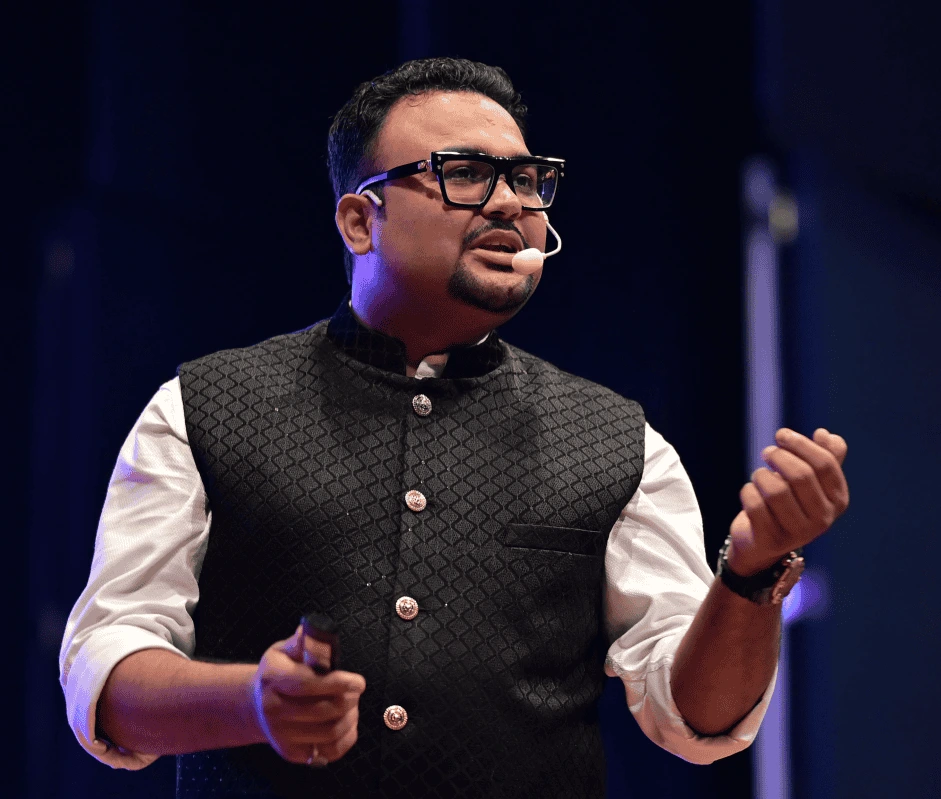
Rahul Malodia is a leading business coach in India, a Chartered Accountant, and the creator of the transformational Vyapari to CEO (V2C) program. With a mission to empower MSMEs, he has trained over 4,00,000 entrepreneurs to systemize operations, manage working capital, and scale their businesses profitably.
Known for transforming traditional business owners into confident CEOs, Rahul delivers India’s top business coaching programs through bootcamps, workshops, and online courses. His practical strategies and deep industry insights have made him a trusted name among entrepreneurs seeking sustainable and scalable growth.
