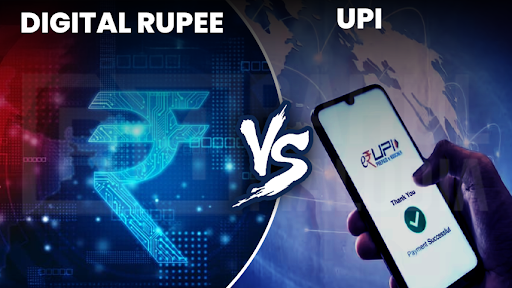
Digital Rupee vs UPI: Which Will Dominate the Future of Payments?
Hey there, friend. Picture this: It's a hectic Monday morning in Mumbai, and you're rushing to your startup office with a hot chai in hand. Your phone buzzes, a client just wired payment for that big project you closed last week. No fumbling for cards or counting notes. Just a quick scan, and boom, the money's in your account. Feels normal now, right? But what if I told you this ease is just the tip of the iceberg? In India, where payments are exploding faster than monsoon rains, two giants are duking it out for the throne: the Digital Rupee and UPI. One's a shiny new kid on the block, backed by the RBI itself, promising a cashless dream without the strings. The other's the trusty sidekick that's already woven into our daily chaos. As an entrepreneur juggling vendors, salaries, and surprise coffee runs, you're probably wondering, which one will rule the future of payments in India? Stick with me, because by the end, you'll see why it's not about picking sides, but playing both to win big.
Imagine Waking Up to a World Without Cash
You know that nagging worry when your wallet feels light during a late-night street food binge? Or the time you haggled with a cab driver over crumpled notes that looked like they'd seen better days? Cash has been our faithful companion, but let's be real, it's fading fast. In 2025, India's digital payments hit a staggering 206 billion transactions last fiscal year, up 37% from before, with values soaring to $3.38 trillion. That's not just numbers; it's lives changing. Think of your neighborhood kirana store owner, once buried in coin jars, now swiping phones like a pro.
But here's the twist: while UPI has been the spark lighting this fire, the Digital Rupee is sneaking in like a quiet revolution, ready to fan the flames. What makes it different? Why should you, hustling to scale your business, care? Hold that thought, we're about to dive into the Digital Rupee's story, and trust me, it's got more plot twists than your favorite Bollywood flick.
Meet the Digital Rupee: RBI's Bold Bet
Okay, let's pull back the curtain on this newcomer. The Digital Rupee, or e-Rupee as some call it, isn't your average app update. It's India's take on a Central Bank Digital Currency, straight from the RBI's playbook. Launched in pilots back in 2022, it's evolved into something real by October 2025. Just last week, on October 8, the RBI kicked off a fresh pilot for deposit tokenisation, turning boring old certificates into speedy digital assets. And get this, circulation jumped to ₹10.16 billion by March this year, a whopping 334% leap from the year before. That's $122 million buzzing in wallets, folks.
But why build it? Imagine sending money to your family in a remote village without a single ATM in sight. The Digital Rupee works offline, no internet drama. It's like cash, but digital, backed fully by the RBI, so zero risk of your bank folding. For you as a business owner, picture settling bulk supplier payments in seconds, with built-in privacy that UPI sometimes lacks. No more every transaction pinging back to your bank statement like a nosy relative. Early adopters in the pilot, like folks in Mumbai and Bengaluru, are testing it for everything from grocery buys to salary credits.
One bank teller I chatted with, okay, overheard at a fintech meetup, said it cut their settlement time from hours to instants. Sounds dreamy, but is it ready for prime time? Banks are dragging their feet on tech upgrades, and adoption's crawling at a snail's pace. Settlement delays mean it's not zooming like we hoped. Yet, here's the hook: what if this slow burn turns into a wildfire, reshaping how we think about money itself?
UPI: The Everyday Hero That's Already Changed Everything
Now, shift gears to the champ we can't stop cheering for, UPI. If the Digital Rupee is the intriguing stranger at the party, UPI is that reliable friend who's got your back since 2016. Built by NPCI, it's not just an app; it's the backbone of India's payment revolution. Fast-forward to August 2025: 20 billion transactions, worth ₹24.85 lakh crore. That's over 688 million daily zaps! September clocked ₹23.87 lakh crore in value alone. By now, UPI handles 50% of the world's digital transaction volume, 250 billion a year, totaling $3.4 trillion. Mind-blowing, right?
Remember that street vendor in Delhi who used to scribble IOUs on scraps? Today, he's got a QR code on his cart, pulling in ₹50,000 a month via UPI. For entrepreneurs like you, it's a game-changer. Instant peer-to-peer transfers mean closing deals on the go, no waiting for cheques to clear.
Take Priya, a boutique owner in Chennai I know, she scaled from one shop to three because UPI let her pay weavers in Rajasthan without wiring fees eating her margins. It's seamless, with 675 banks on board by mid-2025, up from 602 last year. But here's the quiet ache: as volumes skyrocket, so do tiny glitches, like that one overload during festival sales that left folks staring at spinning wheels. UPI's linked to your bank account, so privacy? Not its strongest suit. Still, it's the glue holding our cashless shift together. But what happens when the Digital Rupee crashes this party? Will it steal the spotlight, or team up for something epic?
Face-Off: Where Digital Rupee Edges Out UPI
Alright, let's get real and pit them head-to-head, because as a pro navigating supplier deals and investor calls, you need the unfiltered truth on Digital Rupee vs UPI. Start with speed and reach. UPI wins hands-down for everyday hustles, those quick chai payments or vendor splits happen in a blink. But the Digital Rupee? It's designed for the heavy lifting. Programmable money means you can set rules, like auto-releasing funds only when a shipment hits your warehouse. In pilots, it's slashed cross-border settlement costs by up to 50% for importers, per RBI whispers. No middlemen, just RBI guaranteeing every rupee.
Privacy's another edge. UPI logs everything through banks, which is great for tracking but feels like Big Brother sometimes. The Digital Rupee keeps your spends more under wraps, using tech that anonymizes small transactions. Offline mode? Game over for UPI in spotty network zones like rural Bihar. A farmer there told a story in a recent RBI report: he used a Digital Rupee pilot wallet to buy seeds during a blackout, saving a trip to town. Financial inclusion jumps too, unbanked folks get a direct RBI wallet, no account needed.
Costs? UPI's free for most, but merchant fees nibble at 1-2%. Digital Rupee aims for zero, cutting your overheads on big B2B plays. Yet, it's not all roses. Adoption lags because banks aren't fully geared up, with only a handful in the pilot by October 2025. UPI's at 185.8 billion transactions this fiscal; Digital Rupee's a speck at millions. So, does this mean the new guy's got hidden superpowers waiting to unleash? Keep reading, the flip side might surprise you.
But Wait, UPI Isn't Going Anywhere, Here's Why
Don't count UPI out just yet; it's like that underdog story that keeps winning. Sure, the Digital Rupee dazzles with its RBI shine, but UPI's grip on the future of payments in India is ironclad. Why? Scale, baby. By June 2025, it processed 18.4 billion transactions, with merchant payments alone at 11.7 billion. That's your coffee shop accepting tips, your logistics guy settling fuel bills, all frictionless. Projections scream growth: PwC says digital volumes will hit 617.3 billion by FY30, with UPI driving 24% annual jumps. Values? $10.23 trillion. UPI's not just surviving; it's evolving, with cardless cash withdrawals rolling out at 2 million banking points soon.

Think of Raj, a logistics entrepreneur in Pune. He moved 500 truck payments monthly via UPI last year, saving ₹2 lakh in fees compared to old wires. No learning curve, everyone from Gen Z to your uncle knows it. Integration's a breeze too; apps like PhonePe and GPay make it plug-and-play for your business dashboard. Disadvantages? Yeah, network hiccups during peaks, and that bank-link means if your account freezes, so does your flow. But RBI's tweaking caps to ₹2 lakh per transaction by 2026, easing corporate woes. The Digital Rupee might nibble at niches like offline rural pays, but UPI's ecosystem, 50 remitter members handling billions, is too sticky to shake. So, if they're not rivals, what are they? Teammates in a bigger game? The real tales from the trenches will show you.
Real Stories: How These Tools Are Shaping Lives Right Now
Nothing hits home like a good yarn from the ground, right? Let's talk Arjun, a spice trader in Kochi. Back in 2023, he'd lose days chasing delayed cheques from northern buyers. Enter UPI: now, 80% of his ₹5 crore annual deals close instantly, freeing him to scout new farms. Last Diwali, a glitch froze his app mid-festival rush, heart-stopping, but a quick bank call fixed it. UPI's volume hit 19.5 billion in July 2025 alone, proving it's battle-tested.
Flip to Lakshmi, a self-help group leader in Tamil Nadu's villages. No banks nearby, spotty signals, UPI was a tease. But the Digital Rupee pilot changed that. In early 2025, her group got RBI wallets for micro-loans. One member bought solar lamps offline during a storm, repaying via token without data. Circulation's up 334%, but it's personal: her group's income rose 25% as funds flowed freer. A Mumbai exporter, Vikram, blends both, UPI for daily ops, Digital Rupee for wholesale token pilots that cut his forex losses by 30%.
These aren't stats; they're dreams unlocked. In a country where 40% still clutch cash, UPI's pulled in 300 million new users since 2020, while Digital Rupee eyes the last mile. But as these stories collide, what's brewing for tomorrow? The future's peeking, and it's brighter than you think.
Peering into the Crystal Ball: What's Next for India's Payments?
Fast-forward a bit, it's 2030, and you're toasting your business's next milestone. What does the payment landscape look like? Experts at BCG predict 65% of transactions digital by 2026, with UPI as the anchor. But the Digital Rupee? It's the wildcard, expanding to wholesale for inter-bank zaps, potentially saving ₹50,000 crore yearly in liquidity costs. Juniper Research sees CBDC payments ballooning to 7.8 billion globally by 2031; India's slice could be huge, blending with UPI for hybrid magic.
Imagine programmable wallets: your invoice auto-pays on delivery, tagged with Digital Rupee smarts. Offline UPI via sound boxes in trains? Coming soon. Yet, hurdles loom, cyber threats, with UPI frauds hitting ₹1,000 crore last year, demand tighter nets. RBI's doubling down, per Union Minister Piyush Goyal, while shunning private crypto. For you, it means opportunities: fintechs building bridges between them could boom. A 2025 PwC report forecasts 25% value growth yearly, hitting $10 trillion. But the real thrill? Inclusion, 190 million unbanked could join via Digital Rupee, fueling startups in underserved spots. Exciting, nerve-wracking, which force shapes it most? The answer's unfolding, and it's not black-and-white.
The Verdict: Co-Stars, Not Rivals
So, after all this buildup, the burning question: Digital Rupee vs UPI, who's dominating the future of payments? Spoiler: it's not a cage fight. They're co-stars in India's blockbuster cashless saga. UPI's the crowd-pleaser, with 185.8 billion FY25 transactions proving its reign for P2P and retail. It's accessible, instant, and embedded in our lives, projected to handle trillions as volumes surge 24% yearly. The Digital Rupee, though nascent at ₹10 billion circulation, brings the depth, offline resilience, privacy shields, and programmability for B2B brains like yours.
Together? Unstoppable. UPI for the quick wins, Digital Rupee for strategic strikes. Early pilots show 1 million active wallets across 15 banks, hinting at synergy. Disadvantages balance out: UPI's scale trumps Digital Rupee's slow rollout, but the latter's RBI backing quells UPI's occasional outages.
By 2030, expect a seamless blend, where your business dashboard flips between them effortlessly. No domination, just elevation. As an entrepreneur, this duo means leaner ops, bolder risks, and payments that feel like second nature.
Your Next Step: Get Ready to Ride the Wave
We've journeyed from cash crunches to digital dreams, unpacked the players, and glimpsed the horizon. Feels empowering, doesn't it? But knowledge without action is like a full wallet you never spend. As a business owner, dip your toes now. Link a pilot Digital Rupee wallet via your bank app, SBI and HDFC are leading. Amp up UPI with QR limits for your team. Watch RBI updates; that October offline launch could be your edge in rural expansions.
You're not just surviving the shift, you're shaping it. In a nation racing to $5 trillion GDP, payments are the fuel. Grab UPI's speed, Digital Rupee's smarts, and build something lasting. What's your first move? Drop a thought in the comments, let's chat. Until next time, keep those transactions flowing, friend. The future's paying dividends, and you're invited.
- government schemes
- BusinessGrowth
- focus on money
- Business Finance
- Market Analysis



Rahul Malodia is a leading business coach in India, a Chartered Accountant, and the creator of the transformational Vyapari to CEO (V2C) program. With a mission to empower MSMEs, he has trained over entrepreneurs to systemize operations, manage working capital, and scale their businesses profitably.
Known for transforming traditional business owners into confident CEOs, Rahul delivers India’s top business coaching programs through bootcamps, workshops, and online courses. His practical strategies and deep industry insights have made him a trusted name among entrepreneurs seeking sustainable and scalable growth.
