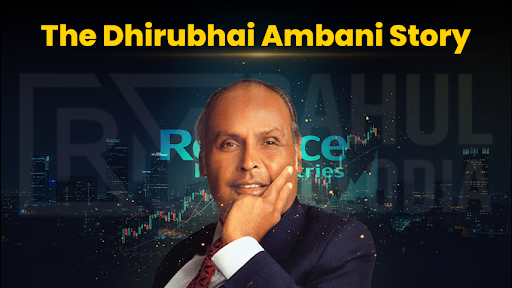
The Dhirubhai Ambani Story: From Petrol Pump Attendant to India’s Business Icon
When we think of billionaires today, we imagine boardrooms, private jets, and a life of luxury. But the story of Dhirubhai Ambani, the man who built Reliance, did not begin in any glamorous setting. It began in Chorwad, a small village in Gujarat, where he was born on 28 December 1932. His father was a schoolteacher, and money was always tight. For many, this would have meant living within limits, but for young Dhirubhai, it meant dreaming beyond limits.
At the age of just 16, Dhirubhai left India and moved to Aden, a port city in Yemen, to work at a petrol pump owned by Shell. Imagine this for a moment, today’s Reliance empire, worth trillions of rupees, once rested on the shoulders of a teenager counting fuel cans and helping motorists. Aden in those days was buzzing with trade. Ships came in with goods from all over the world, and this environment exposed him to something that would shape his future, global business.
Learning from the Ground Up
Working as a petrol pump attendant may sound ordinary, but for Dhirubhai, it was like an open university. He saw how oil companies worked, how prices fluctuated, and how trade routes shaped fortunes. More importantly, he realized one thing, business was not about luck, it was about spotting opportunities before others did.
In Aden, he worked his way up and joined a firm called A. Besse & Co, one of the largest trading firms there. Here, he handled accounts, managed transactions, and slowly learned the language of international trade. He saw the power of supply chains, of imports and exports, and of building networks. Many young men in his place would have settled for a stable job, but Dhirubhai was different. He wasn’t interested in job security; he was interested in building something of his own.
The Return to India with a Burning Dream
In 1958, Dhirubhai Ambani returned to India with just ₹500 in his pocket. Think about this for a moment, no capital, no godfather in business, and no powerful family connections. Just ₹500, an idea, and immense courage.
He started his trading business in Mumbai under the name Reliance Commercial Corporation. His office was a small 350-square-foot space in Masjid Bunder. His first business was importing polyester yarn and exporting spices. Spices were India’s old strength, and polyester was the fabric of the future. It was a smart bet, combining India’s traditional advantage with modern global demand.
But trading was not easy. India in the 1960s was a “license raj” economy. Every step required approvals, paperwork, and navigating a maze of rules. This is where Dhirubhai’s real genius showed. He knew how to build relationships, win trust, and find innovative ways around roadblocks. While many businessmen complained about restrictions, Dhirubhai found ways to turn them into opportunities.
Building Trust Brick by Brick
Reliance was still small, but Dhirubhai understood one rule of business better than anyone else, trust is the strongest currency. He always made sure his traders, suppliers, and customers got their payments on time. Even if it meant borrowing money or selling at lower margins, he never let his credibility slip.
Soon, word spread in the markets of Mumbai. Traders began saying, “If Dhirubhai promises, he delivers.” This reputation became the foundation of Reliance. Trust built his brand before advertisements ever did.
The Big Leap into Manufacturing
By the late 1960s, Dhirubhai realized that trading alone would not be enough. If he wanted to create something big, he had to manufacture. Polyester was booming, and India was importing it. Why not produce it in India?
This was a bold move because manufacturing required huge capital, approvals, and infrastructure. But in 1966, he set up his first textile mill in Naroda, Ahmedabad. The brand he created was called Vimal, named after his nephew. At that time, foreign fabrics dominated the Indian market. Yet, Reliance’s textiles stood out because they were high-quality and affordable.
People in small towns, shopkeepers in bazaars, and even middle-class families began asking for Vimal by name. Soon, Reliance’s textile outlets spread across India. This was not just a business expansion; it was the birth of a brand that middle-class Indians could connect with.
Dhirubhai and the Stock Market Revolution
If there is one thing that truly changed the destiny of Reliance, it was Dhirubhai’s vision of raising money from ordinary Indians. Until then, the stock market was a playground for the elite. But Dhirubhai turned it into a platform for the masses.
In 1977, Reliance went public. Thousands of small investors put their savings into the company. They weren’t just buying shares; they were buying into Dhirubhai’s dream. And he rewarded them. Reliance gave handsome dividends, and people who trusted him saw their wealth grow. For the first time, the middle class felt they had a chance to be part of India’s big business story.
Stories spread of schoolteachers, clerks, and shopkeepers who became lakhpatis because they invested in Reliance shares. This changed the way India looked at investing. Dhirubhai Ambani had democratised wealth creation in a way no one else had before.
Facing Challenges and Criticism
Of course, no success story comes without storms. Dhirubhai faced allegations of bending rules, taking advantage of political connections, and using aggressive tactics. His rivals accused him of unfair practices, and his rise often became controversial.
But Dhirubhai was never shaken by criticism. He believed that in business, you cannot please everyone. What mattered was creating value, generating jobs, and building an empire that gave India confidence in its own abilities.
He once famously said, “If you don’t build your dream, someone else will hire you to build theirs.” This wasn’t just a quote; it was how he lived.
The Legacy of Reliance
By the time Dhirubhai Ambani passed away in 2002, Reliance had become India’s largest private sector company. From textiles to petrochemicals, from refineries to telecom, Reliance had its footprint everywhere.
In 2002, Reliance Industries was worth around ₹62,000 crore. Fast forward to today, and its market capitalization has crossed ₹19 lakh crore, making it not only India’s largest company but also a global powerhouse. From the petrol pump in Aden to this scale, the journey is nothing less than extraordinary.
His sons, Mukesh Ambani and Anil Ambani, carried forward the empire after his passing. Mukesh in particular took Reliance into telecom with Jio, changing how India connects and communicates. Even today, every Indian entrepreneur who dreams big looks back at Dhirubhai’s story for inspiration.
Lessons for Entrepreneurs Today
The Dhirubhai Ambani story is not just history; it’s a guidebook for entrepreneurs. It teaches us that no background is too humble to stop you, no dream is too big to chase, and no challenge is too strong to break you.
For today’s business owners and professionals, his journey is a reminder that success is not about where you start but about how boldly you move forward. Whether you are running a kirana shop in Patna or a startup in Bangalore, the principles remain the same, spot opportunities, build trust, and never fear risks.
A Lasting Inspiration
The name Dhirubhai Ambani today stands for more than just business. It stands for courage, for breaking barriers, and for showing India that we can compete with the best in the world. He was not born rich, he did not inherit an empire, and he did not wait for luck. He built his fortune with vision, hard work, and a fearless attitude.
For every Indian entrepreneur reading this, the story of Dhirubhai Ambani is not just about Reliance, it is about believing that one determined individual can change the destiny of a nation. From a petrol pump attendant in Aden to India’s biggest business icon, his life remains the ultimate example of how dreams, when backed by courage, can turn into reality.
Visit our blog library if you need more business-related articles!
FAQs: The Dhirubhai Ambani Story
Q1. Who was Dhirubhai Ambani?
Dhirubhai Ambani was the founder of Reliance Industries, one of India’s largest companies. He rose from humble beginnings as a petrol pump attendant to become a business icon.
Q2. Where was Dhirubhai Ambani born?
He was born on 28 December 1932 in Chorwad, a small village in Gujarat, to a schoolteacher’s family.
Q3. What was his first job?
At 16, he worked as a petrol pump attendant for Shell in Aden, Yemen, where he gained exposure to global trade and business.
Q4. When did Dhirubhai Ambani start Reliance?
In 1958, he returned to India with ₹500 and started Reliance Commercial Corporation in Mumbai, focusing on polyester and spices trading.
Q5. What was his first big manufacturing venture?
In 1966, he set up a textile mill in Naroda, Ahmedabad, and launched the textile brand Vimal, which became a household name across India.
Q6. Why is his stock market move considered revolutionary?
In 1977, Reliance went public, inviting ordinary Indians to invest. Thousands of small investors benefited, making wealth creation accessible to the middle class.
Q7. Did Dhirubhai Ambani face criticism?
Yes, he was accused of bending rules and leveraging political connections. Despite controversies, he focused on growth, jobs, and value creation.
Q8. What was Reliance’s worth when he passed away?
By 2002, Reliance was worth around ₹62,000 crore. Today, its value has crossed ₹19 lakh crore, making it India’s largest private sector company.
Q9. Who manages Reliance after Dhirubhai’s death?
His sons, Mukesh Ambani and Anil Ambani, inherited the business. Mukesh expanded Reliance into telecom with Jio, transforming India’s digital landscape.
Q10. What can entrepreneurs learn from Dhirubhai Ambani?
His life teaches us to spot opportunities early, build trust, dream big, and never let humble beginnings limit ambition.
- BusinessSuccess
- Personal Development
- Businessman
- Business Case study


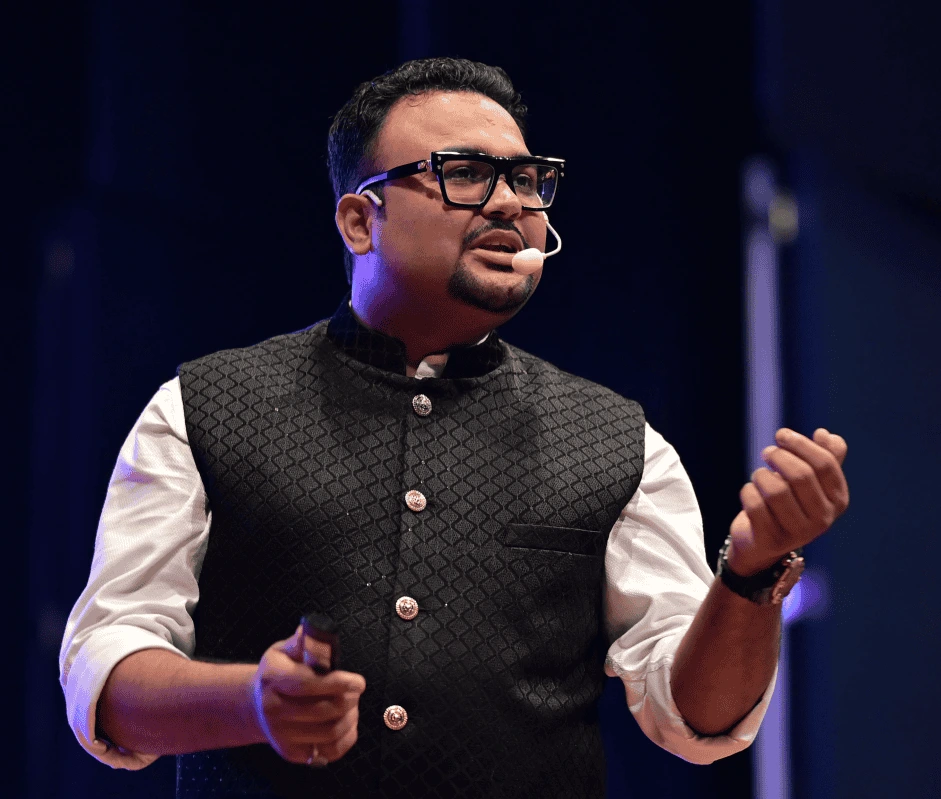
Rahul Malodia is a leading business coach in India, a Chartered Accountant, and the creator of the transformational Vyapari to CEO (V2C) program. With a mission to empower MSMEs, he has trained over entrepreneurs to systemize operations, manage working capital, and scale their businesses profitably.
Known for transforming traditional business owners into confident CEOs, Rahul delivers India’s top business coaching programs through bootcamps, workshops, and online courses. His practical strategies and deep industry insights have made him a trusted name among entrepreneurs seeking sustainable and scalable growth.
