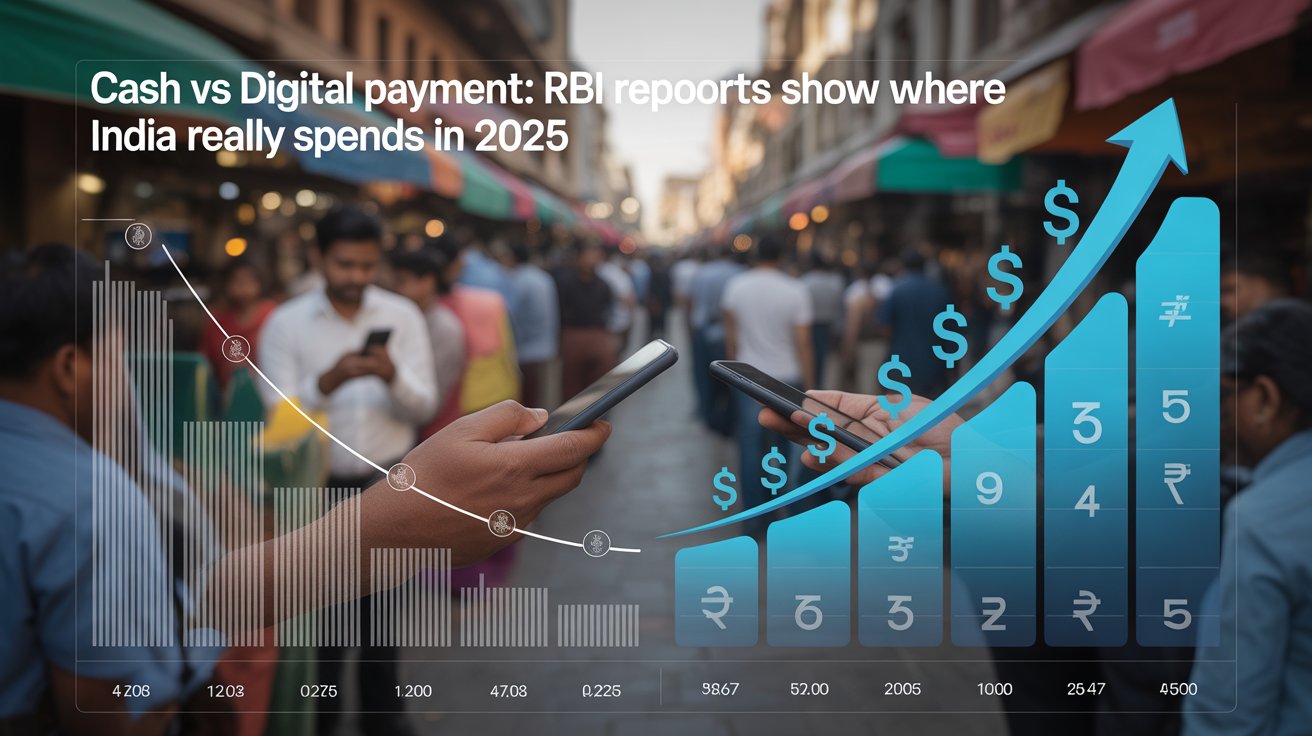
Cash vs Digital Payment: RBI Reports How India Spends in 2025
Every time you step into a kirana store or pay for a cab ride, there’s one question that keeps coming back, cash or digital? India has been on a digital payment revolution for the past decade, with UPI transactions breaking new records almost every month. Yet, if you walk into a mandi in Jaipur, a street food corner in Delhi, or even a medical shop in Lucknow, you’ll see something surprising cash is still king in many places.
The Reserve Bank of India (RBI) recently released its 2025 data on cash circulation and digital adoption, and the numbers reveal a truth that is both exciting and eye-opening. India is not a cashless economy, and it won’t be anytime soon. Instead, what we’re witnessing is a unique balancing act where both cash and digital coexist, each dominating different corners of our daily life.
Why Cash Refuses to Die in India
Demonetization in 2016 was supposed to mark the “end of cash.” Yet, as of March 2025, RBI data shows that currency in circulation stands at around ₹37 lakh crore. That’s not just a survival story; it’s growth compared to ₹32 lakh crore in 2022. So why is cash still so strong?
The answer lies in trust and habit. For millions of small shopkeepers, daily wage workers, and even middle-class households, cash is not just a payment method; it’s a comfort zone. It doesn’t need the internet, doesn’t fail when servers crash, and doesn’t leave a digital trail that many still feel uneasy about. A vegetable seller in Patna told a business daily, “Digital ka system thik hai, par din ke ant me notes gin ke sukoon alag hi hai.” This reflects a cultural truth: cash feels real in a way that numbers on a screen often don’t.
The Explosive Rise of Digital Transactions
But while cash remains strong, digital is not slowing down either. In fact, RBI’s latest report shows that UPI transactions in 2025 have crossed a monthly average of 15 billion transactions, worth more than ₹30 lakh crore. This is a staggering jump from just 2 billion monthly transactions in 2019.
India’s digital payment story is not just about convenience. It’s about accessibility. Today, even a chaiwala in Surat or a rickshaw driver in Pune proudly displays a QR code. Digital is no longer limited to metros; it has spread deep into Tier-2 and Tier-3 cities. The fact that India will have over 850 million smartphone users in 2025 makes it clear why UPI and wallets have exploded in usage.
The Indian Consumer’s Dual Personality
Here’s where it gets interesting. Indians don’t choose one over the other; they use both, depending on the situation. When it comes to small daily payments, like paying ₹30 for chai or ₹150 for groceries, digital dominates because of the ease of QR scanning. But when it comes to weddings, real estate deals, or even gifting money at family functions, cash takes center stage.
A 2025 RBI consumer survey highlighted that 73% of urban Indians prefer digital for day-to-day purchases, while 64% of rural Indians still lean on cash. Yet, during festivals like Diwali or Holi, even digital-savvy urban consumers admitted to withdrawing extra cash for “comfort and tradition.” It’s almost as if cash carries an emotional weight that digital has not yet been able to replace.
Why Businesses Can’t Ignore Cash
If you’re an entrepreneur or small business owner in India, ignoring cash is not an option. Even though UPI is growing at record speed, RBI reports show that over 50% of retail transactions in value terms are still conducted in cash. Think about jewelry purchases, wholesale trade, or agricultural markets, cash is often the default.
Consider the case of automobile sales. While digital payments and bank loans cover a large share, RBI data shows that nearly 35% of two-wheeler purchases in semi-urban areas are still cash-driven. For business owners, this means that while investing in digital payment infrastructure is important, cash handling systems remain equally critical.
The Role of Trust and Infrastructure
Digital payment adoption also depends on infrastructure. Urban India has fast internet and smartphone penetration, but rural areas still face patchy connectivity. RBI’s Financial Inclusion Index for 2025 highlights that while digital accounts have grown rapidly, nearly 23% of rural adults still face difficulties in accessing reliable banking and internet services.
Trust plays a big role too. For many first-time digital users, one failed UPI payment or a delay in refunds can create hesitation. That’s why cash continues to dominate in high-risk or uncertain situations. When it comes to paying a farmer for fresh produce or making daily wage payments, people prefer the immediate assurance of cash.
Festivals, Emotions, and the Psychology of Spending
India’s relationship with cash is not just economic, it’s cultural. During wedding seasons, families withdraw lakhs of rupees for gifting, shopping, and payments. RBI data shows a sharp spike in currency demand every October-November during Diwali season. Similarly, during Holi or Eid, ATM withdrawals surge by 20–25%.
Cash also carries symbolic value. Gifting a crisp ₹500 note in a shagun envelope feels different from sending a UPI transfer, no matter how fast or convenient digital is. These cultural layers explain why India’s transition to a fully cashless society will always be slower compared to countries like Sweden or South Korea.
Government Push vs. Ground Reality
The Indian government and RBI have made huge pushes toward digital payments, whether it’s through incentives, GST reforms, or the Digital India mission. Yet, ground reality shows that cash is deeply entrenched. A 2025 RBI report notes that while the share of digital in total transactions has risen to 54%, the absolute value of cash transactions has not dropped; it has grown alongside digital.
This dual growth is unique to India. Instead of digital replacing cash, the two are growing together. This means business owners must be flexible and accept both, depending on customer preference.
What the Future Holds for Indian Businesses
So, where is this heading? Experts predict that by 2030, digital will account for nearly 70% of total transactions, thanks to better connectivity and younger consumers embracing fintech. However, cash will not disappear; it will remain the backbone of certain sectors like agriculture, real estate, and informal trade.
For entrepreneurs, this is both a challenge and an opportunity. A restaurant owner in Bangalore cannot afford to say “cash not accepted,” because it might lose him customers. At the same time, a shopkeeper in Varanasi risks falling behind if he refuses to go digital. The real winners will be those who balance both worlds, keeping cash systems strong while embracing digital with open arms.
Final Thoughts: A Country of Two Wallets
India in 2025 is not a cashless economy, and it’s not a fully digital economy either. It’s a hybrid nation where people carry two wallets, one in their pocket filled with cash, and one on their phone filled with apps. RBI’s reports make one thing clear: the future of Indian spending is not about choosing one over the other, but about learning how to live with both.
For business owners, professionals, and entrepreneurs, the message is simple. Don’t fall into the trap of thinking cash is old-fashioned or digital is everything. India’s real story is about adaptation. The faster you understand where your customers truly spend, cash or digital, the stronger your business will stand in this evolving market.
“ Read previous blog: RBI policy changes impact small businesses ”
FAQs: Cash vs Digital in India 2025
Q1. Is India becoming a cashless economy in 2025?
No. RBI data shows both cash and digital are growing together. India is a hybrid economy where cash and UPI coexist.
Q2. How much cash is in circulation in India in 2025?
As of March 2025, currency in circulation is about ₹37 lakh crore, higher than ₹32 lakh crore in 2022, proving cash is still strong.
Q3. How big is digital payment adoption in 2025?
UPI now averages 15 billion monthly transactions worth ₹30 lakh crore, showing massive growth across metros and small towns.
Q4. Why do Indians still prefer cash?
Trust, habit, and cultural value. Cash feels real, works without internet, and is deeply tied to traditions like weddings and festivals.
Q5. Which transactions still rely heavily on cash?
High-value purchases like real estate, jewelry, agriculture, and weddings remain cash-driven, despite digital’s rise.
Q6. What percentage of retail transactions are cash-based?
RBI reports say over 50% of retail transactions by value still happen in cash, especially in semi-urban and rural markets.
Q7. Why is digital growing so fast in India?
Affordable smartphones, QR codes, and UPI’s simplicity have made digital payments accessible even to street vendors and rickshaw drivers.
Q8. Does rural India prefer cash or digital?
RBI surveys show 64% of rural Indians still rely on cash, while 73% of urban Indians prefer digital for daily spending.
Q9. Will cash disappear in India?
Unlikely. Experts predict that by 2030, digital may dominate 70% of transactions, but cash will remain vital for culture-driven and informal markets.
Q10. What should Indian business owners do?
Accept both. Businesses that balance cash handling and digital infrastructure will win in India’s hybrid economy.
- focus on money
- Business Finance


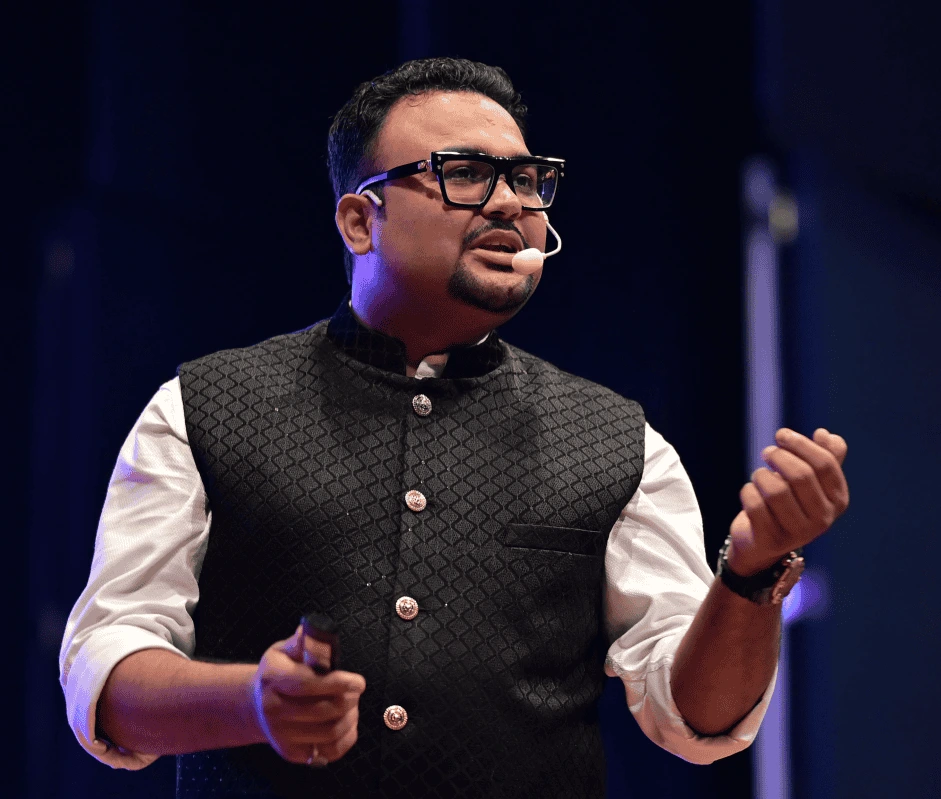
Rahul Malodia is a leading business coach in India, a Chartered Accountant, and the creator of the transformational Vyapari to CEO (V2C) program. With a mission to empower MSMEs, he has trained over entrepreneurs to systemize operations, manage working capital, and scale their businesses profitably.
Known for transforming traditional business owners into confident CEOs, Rahul delivers India’s top business coaching programs through bootcamps, workshops, and online courses. His practical strategies and deep industry insights have made him a trusted name among entrepreneurs seeking sustainable and scalable growth.
