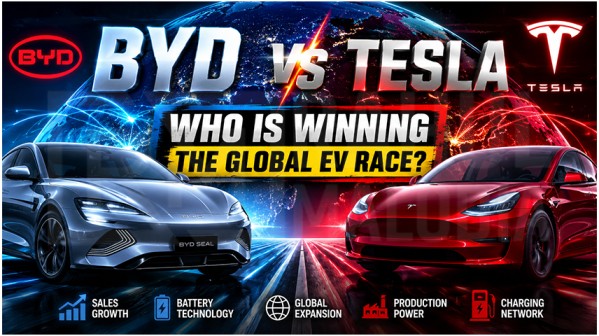
BYD vs Tesla: Who Is Winning the Global EV Race?
Imagine running a growing business in Jaipur or Mumbai. Fuel costs pinch your fleet, and customers increasingly ask about electric options. Two names keep popping up: Tesla and BYD.
One built the dream of premium electric driving. The other is flooding markets with practical, affordable choices. As an Indian entrepreneur watching global shifts, understanding this race matters for your own decisions on transport, energy, and investments.
The Making of Two EV Powerhouses
Tesla started the modern EV revolution with sleek cars, advanced software, and a cult following. Its early lead came from innovation in batteries and autonomous tech. Founders and professionals in India admired its bold vision. BYD, the Chinese giant, began in batteries and scaled into full vehicles. It focused on vertical integration, making almost everything in-house. This approach helped control costs in a price-sensitive world.
Both companies bet big on electric futures, but their paths diverged. Tesla chased premium appeal and technology leadership. BYD chased volume and accessibility.
Sales Numbers That Changed the Game
In 2025, BYD delivered about 2.26 million battery electric vehicles, overtaking Tesla’s 1.64 million. This marked the first full year BYD claimed the top spot globally. Tesla saw a roughly 9% drop in deliveries that year. Early 2026 showed Tesla regaining some ground in quarterly figures, but the momentum shift felt real.
For Indian businesses tracking costs, these numbers highlight scale advantages. Higher volume often means better supply chains and pricing power.
A Simple Sales Comparison
| Company | 2025 BEV Sales | Market Share Trend | Key Strength |
| BYD | 2.26 million | Leading | Volume & Affordability |
| Tesla | 1.64 million | Declining slightly | Premium & Tech |
This table shows raw volume leadership for BYD while Tesla maintains a premium edge. In India, where most buyers seek value, such contrasts influence local strategies.
Battery Technology and Innovation Race
BYD’s Blade Battery stands out for safety and cost efficiency using LFP chemistry. It offers strong longevity and lower fire risks. Tesla pushes 4680 cells for higher energy density and faster production. Both invest heavily in next-generation options like solid-state batteries.
Indian entrepreneurs notice this. Better batteries mean longer range and lower running costs for commercial fleets in hot climates like Rajasthan. Reliability on Indian roads becomes a key factor.
Pricing Strategies That Hit Different Markets
BYD wins on affordability with models starting much lower, appealing to mass markets. Tesla holds higher price points but offers strong perceived value through performance and updates. This split shapes global competition. In emerging markets, price often decides adoption speed.
Many Indian MSME owners relate. When expanding fleets, total ownership cost, including maintenance and electricity, matters more than sticker price.
Global Expansion Moves
BYD aggressively builds factories outside China, targeting Europe, Latin America, and Asia. Exports grew sharply in 2025. Tesla relies on established Giga factories and focuses on brand strength plus software services. Both face trade tensions and local regulations.
For India, these moves signal opportunity. Local manufacturing push under policies like PLI could benefit collaborations or component suppliers.
India’s EV Story in the Mix
India’s EV sales crossed significant milestones with FAME schemes and state incentives driving two-wheelers and three-wheelers first. Four-wheelers grow steadily, led by Tata, Mahindra, and others. Tesla made a formal entry with premium models, while BYD offers more accessible options through partnerships.
Business owners in logistics or urban delivery see real impact. Lower operating costs help margins in competitive markets. Charging infrastructure remains a shared challenge across players.
Visualising Growth Trends
Imagine a line graph showing India’s EV passenger vehicle sales climbing steadily from 2023 to 2026, with sharper upward curves after policy boosts. Global lines for BYD and Tesla would show BYD’s steeper volume rise against Tesla’s technology-focused curve. This helps Indian decision-makers picture where local opportunities align with global leaders.
Technology vs Volume: Different Paths to Profit
Tesla bets on autonomy, energy storage, and premium experiences for higher margins. BYD leverages manufacturing scale for thinner margins but massive throughput. Recent data shows BYD’s revenue crossed Tesla’s in 2025, yet profitability faced pressure from competition.
Indian CXOs understand this balance. Scaling operations efficiently while protecting profits is a daily reality for startups and established firms alike.
What This Means for Indian Entrepreneurs
Watch how these giants adapt to emerging markets. Tesla brings aspirational appeal and software updates. BYD demonstrates cost leadership and rapid model variety. Smart businesses study both supply chain resilience and customer preferences. Whether investing in EV charging, fleet electrification, or related tech, lessons apply directly.
The race continues with no clear single winner yet. It pushes the entire industry forward, creating openings for local innovation in batteries, charging, and services tailored to Indian conditions. Stay observant, adapt early, and turn global competition into your growth advantage.
- Business case study
- Market Analysis


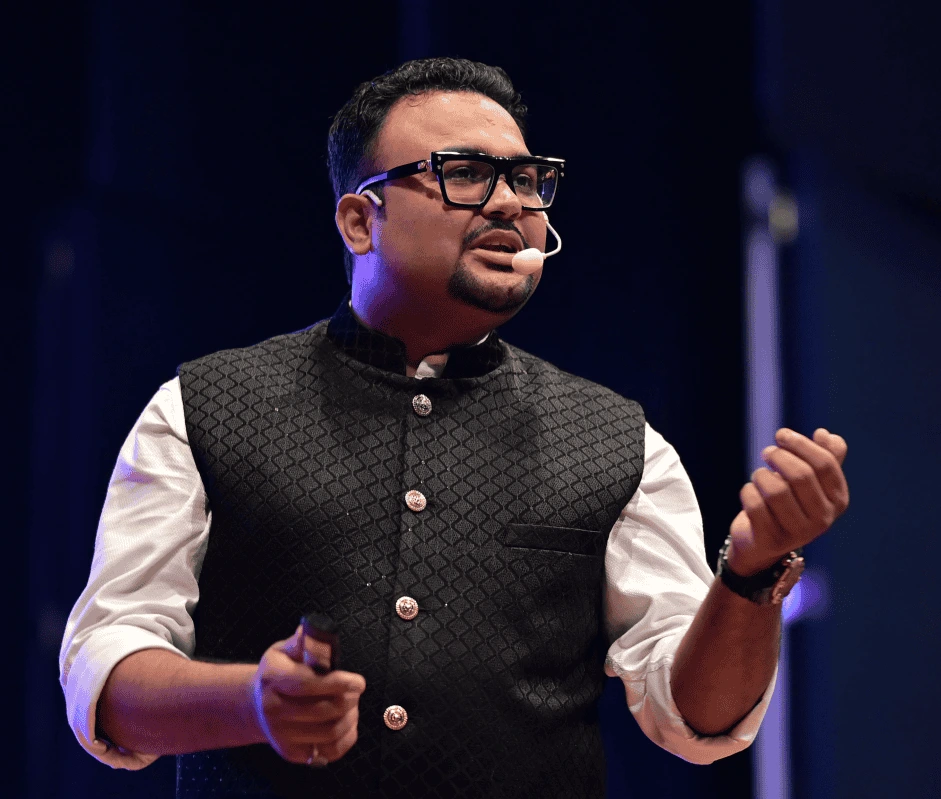
Rahul Malodia is a leading business coach in India, a Chartered Accountant, and the creator of the transformational Vyapari to CEO (V2C) program. With a mission to empower MSMEs, he has trained over 5,00,000+ entrepreneurs to systemize operations, manage working capital, and scale their businesses profitably.
Known for transforming traditional business owners into confident CEOs, Rahul delivers India’s top business coaching programs through bootcamps, workshops, and online courses. His practical strategies and deep industry insights have made him a trusted name among entrepreneurs seeking sustainable and scalable growth.
