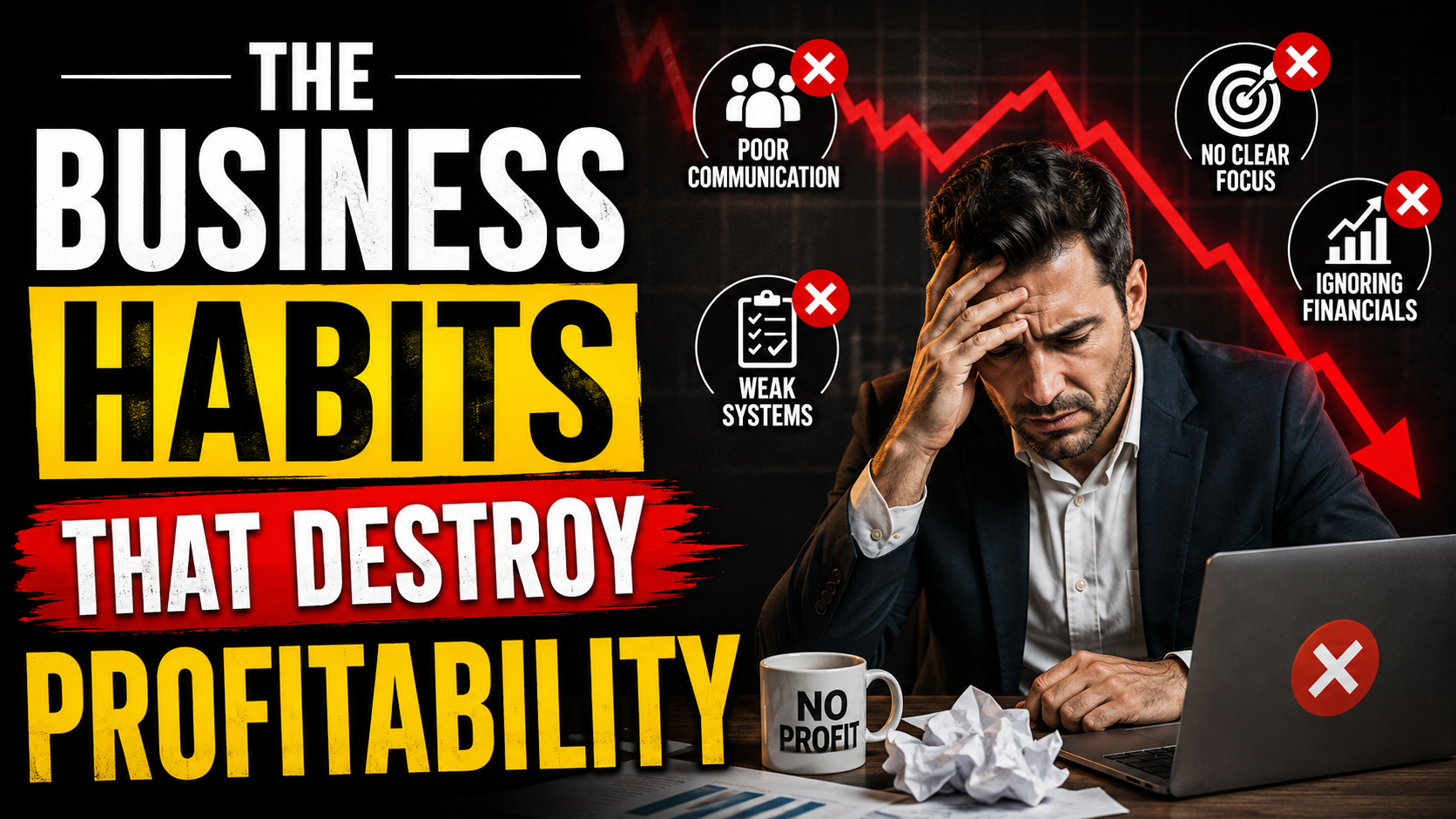
The Business Habits That Destroy Profitability
You built your business with sweat, late nights, and big dreams. Yet, month after month, the profits refuse to show up even as sales look decent on paper. This story is painfully common among Indian entrepreneurs, MSME owners, and startup founders navigating the pressures of a fast-changing economy. Bad habits quietly eat away at margins, turning promising ventures into cash traps. Understanding these habits early can save years of struggle and protect the hard-earned capital that fuels growth in India's competitive markets.
The Silent Killer: Ignoring Cash Flow Realities
Many owners celebrate top-line growth while the bank balance stays stressed. Delayed payments from clients, common in India, where receivables can stretch 90-120 days, create constant pressure. You pay suppliers upfront and salaries on time, but inflows lag. This mismatch forces borrowing at high interest, quietly destroying profitability.
Businesses that track daily cash positions spot problems weeks earlier. They negotiate better terms or offer early-payment discounts. In contrast, those who focus only on sales reports often face crises when bills pile up. India's MSME credit gap of around ₹30 lakh crore makes this habit especially dangerous.
Underpricing in the Name of Volume
The temptation to quote the lowest price to win deals is strong, especially in price-sensitive Indian markets. Founders believe more volume will eventually cover costs. Yet thin margins leave no room for unexpected expenses, quality upgrades, or market shifts.
Smart competitors price based on real costs plus a healthy profit, then differentiate through service or reliability. They build loyalty instead of racing to the bottom. Data from Indian businesses shows many micro-enterprises operate with margins under 5-10%, barely covering risks, while disciplined ones maintain 15-25% by understanding true value delivered.
Table: Pricing Impact on Profitability (Typical Indian MSME Example)
| Aspect | Low-Price Approach | Value-Based Pricing |
| Monthly Revenue | ₹10 lakh | ₹8 lakh |
| Gross Margin | 8% | 22% |
| Monthly Profit | ₹80,000 | ₹1.76 lakh |
| Sustainability | High stress | Room for growth |
This simple view shows why volume obsession often backfires in practice.
Scaling Too Fast Without Foundations
Expansion excitement leads many to open new branches, hire aggressively, or enter new cities before systems are ready. In India, where logistics and talent vary widely across regions, this habit burns cash rapidly. Kingfisher Airlines exemplified how rapid growth without tight controls led to massive debt and collapse.
Businesses that test small, refine processes, and expand gradually protect profits. They ensure each unit contributes positively before multiplying. A described line graph of revenue vs. profitability for many Indian startups would show sharp revenue spikes followed by steep profit dips exactly during unchecked expansion phases.
Overlooking Hidden and Overhead Costs
Rent, utilities, idle staff, unused subscriptions, and inventory losses add up silently. In manufacturing MSMEs, wastage and inefficient processes can erode 10-15% of potential profits. Service businesses often carry excess software tools or underutilised teams.
Owners who review expenses monthly catch leaks early. They renegotiate vendor deals and eliminate waste. Those who treat all costs as fixed watch margins shrink steadily, especially amid rising input costs in India.
Neglecting Unit Economics
Selling more of an unprofitable product or service is a classic trap. Many startups chase growth metrics while losing money on every transaction due to high customer acquisition costs or poor repeat rates. Indian quick-commerce experiments highlighted how subsidies masked deep unit losses.
Calculating contribution per sale after variable costs reveals the truth. Profitable businesses obsess over this metric and adjust offerings accordingly. They avoid the "growth at all costs" mindset that doomed several funded ventures.
Bar Chart Description (Visualising Unit Economics): Imagine a bar chart comparing Customer Lifetime Value (CLV) versus Acquisition Cost. Healthy businesses show CLV bars towering over acquisition bars (ratio 3:1 or better). Struggling ones have acquisition bars nearly matching or exceeding CLV, signalling inevitable profit erosion.
Poor Financial Discipline and Tracking
Relying on gut feel instead of clear numbers leads to surprises. Many owners lack regular profit and loss reviews or ignore working capital needs. With formalisation rising via Udyam registrations, those who embrace better accounting gain access to cheaper credit and investor confidence.
Disciplined founders use simple dashboards for key metrics. They forecast cash needs and build buffers. Others react to crises, paying higher interest and losing negotiation power with banks.
Resisting Delegation and Building Strong Teams
Founders who control everything bottleneck growth and miss profit opportunities. Micromanagement leads to burnout and mediocre execution. In contrast, businesses that hire right and delegate see higher productivity and innovation.
Indian MSMEs often struggle with talent retention due to limited resources, but clear processes help. Companies that invest in capable people and systems scale profitably while solo operators hit invisible ceilings.
Ignoring Market Signals and Customer Feedback
Markets evolve quickly. Customer preferences shift with rising incomes, digital access, and competition. Businesses stuck in old ways lose relevance. Failure to adapt pricing, products, or channels quietly drains profitability.
Successful entrepreneurs listen actively and iterate fast. They monitor competitors and local trends, from tier-2 city demands to policy changes. This keeps offerings valuable and margins protected.
Comparison Table: Traditional vs Adaptive Habits
| Habit Area | Profit-Destroying | Profit-Protecting |
| Market Response | Stick to old methods | Regular feedback & tweaks |
| Competition View | Ignore or copy blindly | Differentiate smartly |
| Result on Margins | Steady decline | Sustained or growing |
Letting Emotions Drive Financial Decisions
Hope can keep unviable products alive or delay tough cuts. Emotional attachment to failing ideas or reluctance to say no to big but low-margin clients destroys bottom lines. Data-driven reviews help separate sentiment from business reality.
The Path Forward
These habits rarely announce themselves loudly. They creep in through daily choices made under pressure. Indian entrepreneurs who pause to examine their practices, backed by real numbers and small experiments, turn things around. Profitability improves not through grand strategies alone but through consistent, disciplined habits aligned with ground realities. Your business deserves the rewards of smart choices, start spotting and fixing these leaks today.
- Investment Ideas
- Business Ideas



Rahul Malodia is a leading business coach in India, a Chartered Accountant, and the creator of the transformational Vyapari to CEO (V2C) program. With a mission to empower MSMEs, he has trained over entrepreneurs to systemize operations, manage working capital, and scale their businesses profitably.
Known for transforming traditional business owners into confident CEOs, Rahul delivers India’s top business coaching programs through bootcamps, workshops, and online courses. His practical strategies and deep industry insights have made him a trusted name among entrepreneurs seeking sustainable and scalable growth.
