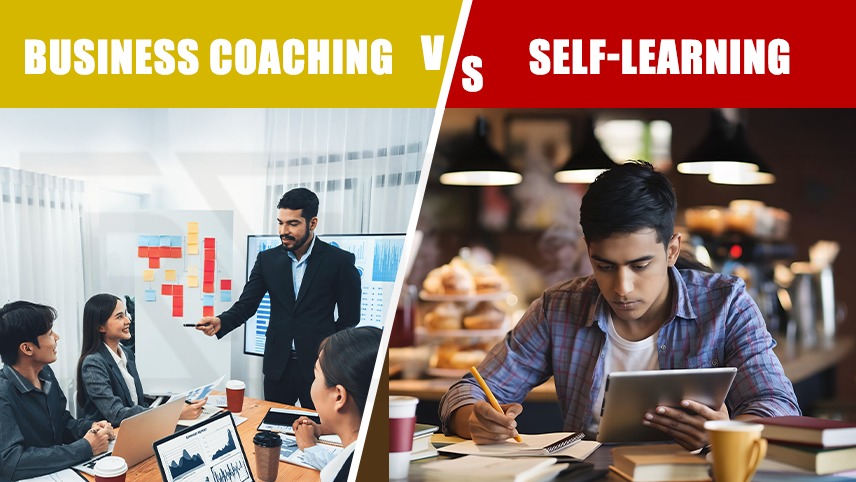
Business Coaching vs. Self-Learning – What Works for Indian Startups?
When you’re chasing your dream, there’s always a turning point.
You're staring at your screen at 1 a.m., sipping cold chai, watching your numbers flatline for the third month in a row. You're tired, confused, but still hopeful. You tell yourself, “I’ll figure it out somehow.”
And that's where the real question kicks in.
Should you continue to self-learn your way forward, or is it time to bring in business coaching?
In the fast-moving world of Indian startups, where competition grows every day and attention spans keep shrinking, this choice could decide whether your startup flies or falls.
So let’s go deep into both worlds not from a theory lens, but through the raw, real, and chaotic experience of Indian entrepreneurs.
The First Few Months: Jugaad or Guidance?
In India, most startups don’t begin with a fancy pitch deck or seed funding. They begin with jugaad small hacks, sleepless nights, and big dreams.
You start with learning. You watch YouTube videos on marketing. Read blogs on startup strategy. You might even watch a bunch of Shark Tank India episodes to feel pumped. And yes, it helps for a bit.
Because self-learning gives you freedom. It gives you speed. It helps you feel in control. You create your own path and follow your own flow. When there’s no one to guide you, learning becomes your best friend.
But slowly, something starts to shift.
The blog posts contradict each other. One podcast says focus on branding, another says performance marketing is king. You try 10 strategies in 10 weeks and none of them seem to stick.
You’re no longer learning. You’re drowning.
When Learning Stops Feeling Like Progress
This is the part no one warns you about.
You start collecting information like badges. You read about customer funnels, SEO tips, and growth hacks. You already know the basics of a business model canvas. But somehow, none of that is fixing your drop in sales or your team’s confusion.
That’s when you realise the problem isn’t that you don’t know. The real issue is, you’re not sure where to put your energy.
And this is where the magic of business coaching enters the picture.
It doesn’t throw more information at you. It clears the clutter.
The Power of a Second Brain
Imagine having someone who listens to your story without judging. Someone who’s been through the same messy days and sleepless nights.
They ask the right questions.
Why are you spending so much time fixing your website when your real problem is retention?
Why are you running Instagram ads when your ideal buyer is actually searching on Google?
That’s what a good business coaching does. They don’t just give advice. They shift your direction. And in the world of Indian entrepreneurship, where every day is a battle against time, money, and energy this kind of direction is priceless.
Especially when the coach understands your context: Indian buyers, Indian markets, Indian growth curves. Because let’s face it, not every Western strategy fits here.
Rahul Malodia: Coaching That Speaks India’s Language
One name that’s creating real change in this space is Rahul Malodia.
He isn’t just another motivational voice. He’s someone who understands how Indian MSMEs and startups actually work. Rahul Malodia explains global business thinking in a way every Indian entrepreneur can use.
If you’ve ever watched his videos, you’ll notice it’s not just theory. It’s hands-on, real-life business coaching tailored for Indian founders. Whether it's managing cash flow, building a sales team, or scaling operations, his approach is deeply rooted in what Indian businesses truly face on the ground.
Many entrepreneurs who once struggled with direction are now seeing serious growth after applying what Rahul teaches. That’s the difference a coach makes especially when they speak your language and know your market.
But Isn’t Coaching Expensive?
It can be. And when your startup is running on low budgets, spending money on coaching feels risky.
But here’s a better way to think about it.
If self-learning saves money, coaching saves time. And in business, time is far more expensive than money.
You could spend six months trying to figure out pricing strategy through videos and trial-and-error.
Or spend one hour with a coach like Rahul Malodia who shows you exactly what works for your business type, your customer base, and your growth stage.
In the long run, avoiding the wrong path is more valuable than finding the perfect one.
The Silent Killer: Burnout from Doing It All Alone
Let’s talk about something that doesn’t get enough attention: the emotional side of self-learning.
It’s romanticised. The lone warrior. The self-made founder. The late nights of “hustle.”
But what people don’t talk about is the mental exhaustion that comes from constantly learning, failing, adjusting, and still not feeling sure.
It’s lonely. You start questioning your decisions. You lose confidence. You doubt yourself.
And this is where business coaching in India becomes more than strategy it becomes support.
Sometimes, having someone to talk to, someone who understands your chaos, can be the difference between quitting and continuing.
Because motivation fades. But accountability stays.
When Self-Learning Works Best
Now don’t get me wrong, self-learning isn’t useless. It’s a superpower when used right.
In fact, some of India’s best entrepreneurs have grown purely on learning from books, interviews, failures, and daily hustle.
If you have time, energy, and curiosity and you're just starting out, self-learning gives you flexibility. It teaches you resourcefulness. It makes you sharper and more independent.
And there’s pride in that.
But at some point, you’ll face problems that Google can’t answer. When you reach that stage, asking for coaching shows strength, not failure. It’s wisdom.
The Hybrid Mindset That Wins
The smartest Indian founders I know do both.
They start with self-learning reading, experimenting, talking to customers, and building MVPs.
But they don’t stay stuck when they hit a wall. That’s when they invest in business coaching, mastermind groups, or experienced mentors who bring clarity.
This hybrid approach saves them from wasting years and lakhs of rupees in the wrong direction.
You don’t have to do it all alone to grow your business. Success starts when you’re not afraid to ask for guidance.
The Indian Reality Check
Let’s be real, the Indian startup space isn’t easy.
You’re dealing with unorganised markets, budget-conscious customers, and a culture that still asks, “Business? But what about a job?”
In this environment, speed matters. Clarity matters. Emotional strength matters.
So whether you choose self-learning or business coaching, ask yourself:
What’s slowing me down right now?
Is it a knowledge gap? Learn.
Is it confusing? Get coached.
Is it emotional fatigue? Talk to someone who’s been there.
Final Thoughts: The Choice Is Yours — But Make It Wisely
There’s no one right path for everyone.
Some businesses grow from YouTube tutorials and instinct. Some people grow the most when a coach helps them see things clearly.
But here’s what I’ve seen again and again in the Indian ecosystem: the founders who win are not the ones who know it all.
They keep learning, keep asking, and keep pushing ahead no matter what.
So if you’re reading this, wondering what to do next, take a breath.
Your answer isn’t in more research. It's about understanding what your business really needs today. Self-learning or coaching both work. If done right.
But not choosing at all? That’s the real risk.
FAQs
What is business coaching and how can it help Indian startups?
Business coaching is professional guidance that helps entrepreneurs grow their business faster and with more clarity. For Indian startups, coaching can solve specific problems like low sales, poor team performance, or lack of direction. A coach helps you avoid costly mistakes and take smarter decisions based on experience and proven strategies.
Is self-learning enough to grow a business in India?
Self-learning is a great way to start, especially when budgets are tight. Many Indian founders begin by watching videos, reading books, and trying things on their own. But after a point, you may feel stuck or overwhelmed. That’s when getting external help like business coaching in India can make a big difference.
When should I think about hiring a business coach?
If you’re facing challenges like slow growth, team confusion, unclear goals, or constant trial-and-error with no results, it may be time to explore business coaching. A coach helps you stay clear and take the right steps in your business. Indian entrepreneurs often say they wish they had taken coaching earlier when they look back.
What makes Rahul Malodia different from other business coaches?
Rahul Malodia is known for his practical, no-jargon approach. He understands how Indian businesses actually work from small shops to fast-growing startups. His coaching is not just motivation; it’s filled with real strategies that work in the Indian market. That’s why many Indian entrepreneurs trust him to guide their journey.
Which is better: business coaching or self-learning?
There’s no one-size-fits-all answer. If you’re just starting and love exploring on your own, self-learning gives you freedom. But if you’ve hit a roadblock or want to scale faster, business coaching gives you the clarity and direction you need. Many successful Indian startups use a mix of both.
Is business coaching expensive for Indian startups?
Some coaching programs cost more upfront, but they often save you money in the long run by helping you avoid wrong decisions. With experts like Rahul Malodia, you get value that’s far greater than the cost because you’re saving time, effort, and potential business losses.
Can self-learning help if I have zero business background?
Yes, self-learning is perfect if you're new and want to understand the basics. Many first-time Indian entrepreneurs begin this way. But as your business grows, you may need help with real-time decisions, team building, or scaling and that’s where coaching steps in.
- Personal Development
- BusinessCoaching



Rahul Malodia is a leading business coach in India, a Chartered Accountant, and the creator of the transformational Vyapari to CEO (V2C) program. With a mission to empower MSMEs, he has trained over 5,00,000+ entrepreneurs to systemize operations, manage working capital, and scale their businesses profitably.
Known for transforming traditional business owners into confident CEOs, Rahul delivers India’s top business coaching programs through bootcamps, workshops, and online courses. His practical strategies and deep industry insights have made him a trusted name among entrepreneurs seeking sustainable and scalable growth.
