
AI-Driven Marketing in India: Hype or Real Growth Booster?
The New Buzzword in Indian Business
Every few years, a new trend sweeps across the business world in India. It happened with social media marketing, it happened with influencer campaigns, and now it’s happening with Artificial Intelligence. Everywhere you look, AI is being sold as the ultimate game-changer. But here’s the real question, when it comes to marketing in India, is AI just hype dressed up with fancy jargon, or is it truly a growth booster that can transform businesses?
If you’re an entrepreneur, a small business owner, or even a professional running marketing campaigns, you’ve probably already heard phrases like “AI-driven customer targeting” or “AI-powered personalisation.” They sound exciting, but deep down, you may wonder: Does this actually work in India’s unique market, or are we being sold dreams that only big corporations can afford?
Let’s break this down.
The Promise of AI in Marketing
AI in marketing is not a new idea globally. Companies like Amazon, Netflix, and Google have been using AI for years to recommend products, predict user behaviour, and even design ads. But what makes this moment in India different is the speed of adoption. According to a PwC India report, the AI market in India is projected to reach nearly $17 billion by 2027, and marketing is one of the key areas driving this growth.
Think about it, over 900 million Indians now use the internet, with more than 650 million on smartphones. That means every search, scroll, and swipe generates data. AI tools claim they can take this ocean of data and turn it into sharper ads, smarter campaigns, and higher sales. On paper, this sounds like a jackpot for any business. But does it really deliver in practice?
The Ground Reality for Indian Businesses
Here’s where the story gets interesting. Most small and medium businesses in India don’t operate with massive marketing budgets like Reliance Jio or Zomato. They don’t have in-house AI teams or unlimited funds for experiments. For them, AI tools often come packaged in marketing platforms like Google Ads, Meta Ads, or CRM systems such as Zoho and HubSpot.
Take the example of Jio. Using AI-driven insights, Jio tailors offers for customers depending on their recharge patterns, data usage, and browsing habits. That level of personalisation has helped them dominate the telecom market. But can a small retail shop in Jaipur or a D2C startup in Surat do the same? The reality is, yes, but at a smaller scale. For instance, even simple AI features in Facebook Ads Manager can now predict which customers are most likely to buy and automatically push ads to them. The business owner doesn’t need to understand coding, just how to use the tool smartly.
Why India is a Different Playground
India is not Silicon Valley, and that’s both a challenge and an opportunity. On one hand, Indian consumers are price-sensitive, emotional, and influenced by trust more than just flashy ads. On the other hand, the sheer scale of the market means even small improvements in targeting can create huge returns.
Consider an Indian fashion brand that sells through Instagram. Instead of blasting the same ad to everyone, AI tools can analyse which customers respond better to festive discounts, who prefer casual wear, and who buys only during payday weeks. In a country where festive shopping contributes nearly 30-40% of annual sales for many brands, such insights can make or break a business.
But there’s another angle, India’s linguistic and cultural diversity. Most AI models are built on Western consumer data, which is why they often struggle to truly understand the mindset and behaviour of the Indian buyer. A chatbot that speaks Hinglish or responds with “Namaste” may win more hearts than one that sounds robotic. This is why local startups like Haptik (acquired by Reliance) are focusing on AI solutions built specifically for Indian businesses and Indian consumers.
The Fear of Hype
Every major trend always brings along its share of hype and overstatement. Many entrepreneurs in India are being told that without AI, their business will collapse. This is far from true. AI is not a magic wand. It cannot fix a bad product, weak branding, or poor customer service. If your business foundation isn’t solid, AI won’t save you; it will only speed up your downfall.
In fact, surveys show that almost 60% of Indian small business owners who tried AI-driven tools abandoned them within a year because they expected overnight miracles. They assumed AI would double their sales without effort. The reality? AI works only when combined with a strong marketing strategy, consistent execution, and a willingness to learn from data.
Real Success Stories in India
Still, there are businesses proving that AI is not just hype. Zomato is a classic example. Every time you open the app, the restaurant suggestions and offers are not random. They are driven by AI, learning from your eating patterns, the weather in your city, and even local events like IPL matches. If you crave biryani on Friday nights, chances are Zomato knows it before you even place the order.
Flipkart also uses AI extensively. During their Big Billion Days sale, AI predicts demand for different products, manages inventory, and even decides which ads to push to which users. Flipkart’s razor-sharp precision in planning has turned its festive campaigns into some of the biggest success stories in India.
On a smaller scale, even local startups are reaping benefits. For instance, many D2C skincare brands in India now use AI-powered quizzes on their websites. These quizzes analyze skin type, age, and preferences to recommend products. The result? Higher customer satisfaction and reduced returns.
The Cost Factor for Small Businesses
You’re probably wondering, “This all sounds promising, but won’t AI burn a hole in my pocket?” That was true a few years ago. But today, even small businesses can access AI through affordable SaaS tools. Platforms like Zoho, Freshworks, and Instamojo are embedding AI features directly into their services. You don’t have to hire an AI engineer; what really matters is knowing how to use the right AI tools wisely.
For example, Zoho’s AI assistant “Zia” can analyse customer emails and suggest responses. Freshworks uses AI to prioritise support tickets so that urgent customer issues get solved first. Even WhatsApp Business, which is widely used in India, now integrates AI chatbots that can handle FAQs and orders 24/7. For a kirana store or a local boutique, these features can save time and build trust without breaking the bank.
The Future of AI Marketing in India
The reality is, artificial intelligence in Indian marketing is just beginning to take shape. Most businesses are experimenting, learning, and adapting. But the direction is clear. According to Nasscom, AI adoption in Indian businesses is growing at nearly 45% annually, one of the fastest in the world.
What this means is that businesses that start learning AI tools today will have a massive advantage in the next three to five years. Just like how those who adopted social media marketing early grew faster, those who adopt AI marketing early will outpace competitors.
Here’s the truth: technology can support your journey, but it can never take the place of genuine human creativity. It’s about using AI as a partner. AI has the power to analyse massive amounts of data, spot trends before they happen, and handle routine tasks automatically. But the emotional storytelling, cultural nuance, and relationship-building, that’s still the human touch. In India, where buying decisions are often made on trust and emotion, this balance is the real secret.
So, Hype or Growth Booster?
If you’ve read this far, you know the answer is not black and white. For businesses in India, AI-driven marketing is not pure hype. It’s not a magic bullet either. It’s a powerful tool, one that can give your business sharper insights, better targeting, and higher returns if used wisely.
The hype lies in expecting AI to replace effort. The growth lies in blending AI with strong fundamentals, human creativity, and an understanding of India’s unique consumer base.
So the next time someone tries to sell you an AI solution as the ultimate game-changer, ask yourself: “Do I have the right product, the right audience, and the right story?” If the answer is yes, then AI can truly be your growth booster. If not, it’s just another buzzword.
Final Thoughts
India is standing at the edge of an AI marketing revolution. From startups in Bengaluru to kirana shops in Indore, the tools are becoming accessible to everyone. The businesses that win will not be the ones that blindly chase hype, but the ones that learn, adapt, and use AI as a partner rather than a replacement.
At the end of the day, AI is like electricity. It won’t cook your food or build your house by itself. But if you know how to use it, it can light up your entire business. The choice is yours, will you treat AI as hype, or will you make it your growth booster?
FAQ
Q1. What is AI-driven marketing in India?
AI-driven marketing in India uses artificial intelligence tools to analyse customer data, predict behaviour, and create personalised campaigns that improve business growth.
Q2. Is AI marketing only for big companies in India?
No, even small businesses can use affordable AI tools like Zoho, Freshworks, and WhatsApp chatbots to improve customer engagement and sales.
Q3. Does AI guarantee higher sales for Indian businesses?
AI can boost targeting and efficiency, but success still depends on having a good product, a clear strategy, and strong customer trust.
Q4. Which Indian companies are using AI in marketing successfully?
Brands like Zomato, Flipkart, and Jio use AI for personalisation, demand forecasting, and customer engagement, proving its real-world impact.
Q5. Is AI in Indian marketing just hype or a real growth booster?
It’s not hype, it’s a powerful tool. When combined with human creativity and strong fundamentals, AI can be a real growth booster for Indian businesses.
- Business Ideas
- ai automation


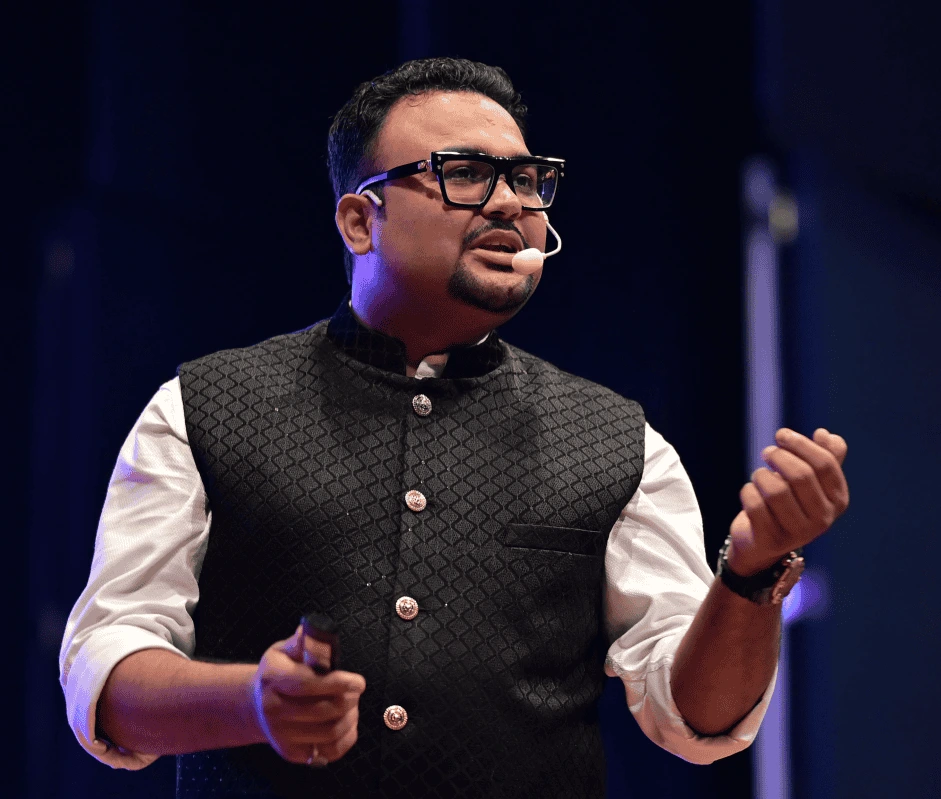
Rahul Malodia is a leading business coach in India, a Chartered Accountant, and the creator of the transformational Vyapari to CEO (V2C) program. With a mission to empower MSMEs, he has trained over entrepreneurs to systemize operations, manage working capital, and scale their businesses profitably.
Known for transforming traditional business owners into confident CEOs, Rahul delivers India’s top business coaching programs through bootcamps, workshops, and online courses. His practical strategies and deep industry insights have made him a trusted name among entrepreneurs seeking sustainable and scalable growth.
