
Why Is My Business Not Growing? Real Reasons Explained
There is a quiet frustration many business owners carry today.
The kind that doesn’t show on social media.
The kind that appears when revenue stays flat, despite long working hours and honest effort.
You look at your business and ask a simple question.
Why is my business not growing?
This question is being asked across India right now.
From MSME owners in manufacturing clusters to startup founders in Bengaluru.
From traders who survived Covid to professionals who built service firms.
What makes this phase confusing is that demand still exists.
Markets are open.
Customers are around.
Yet business growth feels slower, heavier, and uncertain.
This is not a motivation problem.
This is a structural reality problem.
Let’s break it down calmly, clearly, and truthfully.

The Market Didn’t Stop, It Shifted Quietly
One of the biggest reasons business growth is slow in 2025 is not lack of effort.
It is a silent market shift.
According to RBI data, India’s GDP growth remains above 6 percent, but consumer spending growth dropped below 4 percent in many urban segments during 2024.
Customers are buying, but they are buying less frequently.
They are delaying decisions.
They are negotiating harder.
This is why many business owners feel that sales are not increasing even though inquiries are coming.
Earlier, demand converted faster.
Today, demand needs more trust, more proof, and more patience.
Businesses that adapted to this shift grew.
Businesses that continued with old assumptions entered business stagnation.
Hard Work Is No Longer the Growth Driver
This is uncomfortable to hear.
But it is real.
Earlier, more hours meant more output.
In 2025, more hours often mean more exhaustion.
Many Indian entrepreneurs face a business plateau problem because they are still operating like operators, not builders.
They are involved in everything.
Sales calls.
Vendor follow-ups.
Team supervision.
The business depends on the owner’s presence to move even slightly.
According to a 2024 Nasscom MSME study, over 62 percent of small businesses in India are still over-dependent on founders for daily decisions.
This creates invisible business growth blockage.
When the owner becomes the system, scaling becomes impossible.
Marketing Is Working, But Not the Way It Used To
A common complaint today is simple.
Why marketing is not working anymore.
Instagram reach dropped by more than 40 percent on average between 2023 and 2024.
Facebook ads cost increased by nearly 30 percent in competitive categories.
Google Ads CPC for local services rose sharply in metros.
This does not mean marketing is broken.
It means lazy marketing is dead.
Businesses that relied on one platform are facing customer acquisition problems.
Businesses that built brand recall, trust, and authority across channels are still growing.
The problem is not low leads.
The problem is low conversion rates in business due to trust gaps.
Pricing Is Quietly Killing Growth
Many businesses don’t realize this.
But pricing strategy problems are one of the biggest slow business growth reasons today.
Indian customers have become extremely price sensitive.
But they are also value sensitive.
According to Bain India, customers are willing to pay 12 to 18 percent more for brands they trust.
Yet most businesses compete only on discounts.
Low margins create profit but no growth situations.
Cash flow problems appear even when sales look healthy.
Growth requires surplus.
Discounting destroys surplus silently.
Systems Are Missing, Not Motivation
Most business owners think growth is blocked due to external factors.
Inflation.
Competition.
Market uncertainty.
But internal systems tell a different story.
Lack of delegation in business leads to burnout.
Business systems missing leads to chaos.
No CRM means lost follow-ups.
No SOPs means inconsistent delivery.
A Dun & Bradstreet India report shows that MSMEs with documented systems grow 2.3 times faster than those without.
Business not scaling is rarely a market issue.
It is usually an operational discipline issue.
Cash Flow Is the Real Growth Killer
Many owners say their business is profitable, yet growth has stopped.
This contradiction confuses them.
Profit is an accounting number.
Cash flow is a survival number.
Delayed payments from clients, inventory cash blockage, and rising operating costs have created working capital issues across India.
According to SIDBI, over 55 percent of MSMEs face working capital shortages despite steady order books.
When cash is stuck, decisions become defensive.
Hiring stops.
Marketing slows.
Expansion freezes.
Business revenue not increasing is often a symptom of cash flow stress, not market failure.
The Team Problem Nobody Wants to Talk About
Hiring problems in business have intensified.
Skilled talent shortage is real.
Employee attrition problem is rising, especially in sales and operations roles.
But the deeper issue is structure.
Most small businesses have no middle management.
Everything flows to the founder.
This leads to low employee productivity and founder burnout.
According to TeamLease, MSMEs with defined leadership layers retain employees 38 percent longer.
Growth needs people who think.
Not people who wait.
Technology Is No Longer Optional
AI impact on small businesses is already visible.
Automation is replacing manual tasks faster than expected.
Businesses that adopted basic AI tools for CRM, accounting, and marketing saw cost reductions of 15 to 25 percent by late 2024.
Businesses that ignored digital transformation challenges are losing customers silently.
Not because competitors are better.
But because customers expect speed, clarity, and consistency.
The technology gap in small businesses is now a growth barrier, not a future concern.
The Indian MSME Reality Nobody Mentions
Indian business growth challenges are not just strategic.
They are structural.
GST compliance burden increased working hours without increasing revenue.
Bank loan rejection rates for small businesses remain above 45 percent.
Credit access problems MSMEs face are real despite schemes.
Udyam registration benefits exist, but awareness and execution remain low.
This is why many owners feel business worked before not growing now.
The environment changed.
Rules changed.
Costs changed.
But business models didn’t.
Competition Is Not the Enemy, Similarity Is
Market too competitive now is a common belief.
But competition alone doesn’t kill growth.
Sameness does.
When ten businesses look identical, customers choose the cheapest.
Brand positioning issues create invisible stagnation.
Businesses that clarified who they serve, why they exist, and what they stand for continue to grow even in crowded markets.
This is why some brands grow during funding slowdown India while others struggle despite demand.
Founder Mindset Is the Final Growth Gate
The difference between a business owner and a business builder is subtle.
But it changes everything.
The CEO vs entrepreneur mindset gap appears when founders refuse to let go.
When they avoid systems.
When they fear structure.
Why entrepreneurs fail to scale is rarely about intelligence.
It is about identity.
Growth requires the founder to change before the business does.
Why Business Growth Feels Confusing Right Now
Business growth confusion exists because old rules no longer apply fully, and new rules are still forming.
High interest rates impact on business decisions.
Inflation impact on small businesses reduces buffers.
Consumer spending slowdown India shifts buying behavior.
At the same time, AI tools for business growth open new doors.
Digital channels still work, but differently.
Customers still buy, but slower.
This transition phase is uncomfortable.
But it is not permanent.
Growth Is Still Possible, But Not the Old Way
If your business feels stuck, it does not mean it is failing.
It means it has outgrown its current structure.
Why is my business not growing in 2025 is not a personal failure question.
It is a strategic evolution question.
Businesses that redesign systems, sharpen positioning, improve cash discipline, and reduce founder dependency are still growing.
Quietly.
Consistently.
Sustainably.
Growth did not disappear.
It changed its address.
And once you understand where it moved, your business can follow.
- Business Case study
- business management consultant
- government schemes
- becoming a ceo
- Businessman
- Ecommerce business model
- Innovation
- Investment Ideas
- Market Analysis
- Business case study
- Business Finance
- BusinessSuccess
- BrandBuilding
- BusinessConsulting
- BusinessCoaching
- BusinessGrowth
- Entrepreneurship
- LeadershipDevelopment
- StartupGrowth
- focus on money


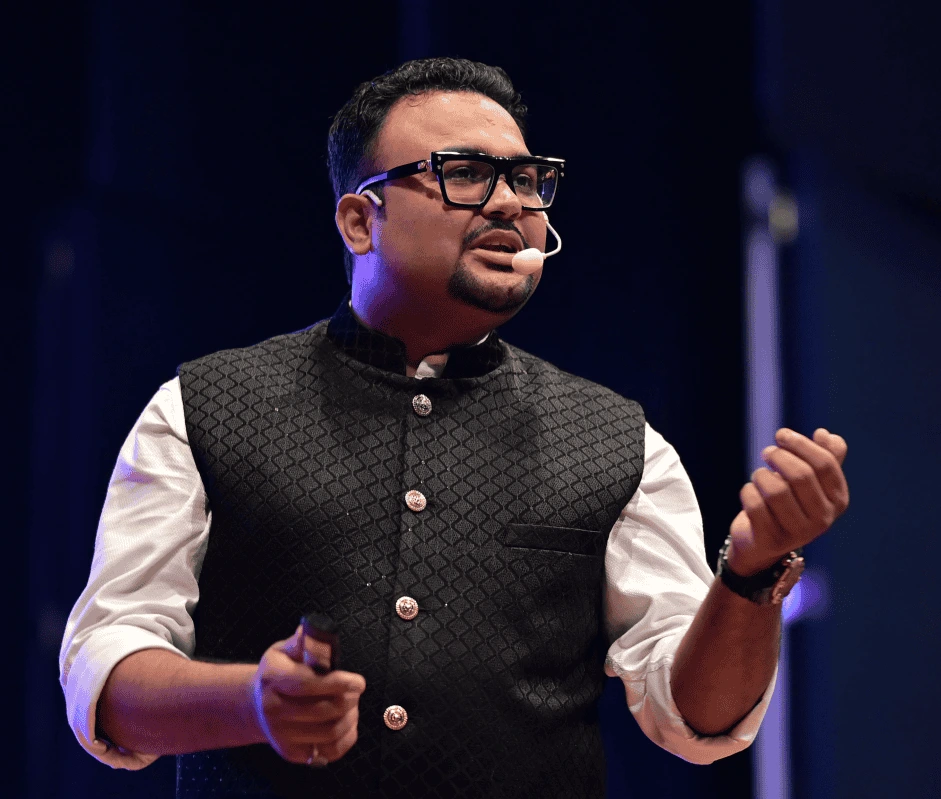
Rahul Malodia is a leading business coach in India, a Chartered Accountant, and the creator of the transformational Vyapari to CEO (V2C) program. With a mission to empower MSMEs, he has trained over entrepreneurs to systemize operations, manage working capital, and scale their businesses profitably.
Known for transforming traditional business owners into confident CEOs, Rahul delivers India’s top business coaching programs through bootcamps, workshops, and online courses. His practical strategies and deep industry insights have made him a trusted name among entrepreneurs seeking sustainable and scalable growth.
