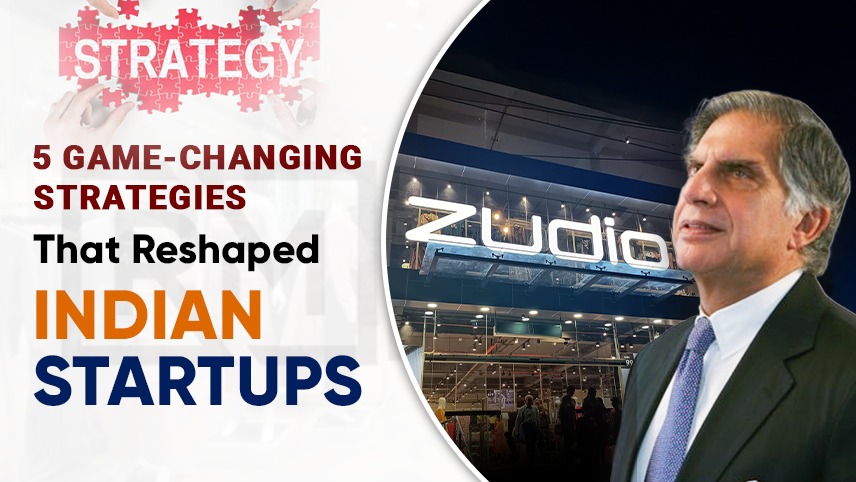
5 Game-Changing Strategies That Reshaped Indian Startups
The Untold Stories Behind India's New-Age Business Boom
If someone had told you ten years ago that Indian startups would one day challenge global giants and redefine how we live, shop, travel, and even think, you might have laughed it off. But look around today. From the way we order food to how we dress, Indian startups have completely changed the game.
The real question isn’t what they did. It’s how they did it.
In this blog, we’re going behind the scenes to explore the five powerful Indian Startup Strategies that helped Indian startups rise, grow, and win. But this isn’t going to be a dry list. Think of it as a journey filled with ideas, emotions, risks, and bold decisions that turned dreams into Indian business success stories.
1. Cracking the Code of Bharat: Knowing the Real Customer
For the longest time, startups only focused on metro cities—Delhi, Mumbai, Bengaluru. That was the whole market. But then something changed. Some founders stopped looking at the surface and went deeper. They realized that real India lives beyond the metros in cities like Indore, Nagpur, Surat, and Patna.
That shift changed everything.
Brands like Zudio collection didn’t follow the traditional playbook. They didn’t open stores just in rich urban malls. They planted themselves in Tier 2 and Tier 3 cities—right where India shops.
And they didn’t just show up. They understood what people wanted: affordable prices, quality they could trust, and styles that made them feel confident. By understanding Bharat-first business strategy, Indian market insights, spending patterns, and the cultural love for Indian retail customers’ offline shopping habits, these startups built a customer base that was underserved and over-delivered to.
And that became their superpower.
2. Going Deep Instead of Wide: The Power of Focused Execution
Most new businesses try to do everything. They want to be in every city, serve every customer, and launch every product. But smart Indian startups chose a different path.
Retell the story of Zudio. No flashy website. No fancy influencer campaigns. No wide product distractions. Just one clear goal: offer fashionable clothes at budget-friendly prices, and do it really well.
That single-minded focus helped them avoid noise and build a loyal following. Their stores weren’t filled with clutter; they were designed to keep people coming back. Collections were refreshed regularly. Shopping felt enjoyable—more like an experience than just another task.
This laser-sharp Zudio pricing strategy helped them stay ahead. Their focused execution wasn’t about cutting corners but about maximizing consistency and delight. Affordable fashion in India needed someone to take charge, and Zudio did.
While others chased growth by burning cash, these focused startups grew by building trust—one city, one store, one customer at a time.
3. Offline is Not Dead: Turning Old-School into Gold
There was a time when every investor said, “If you're not online, you're not going to make it.” But Indian startups had a different story to tell.
Zudio didn’t even bother with online sales. You won’t find their clothes on any app or website. If you want to buy their products, you’ll need to visit a store in person.
And you know what? That decision worked. In fact, it worked brilliantly.
Why? Because many Indians still prefer seeing, touching, and trying clothes before buying. Especially in smaller cities, shopping is a family event—a chance to hang out, take photos, and enjoy the outing. Online can’t replace that feeling.
Zudio turned this insight into action. They created physical spaces that people loved being in. Spacious Zudio stores, good music, clean displays—shopping became fun again.
And in a digital world, that became their edge.
While others fought for attention online, Zudio quietly built offline fashion retail India into an empire that people trusted. They tapped into the family shopping habits that define consumer behavior across Tier 2 and Tier 3 cities.
4. Letting the Customer Do the Talking: Word of Mouth Wins
Here’s something that’ll surprise you: Zudio didn’t run celebrity ads. They didn’t pay Bollywood stars or top influencers. Yet, the brand exploded in popularity.
How?
Because they made their customers feel something. Every time someone bought from Zudio, they didn’t just get clothes—they got value. They felt stylish without spending a bomb. And that feeling? It’s addictive.
People started sharing their Zudio haul on social media. College kids posted mirror selfies. Young moms told their friends. Even those who don’t usually talk about brands started recommending Zudio to family and neighbors.
This wasn’t marketing. It was emotion. It was trust. It was people becoming ambassadors out of love, not payment.
Whether you scroll through Zudio reviews online or hear a friend gush about a purchase, it's all word of mouth marketing India—and it’s been more powerful than any ad could be.
And when love spreads, it’s unstoppable.
5. Building the Brand from Inside Out: Culture Before Campaigns
You know what you don’t see from the outside? The decisions, the thinking, the values that shape a brand.
One of the biggest reasons Indian startups like Zudio are winning is that they focus on what happens behind the scenes. The culture. The team. The consistency.
Zudio is owned by the Tata Group, a name most Indians trust for its honesty, dependability, and long-term vision. That trust carries over into the way Zudio operates. The Zudio operations are tight. The designs are well-researched. Every store looks and feels the same, no matter which location you visit.
Customers may not know the backend story, but they feel the result. Every time they step into a Zudio store and find something affordable yet fashionable, they trust the brand a little more.
That’s how real loyalty is built—not just through ads or sales, but through experience after experience, touch after touch. It's the power of being part of a Tata Group fashion brand, one of the most trusted Indian companies in the world.
The Bigger Truth: Startups Are Winning by Staying Simple
If you’re a startup founder reading this, here’s what you need to know: the Indian startup strategies don’t always involve complex tech, massive funding, or celebrity partnerships.
Sometimes, it’s about doing the simple things better than anyone else.
Understanding your customer. Focusing on value. Staying consistent. Building trust. Letting the product do the talking.
These aren’t flashy strategies, but they are powerful. And when executed with clarity and conviction, they can take a brand from zero to hero, just like the Zudio business model.
Lessons You Can Carry Into Your Own Business
Whether you're running a new startup, growing a D2C brand, or managing a local store, there’s something in Zudio’s journey for everyone.
It teaches us that real growth doesn’t come from shortcuts. It comes from knowing your people, caring about what they need, and serving them without trying to impress anyone else.
It reminds us that when you solve real problems like affordability, accessibility, or customer confusion, people reward you with loyalty.
And most importantly, it proves that when you lead with heart and stay true to your mission, the results will follow.
The Final Thought: India’s Startup Game Has Changed Forever
A quiet revolution is happening in India. Startups are no longer chasing Silicon Valley dreams. They’re building Bharat-first businesses rooted in local needs, culture, and realities.
And that shift is magical.
Because now, when an Indian startup wins, it’s not just about valuation or exits. It’s about creating something meaningful. Something useful. Something that touches lives in small, everyday ways.
Zudio’s story is just one example. But it reflects a bigger wave—of startups rewriting the rules by listening deeply, acting boldly, and never forgetting who they’re serving.
So the next time you think about launching something new—don’t ask “How can I go viral?”
Ask, “How can I matter?”
That question might just be your million-rupee idea.
FAQs
1. Is focusing on offline retail still a smart strategy for startups in 2025?
Yes, absolutely—and Zudio proved it. While the world ran towards online, Zudio leaned into offline, especially in India where over 70% of people still prefer in-person shopping. They built stores where the customers already were—malls, local markets, and high-footfall streets. The strategy wasn’t just bold, it was rooted in real consumer behavior.
2. How important is pricing strategy in building a loyal customer base?
It’s everything. Zudio’s biggest win came from its value-driven pricing. They didn’t try to sell “cheap” clothes—they sold smart choices. The idea was to make people feel like they got more than they paid for. That kind of pricing builds trust and loyalty.
3. Can you really build a strong brand without digital marketing or celebrity endorsements?
Zudio did it. They made it big without spending crores on influencers or social media ads. Instead, they let their product and store experience do the talking. Word of mouth became their strongest engine.
4. What is the Zudio share price?
Zudio is part of Trent Ltd, a Tata company listed on NSE/BSE. You can track Zudio’s growth by following Trent Ltd’s performance. This rising interest in Zudio share price is a reflection of how popular the brand has become.
- Business Case study
- Business Ideas
- Market Analysis



Rahul Malodia is a leading business coach in India, a Chartered Accountant, and the creator of the transformational Vyapari to CEO (V2C) program. With a mission to empower MSMEs, he has trained over 4,00,000 entrepreneurs to systemize operations, manage working capital, and scale their businesses profitably.
Known for transforming traditional business owners into confident CEOs, Rahul delivers India’s top business coaching programs through bootcamps, workshops, and online courses. His practical strategies and deep industry insights have made him a trusted name among entrepreneurs seeking sustainable and scalable growth.
